

Boosting Pile Installation Speed with STELCOR Drilled-In Displacement Piles (DDM)
Pile installation speed can shape the entire construction schedule. When deep foundation work takes longer than expected, crews, equipment, access routes, and follow-on trades can all be affected. This is why contractors and engineers often look beyond the pile itself and consider the full installation process. On projects with limited access, contaminated soils, delicate surroundings, high water tables, or tight deadlines, STELCOR drilled-in displacement piles can help reduce complexity while supporting faster deep foundation construction.
Why Pile Installation Speed Matters
Deep foundation work usually happens early in a project. If it slows down, the impact can move through the rest of the schedule. Excavation, concrete work, steel erection, utility installation, and site access can all depend on foundation progress. That makes pile installation speed more than a production metric. It becomes a planning tool for reducing risk.
Faster installation does not mean rushing the work. It means choosing a foundation method that removes unnecessary steps from the process. Delays often come from mobilizing large equipment, handling spoils, working around limited access, dealing with contaminated soils, or managing vibration near existing structures. When a pile system reduces these bottlenecks, the project team can move faster without losing control of quality.
How STELCOR Piles Improve Installation
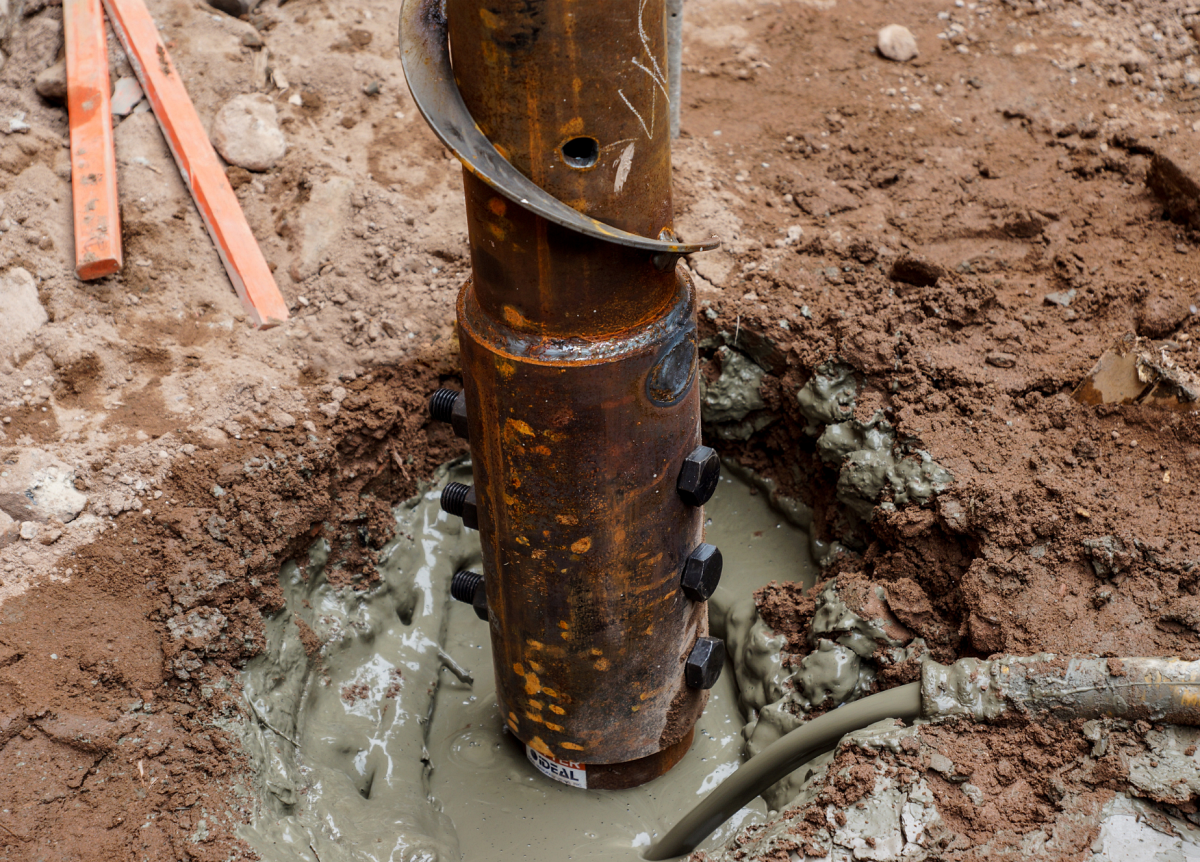
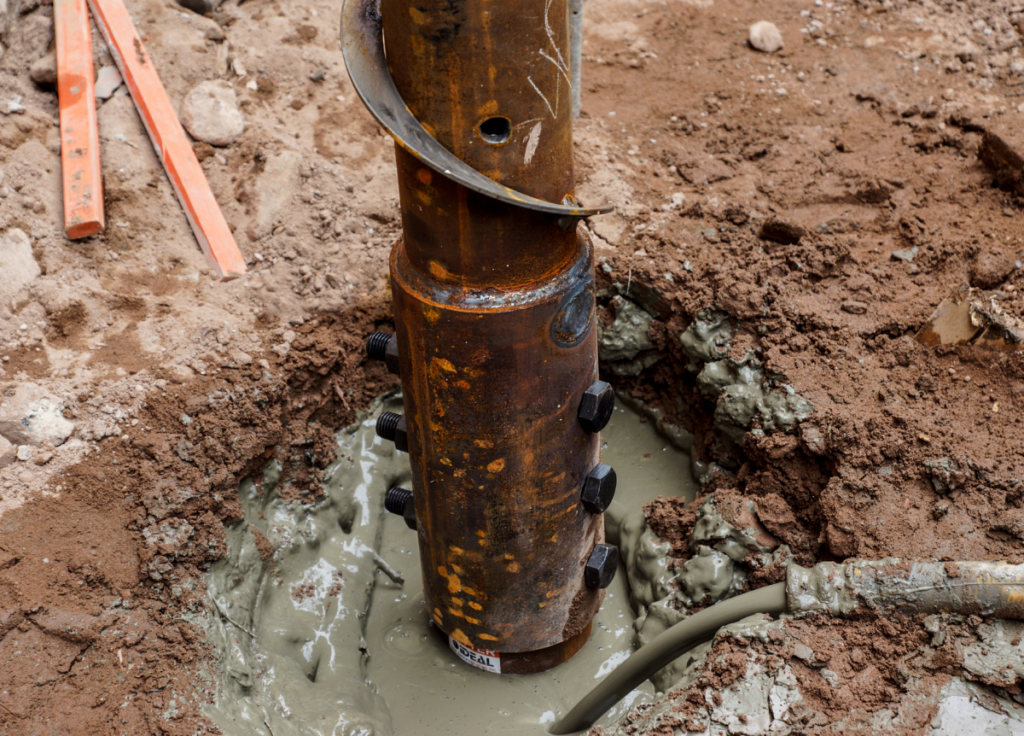
STELCOR piles are installed by rotating a steel core into the ground while applying downward pressure. During installation, grout is supplied to the pile, and the displacement head at the tip moves soil laterally instead of removing large volumes of soil from the ground. This creates space for the grout body while keeping the installation cleaner than many excavation-based deep foundation methods.
One of the biggest reasons STELCOR piles can speed up foundation work is the reduction or elimination of spoil removal. In many drilled systems, soil must be brought to the surface, stockpiled, tested, loaded, hauled, and disposed of. That process can take significant time, especially when the soil is contaminated or when the site has little room for material handling.
With a displacement approach, soil is pushed laterally around the pile instead of being removed as drill tailings. This can reduce truck traffic, cleanup, and disposal coordination. On contaminated sites, that advantage can be even more important because handling excavated material may require special procedures and higher disposal costs.
Reducing Spoil Handling and Site Disruption
Spoil handling can quietly become one of the biggest schedule problems on a foundation project. Even when drilling production is strong, crews may still need to pause for cleanup, hauling, staging, and disposal. If contaminated soils are present, those steps can become slower and more expensive.
STELCOR piles help reduce this issue because the installation process displaces soil laterally instead of bringing large amounts of material to the surface. This can create a cleaner work area and reduce the need for spoil stockpiles. It can also reduce the number of truck movements in and out of the project site.
A cleaner work area can also improve jobsite movement. When there are fewer spoils around the work zone, equipment can move from one pile location to the next with fewer interruptions. Crews also spend less time managing drill tailings and keeping access paths open. On congested sites where every square foot matters, this can support faster transitions and better coordination with other trades.
Improving Mobilization and Equipment Efficiency
Installation speed starts before the first pile goes into the ground. Mobilization, equipment setup, and demobilization all affect the schedule. Some deep foundation systems require large purpose-built rigs and a wider support operation. Those methods can be effective, but they may not be ideal when access is restricted or when the project needs a faster setup.
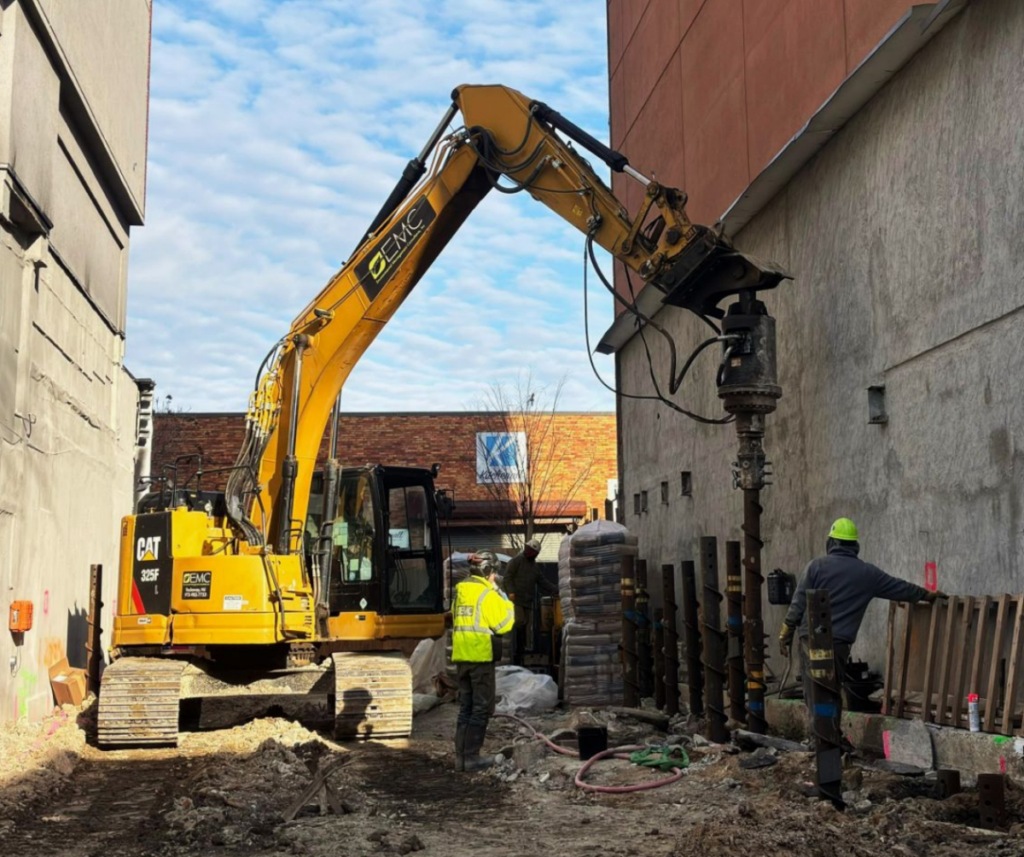
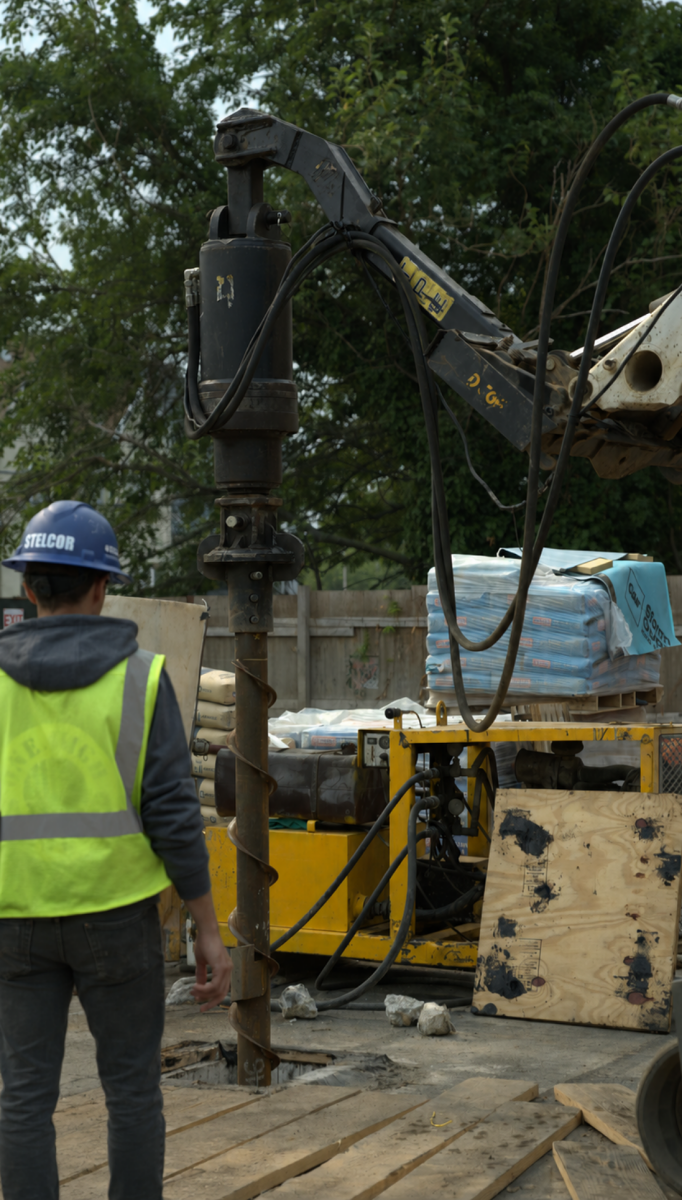
STELCOR piles can often be installed with practical equipment such as an appropriately sized excavator or skid-steer, a hydraulic rotary drive head, and a high shear colloidal grout mixer. When this type of equipment is available or easier to mobilize, the foundation contractor can reduce setup time and keep the project moving.
This can be especially valuable on remote sites, tight urban lots, industrial projects, and retrofit jobs. If the installation equipment is easier to move, position, operate, and maintain, crews can spend more time installing piles and less time managing the support operation around the installation.
Working in Limited Access and Low Headroom
Limited access is one of the strongest use cases for STELCOR piles. Projects inside existing buildings, near active facilities, under structures, or in narrow urban areas often leave little room for large equipment. A foundation method that can use compact installation equipment gives crews more flexibility.
Some STELCOR pile types can be installed with as little as 10 feet of headroom. That makes the method relevant for low-overhead work, basement retrofits, industrial upgrades, and sites where conventional equipment cannot operate efficiently. Even when the installation space is tight, the process can still maintain production without adding major complexity.
Low headroom work is not only about fitting the equipment into the space. It is also about keeping the installation process practical once the equipment is there. If the system reduces spoil, limits cleanup, and avoids large staging needs, it can help contractors work faster in areas where every movement is restricted.
Managing Contaminated Soils and High Water Tables
Contaminated soil can turn spoil handling into one of the most expensive and time-consuming parts of deep foundation work. Excavated material may need testing, special handling, tracking, transportation, and disposal at approved facilities. These requirements can slow production and create added uncertainty.
Because STELCOR piles can reduce or eliminate drill tailings, they can help project teams avoid many of the hidden costs tied to contaminated spoil removal. This does not remove the need for proper environmental planning, but it can reduce the amount of material that must be managed at the surface.
High water tables can also complicate some foundation methods. Groundwater can affect excavation stability, spoil handling, drilling conditions, and construction sequencing. A displacement method that limits soil removal may help reduce some of the handling and cleanup issues that become harder when groundwater is present.
Reducing Vibration Near Sensitive Structures
Fast pile installation must still protect nearby structures and sensitive surroundings. In some locations, vibration can be a concern. Existing buildings, utilities, historic structures, operating equipment, and adjacent infrastructure may limit the use of certain driven pile methods.
STELCOR piles are advanced with rotary installation rather than impact driving. This can make them useful where low vibration is important. The method can support deep foundation installation near delicate surroundings while still allowing crews to work efficiently.
Although STELCOR piles can reduce vibration compared with impact-driven methods, they still displace soil. That means ground conditions must be reviewed carefully. Engineers should evaluate the soil profile, nearby structures, groundwater, obstructions, and installation sequence before choosing the method.
Production Gains in the Field
The speed advantage of STELCOR piles can be significant when site conditions are suitable. A 60-foot pile can be installed in about 30 minutes, including placing the initial 20-foot lead section, adding two 20-foot extensions, completing installation, and moving to the next pile location. Installation rates have been reported as 5 times faster compared to traditional micropile methods.
A few minutes saved on one pile may not seem dramatic. Across dozens or hundreds of piles, those savings can become days or weeks. Reduced spoil handling, faster equipment movement, shorter setup times, and cleaner staging can all add up.
This is why pile installation speed should be measured across the whole process. The pile itself is only one part of the work. The total schedule also includes mobilization, staging, drilling, grouting, spoil handling, inspection, testing, cleanup, and moving to the next location.
Quality Control During Faster Installation
Faster installation should always be paired with strong quality control. STELCOR pile installation can involve tracking depth, torque, downward pressure, grout flow, grout volume, installation rate, and soil changes. These details help confirm that each pile is installed as intended.
Installation torque systems also allow soil stratum verification during installation. This can help the project team compare field conditions with the geotechnical report and adjust production decisions when needed. Predictable grout placement and load test results are important because speed only has value when the installed foundation meets design requirements.
Test piles are especially important because actual grout take and installation behavior can vary by soil type. Published grout take estimates may help with bidding, but site-specific test piles establish installation parameters such as depth, grout take, and capacity. This makes the production phase more predictable.
Understanding True Cost Per Foot
Pile cost should not be judged by material cost alone. A lower cost per foot may not produce the lowest installed cost if the pile requires more depth, more equipment, more spoil removal, or more time. A better comparison looks at the true cost per ton of support, including equipment, installation speed, required capacity, mobilization, disposal, and schedule impact.
STELCOR piles can sometimes achieve required capacity at reduced depths depending on soil conditions and design requirements. They can also reduce costs tied to spoil handling and specialized equipment. For contractors and owners, the key question is not only what each pile costs, but how the selected system affects the entire job.
Boosting pile installation speed requires more than a faster rig. It requires a foundation method that reduces the steps that slow crews down. STELCOR Drilled-in displacement piles can help by reducing spoil handling, limiting mobilization complexity, supporting compact equipment, and improving production on challenging sites. For contractors, engineers, and owners evaluating this approach, IDEAL Foundation Systems offers deep foundation solutions that can help keep foundation work from becoming the bottleneck.
