

How Steerable Trailer Systems Move Long Piles and Bridge Beams Through Tight Routes
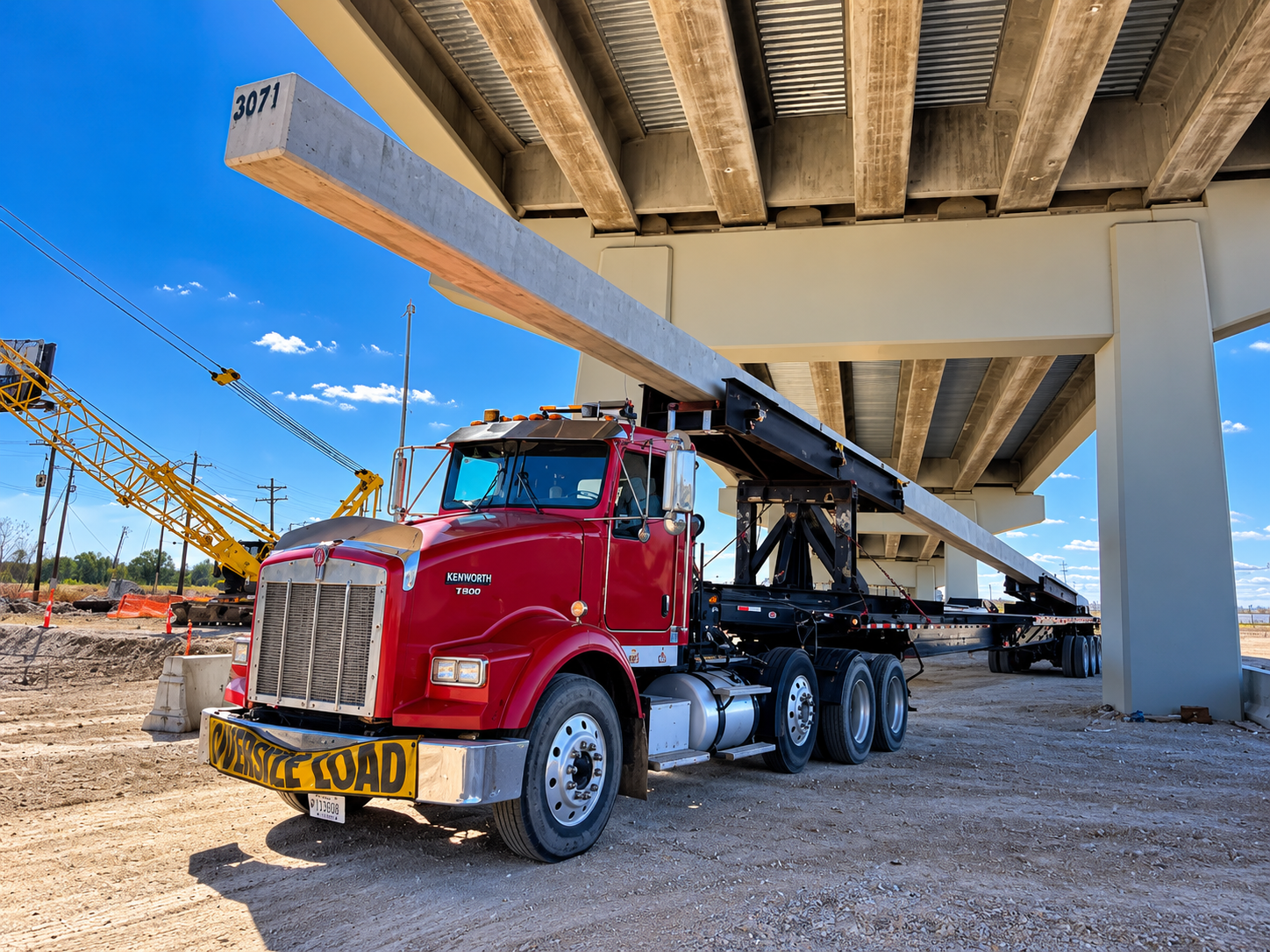
Moving a long pile or bridge beam is not simply a heavier version of ordinary freight. Length changes how a vehicle turns, where its rear axles travel, how much clearance the load requires, and how crews must plan the final approach to a construction site. For contractors coordinating specialized long-load transportation, the most difficult portion may be an intersection, railroad crossing, narrow entrance, or restricted work zone near the destination. Steerable trailer systems provide greater control over the path of unusually long structural members, but successful delivery still depends on route analysis, securement, structural stability, permits, and communication.
Why Long Structural Loads Need Steering
Understanding Low-Speed Offtracking
Low-speed offtracking occurs when the rear wheels of a combination vehicle travel inside the path followed by the tractor during a turn. This movement is especially important at 90-degree intersections, ramps, gates, and other locations where pavement is limited.
A conventional long trailer may require the tractor to swing wide so that its rear axles clear a curb, barrier, sign, or stopped vehicle. When a pile or beam extends beyond its supporting equipment, crews must also consider the travel path of both ends of the member. A route that appears wide enough for the tractor may not provide enough room for the entire transport configuration.
Controlling the Rear Travel Path
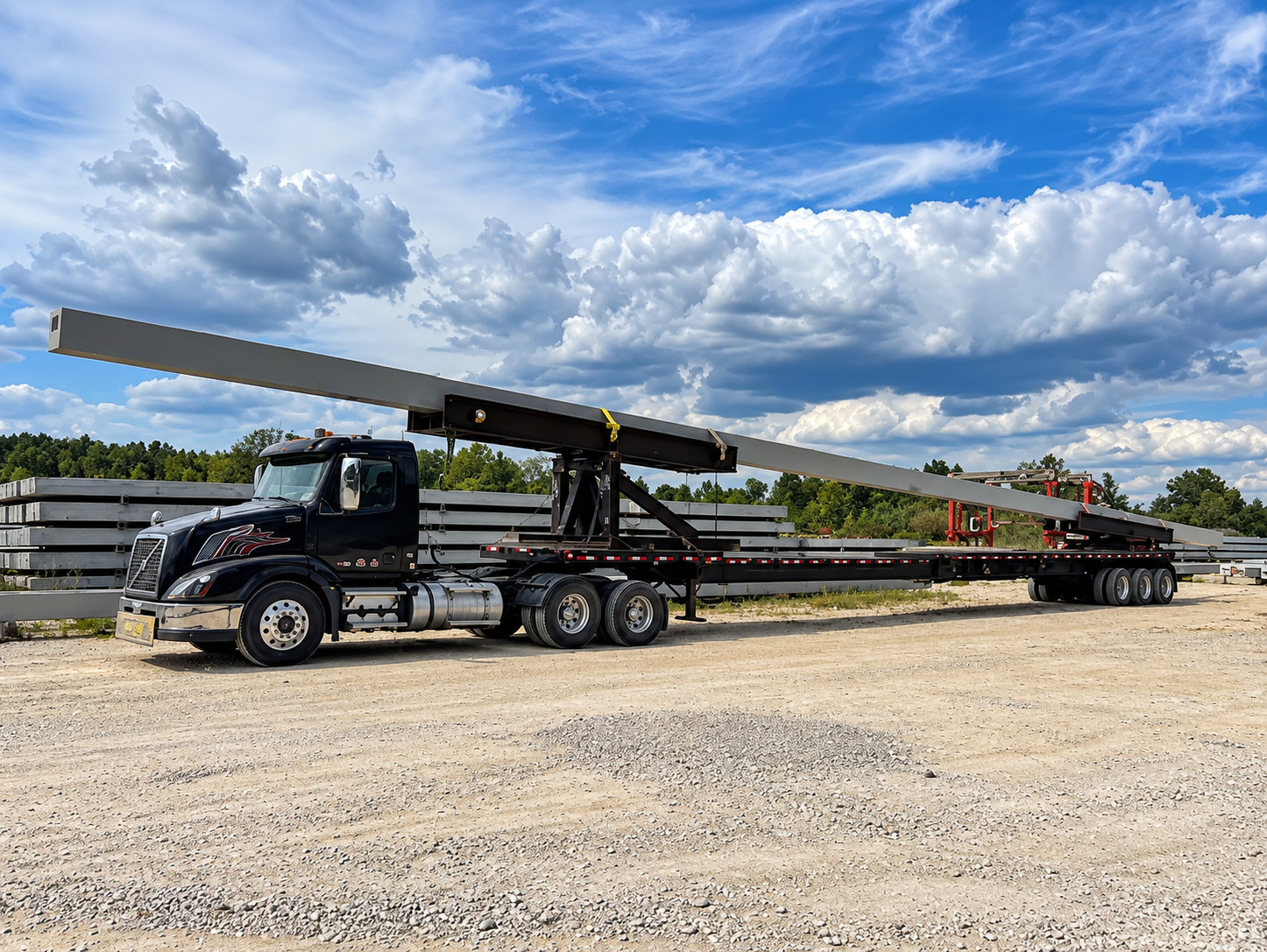
A steerable trailer system allows the rear axle group to be directed through a turn instead of simply following the tractor. On manually controlled systems, a tillerman or steerman controls an articulated rear axle under coordinated operating procedures.
Federal Highway Administration guidance describes rear steering as an important means of preventing a trailer from offtracking into another lane, contacting another vehicle, or leaving the roadway. Rear steering can improve maneuverability, but it does not make every route passable. The tractor, trailer, load, axle spacing, overhang, and steering limitations must be evaluated as one complete system.
Planning the Route Before Loading
Checking Horizontal and Vertical Geometry
A route survey for a long structural load must examine more than distance. Horizontal considerations include intersection geometry, lane width, curb locations, median openings, roundabouts, work zones, and the turning area available at the destination.
Vertical checks include bridge clearances, overhead utilities, signs, railroad crossings, pavement crowns, and abrupt changes in grade. FHWA guidance states that railroad crossings and other grade changes must be assessed when moving low-clearance loads. The agency also identifies a properly calibrated height pole as a best practice for detecting overhead conflicts, although specific requirements vary among states.
Confirming Route Capacity and Permits
The planned route must be checked for posted restrictions, bridge capacity, axle loading, and permit conditions. FHWA bridge construction guidance states that girder transportation commonly requires clearance checks, loading analysis, permitting, and coordination with the agencies responsible for the route.
The same guidance reports that typical over-the-road girder shipping lengths are often within the 120- to 140-foot range. It also notes that lengths up to 185 feet may be possible on certain routes when steerable trailers are used. These figures are planning references rather than universal limits. Actual approval depends on the load, vehicle configuration, jurisdiction, roadway structures, and permit conditions.
Coordinating Fabrication and Delivery
Choosing the Correct Shipping Orientation
Jobsite access can influence how a pile or girder should be positioned before it leaves the fabrication facility. FHWA notes that the erector may select girder orientation based on site constraints and whether the transport vehicle must be backed into the site. That decision should then be communicated to the fabricator.
Early coordination helps the member arrive in a position suitable for unloading or erection. Discovering an orientation problem after delivery may require additional handling, interfere with traffic control, or prevent the vehicle from using the intended entrance.
Planning Support and Structural Stability
A long member must remain stable while it is loaded, transported, and unloaded. Support locations, member geometry, lateral stability, temporary bracing, and movement-related forces all require project-specific consideration.
Texas Department of Transportation guidance for long girders encourages measures such as locating lifting devices at practical distances from the girder ends, using external lateral stiffening during hauling and erection, and minimizing inertial and impact forces during handling. The appropriate measures depend on the individual member and must be established by the responsible project professionals. Steering capability cannot compensate for an unsuitable support or bracing arrangement.
Securing Fabricated Structural Members
Applying Federal Securement Requirements
Federal cargo securement rules require cargo to be firmly immobilized or secured using suitable structures, dunnage, blocking, bracing, tiedowns, or a combination of these methods. The securement system must withstand specified forward, rearward, and lateral forces.
The Federal Motor Carrier Safety Administration recognizes that fabricated structural items such as beams, girders, and trusses may require special securement methods because of their size, shape, or weight. Even when special methods are necessary, the securement devices must meet the applicable performance and working-load-limit requirements.
Inspecting the Complete System
Chains, straps, anchor points, blocking, and other components must be suitable for the load and remain in serviceable condition. Tiedowns must be attached so they do not loosen, open, or release during transit. Edge protection is also required where contact with the cargo could cut or abrade a tiedown.
Support and securement should be treated as connected parts of the transport arrangement. A long pile or beam may have concentrated contact areas, substantial overhang, and geometry that requires carefully positioned supports. The selected arrangement must prevent movement that could affect the stability or maneuverability of the vehicle.
Managing the Final Approach
Coordinating Crews and Traffic Control
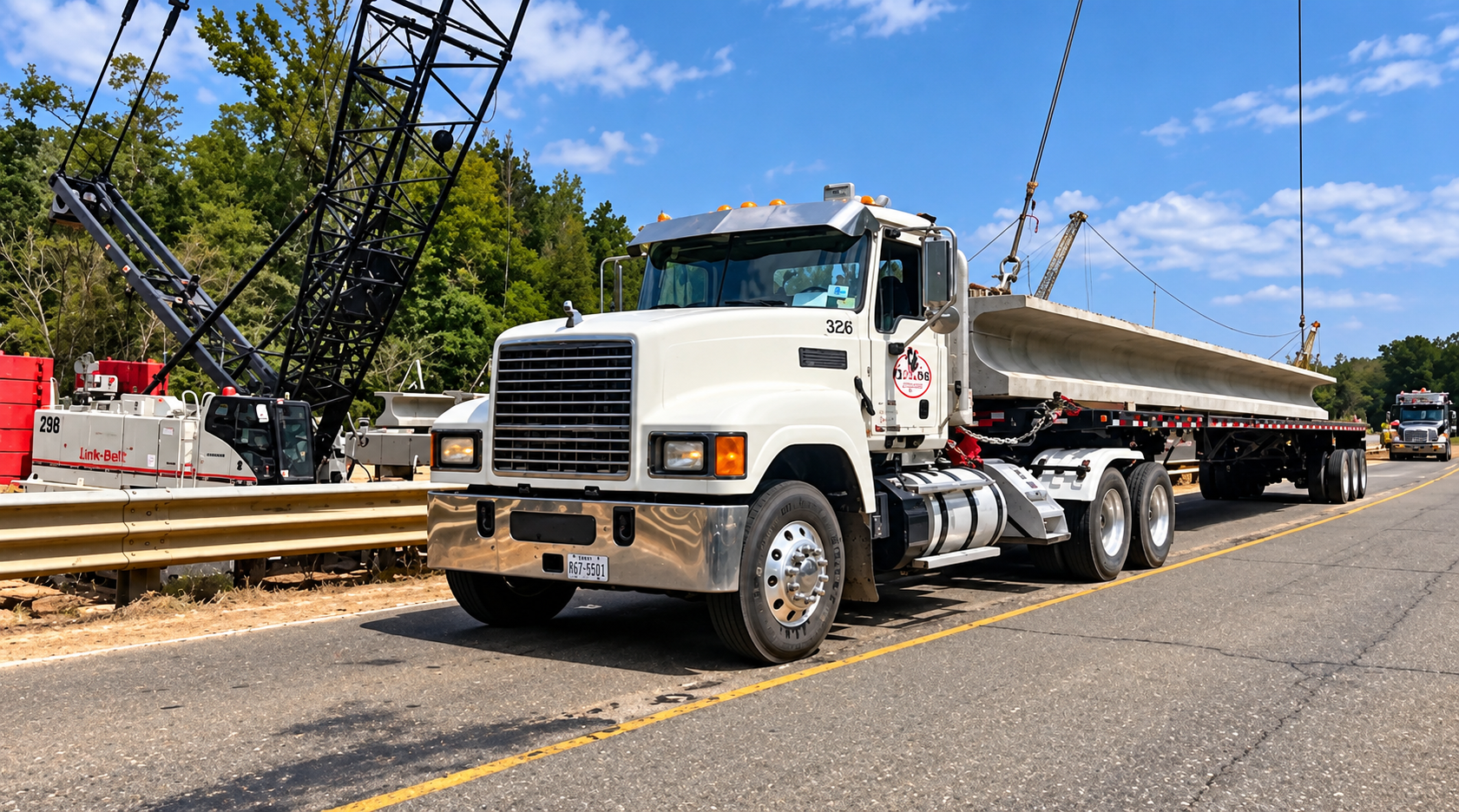
The final approach frequently combines the tightest turns with the least operating space. Before arrival, the team should confirm the entrance path, unloading position, crane access, traffic controls, communications, and contingency procedures.
The tractor operator, rear steering operator, pilot vehicles, spotters, and site personnel need clearly defined roles. Conditions should also be checked near the delivery time because parked vehicles, utility work, construction activity, or changing ground conditions can invalidate an earlier route assessment.
Turning a Difficult Move Into a Controlled Operation
Steerable trailer systems can expand the available routes for long piles and bridge beams by providing greater control over the rear axle path. Their effectiveness depends on integrating steering with route geometry, permit analysis, shipping orientation, structural support, cargo securement, and jobsite coordination. When fabricators, carriers, engineers, and erection teams exchange accurate information early, custom heavy-haul equipment can be matched to the member and route, helping turn a difficult delivery into a controlled construction operation.
