








HSS or Wide Flange? Material Choices for Marine, Foundation & Heavy Civil Applications
View the complete article here.
In heavy civil, marine, and foundation construction—project schedules often hinge on the timely delivery of structural steel. When large wide flange (WF) sections face extended lead times, many engineers and contractors look for viable alternatives that can keep work moving without major redesigns. Large Hollow Structural Sections (HSS)—square and rectangular steel tubing—are one option that frequently comes up in these discussions.
Understanding the Two Shapes
Wide flange beams have long been the standard for many structural applications because of their high moment capacity in one primary direction, familiarity among fabricators, and straightforward connections. They perform especially well as beams spanning in a single plane.
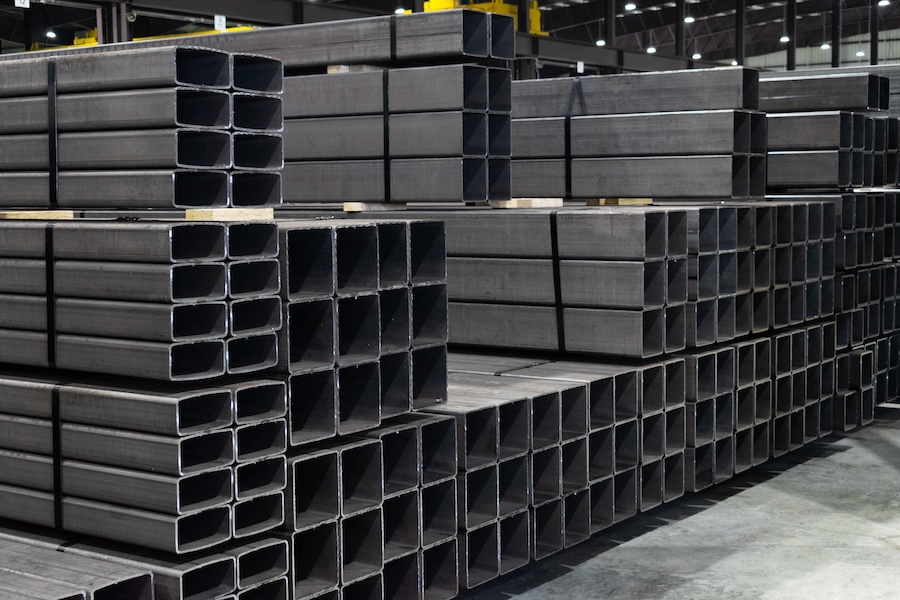
HSS sections, by contrast, are closed tubular shapes. Their geometry gives them strong torsional resistance and more uniform performance under loads from multiple directions. This makes them particularly efficient for columns, bracing, truss members, and frames where loads are not strictly unidirectional. HSS also tend to have less exposed surface area, which can reduce painting or fireproofing costs in some applications.
The two shapes are not interchangeable in every situation, but they are often compared during value engineering or when material availability becomes a constraint.
When HSS Becomes Worth Evaluating
HSS is most commonly considered when:
- Lead times for the required WF sizes are longer than the project can accommodate.
- The member is primarily in compression or subject to multi-directional or torsional loads.
- Reducing overall steel weight or simplifying certain connection details is desirable.
- A cleaner appearance is beneficial (even in industrial or marine settings).
In many cases, engineers can substitute HSS for WF columns or braces with relatively modest adjustments to the design. Beams carrying heavy unidirectional loads, however, often remain more efficient in WF.
Cost Comparison: Material, Fabrication, and Installed Cost
Cost is one of the first questions that arises when considering a switch from WF to HSS. On a per-ton basis, HSS is typically more expensive than hot-rolled wide flange sections. However, the total installed cost picture is often more nuanced.
Because HSS can be more efficient in compression and bracing applications, the total steel weight required is sometimes lower. Reduced surface area can also lower painting and fireproofing costs. On the other hand, HSS connections can require more labor or specialized detailing—which may increase fabrication and erection expenses depending on the fabricator’s experience with tubular sections.
The most accurate way to evaluate cost is to run a side-by-side comparison on the specific members being considered, including fabrication and erection input from the contractor or fabricator. In many projects the installed cost of HSS ends up competitive with WF—in others the difference is significant enough to influence the decision. Early evaluation during design or value engineering helps avoid surprises later.

Connection and Fabrication Considerations
One of the biggest practical differences lies in connections. HSS-to-HSS and HSS-to-WF joints require different detailing than traditional WF-to-WF connections. Moment connections, in particular, need careful attention to load transfer and stiffening.
Fortunately, the industry has developed clearer guidance and standard details for these transitions in recent years. Fabricators experienced with tubular sections can usually handle the work efficiently once the detailing is complete. Early involvement of the fabricator during the substitution review often helps identify the most economical approach.
Relevance to Marine and Heavy Civil Work
While HSS is widely used in building construction, it also appears in heavier applications:
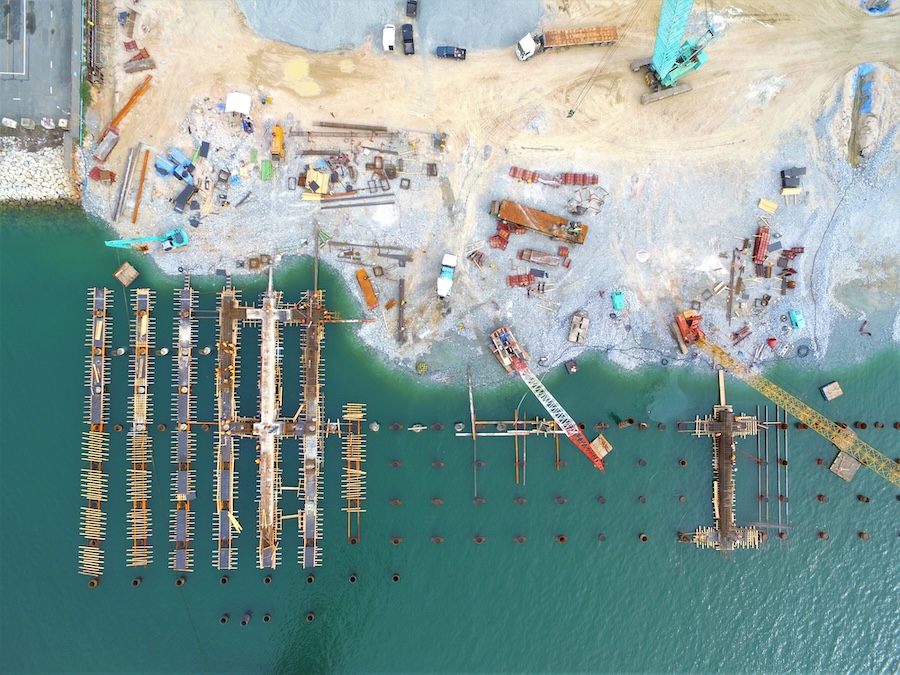
- Bracing and support frames for sheet pile walls and cofferdams
- Equipment platforms, trestles, and temporary works around piling operations
- Structural elements in docks, piers, and waterfront facilities
- Hybrid systems that combine HSS with pipe piles or sheet piling
In marine environments, the closed shape of HSS can offer advantages in corrosion protection planning and resistance to multi-axis forces. For foundation support structures and temporary works, the ability to source material more quickly can directly affect the critical path.
Large-diameter steel pipe piles remain the primary choice for most deep foundation and marine load-bearing applications, but HSS provides an additional tubular option when square or rectangular geometry better fits the design or when availability favors it.
When NOT to Substitute HSS for WF
While HSS can be a strong alternative in many situations, there are cases where staying with wide flange sections is the better choice:
- Long-span beams carrying heavy unidirectional loads, where WF shapes are generally more efficient.
- Projects where the design team or fabricator has limited recent experience with HSS connections and the schedule does not allow time for additional detailing or learning curves.
- Situations where connection simplicity and speed of erection are higher priorities than torsional performance or weight reduction.
- Applications where the absolute lowest material cost per ton is the dominant factor and lead times are acceptable.
A thoughtful substitution review should always include a clear-eyed assessment of when the switch does not make sense.
Final Thoughts
HSS is not a universal replacement for wide flange sections, nor should it be forced into designs where WF is clearly superior. However, when lead times for large WF members threaten to delay a project—running a focused comparison on the critical columns, braces, or secondary members is low-risk due diligence.
Having both shapes in the material selection toolkit gives project teams more flexibility to maintain schedules without compromising structural performance. For contractors and engineers working in piling, marine construction, and heavy civil work—that flexibility can be valuable when steel availability becomes the limiting factor.
