
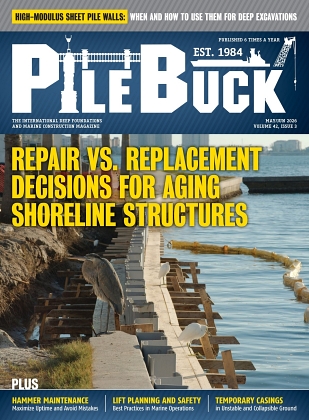

High-Modulus Sheet Pile Walls: When and How to Use Them for Deep Excavations
View the complete article here.
Standard sheet pile walls have long been a reliable and versatile solution for retaining soil and water on a wide range of construction projects. That being said—modern construction increasingly demands deeper excavations, taller walls, tighter deflection criteria, and work in challenging soil conditions. In these situations, many contractors and engineers are turning to high-modulus sheet pile systems for superior performance.
This article draws exclusively from the engineering principles and practical recommendations presented in Sheet Pile Design by Pile Buck, the definitive manual on sheet piling systems. Recognized as the leading reference in the field, this comprehensive guide served as the sole source for every recommendation in the article—delivering clear, field-proven guidance to help engineers, contractors, and project managers make informed decisions on demanding sheet pile projects.
What Are High-Modulus Sheet Pile Walls?
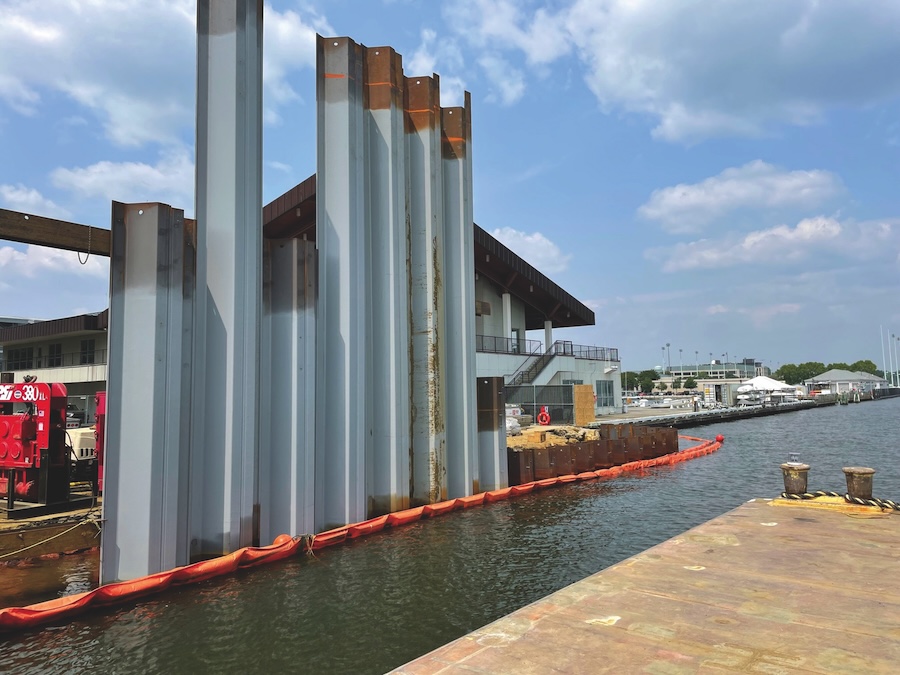
High-modulus sheet pile walls are retaining systems engineered to deliver significantly greater bending stiffness and load-carrying capacity than traditional Z- or U-shaped sheet piles used alone. The increased stiffness comes primarily from a much higher section modulus—which is achieved through optimized pile geometry or, more commonly, through combined “combi-wall” construction.
In a combi-wall system, heavy “king piles”—typically large H-beams, pipe piles, or high-capacity steel sections—are installed at regular intervals. Standard sheet piles then serve as infill panels between the king piles, connected by specialized interlock connectors. This hybrid design places the strongest elements where bending moments are highest while still providing a continuous, watertight wall.
When High-Modulus Walls Are an Ideal Option
Contractors should consider high-modulus systems whenever a project involves deep excavations, high lateral earth pressures, poor or variable soil conditions, or strict limits on wall deflection.
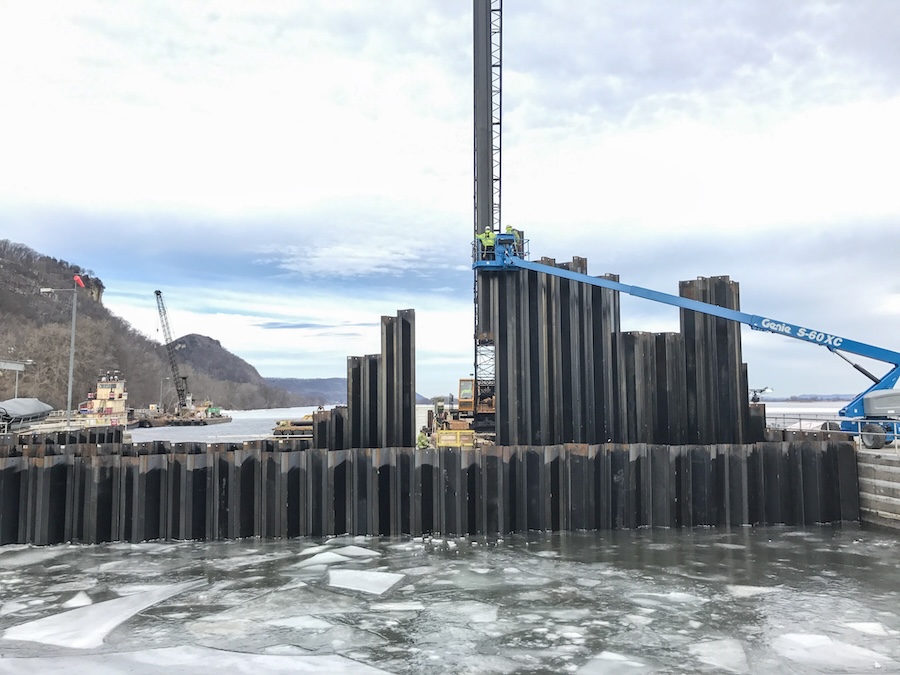
Typical applications include urban excavations near existing structures, marine waterfront projects with deep dredge lines, bridge pier cofferdams, and any situation where excessive movement could damage adjacent buildings, utilities, or infrastructure. In many cases, high-modulus walls can eliminate or substantially reduce the need for internal bracing, walers, and tiebacks—simplifying the site and accelerating the schedule.
Key Design Advantages
The primary benefit of high-modulus walls is their exceptional stiffness. This results in far less deflection under load compared to conventional sheet pile walls of similar depth or loading.
The higher section modulus allows the wall to resist larger bending moments without requiring deeper embedment or extensive additional support. Contractors often see material savings, reduced driving time, and lower overall bracing costs. The system also performs more reliably in weak or variable soils where standard piles might need longer lengths or heavier bracing to meet design requirements.
Installation Considerations
Installing high-modulus walls follows many of the same proven techniques as standard sheet piling, but with extra attention to sequence and alignment.
King piles are typically driven first at the designed spacing using vibratory hammers, hydraulic press-in equipment, or impact hammers depending on soil conditions. Infill sheet piles are then threaded and driven between them. Precise guidance systems and experienced operators are essential to maintain verticality and ensure proper interlock engagement throughout the wall.
Best Practices for Success
Experienced contractors emphasize thorough pre-construction planning, including detailed geotechnical analysis and careful selection of the king pile and infill sheet pile combination to match the specific loads and soil profile.
Maintaining tight driving tolerances, verifying interlock integrity, and incorporating appropriate corrosion protection early in the design are critical for long-term performance. In marine or wet environments, contractors also plan for potential driving aids or jetting to achieve the required penetration without damaging the interlocks.
Achieving Better Results on Demanding Projects
High-modulus sheet pile walls give contractors a powerful option for tackling today’s more challenging deep excavation and marine construction projects.
By delivering significant strength and stiffness—these systems help reduce construction time, minimize bracing requirements, and produce walls that perform reliably even under the most demanding conditions. Contractors who become proficient with high-modulus selection and installation gain a real competitive edge on complex jobsites.
View the complete article here.
What are the advantages of high-modulus sheet pile walls?
High-modulus sheet pile walls provide greater strength and stiffness, reducing wall deflection and minimizing the need for additional bracing.
When should high-modulus sheet pile walls be used?
High-modulus sheet pile walls are ideal for deep excavations, marine construction, and projects with high lateral loads or strict movement limitations.
