


How O-Pile® Improves Bending Moment Capacity in Pipe Sheet Pile Walls
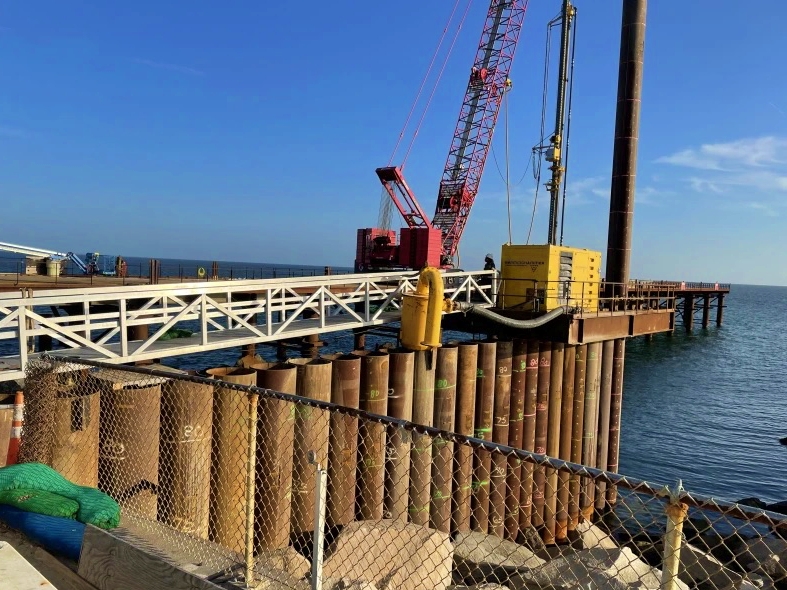
A certified O-Pile system is a contiguous pipe sheet pile system featuring an extra-strong “ball-and-socket” type connection that can be welded along the full length of the pipe to create a continuous, watertight sheet pile wall that can be either temporary or permanent. (As of 2026, physical testing carried out on actual samples has shown interlocking results of the O-Pile ball-and-socket connection at over 27 kips/in.)
The O-Pile DTH (down-the-hole) system can hammer through obstructions using a guided template placed above the waterline or ground. The O-Pile system can be assembled off-site or on site for greater flexibility. This means that if a required section is, say, 60 feet or greater and cannot be easily transported, on-site assembly of the O-Pile can save time and help avoid delays inherently associated with transporting oversized items. On the other hand, if there is limited job site space, the O-Pile sections can be prefabricated near or far from the site depending on project conditions and needs. Often, steel mills and production plants do not have free space available for complex fabrication on site, so sections previously had to be shipped multiple times before reaching the actual job site.
In pipe sheet pile wall design, bending moment capacity plays a major role in determining how efficiently a system can resist load. O-Pile® is built around a pipe-based geometry with welded connectors that form a continuous wall, and one of its key advantages is how that geometry works together with steel grade selection and section properties to produce a high strength-to-weight ratio.
Understanding Bending Moment Capacity in O-Pile®
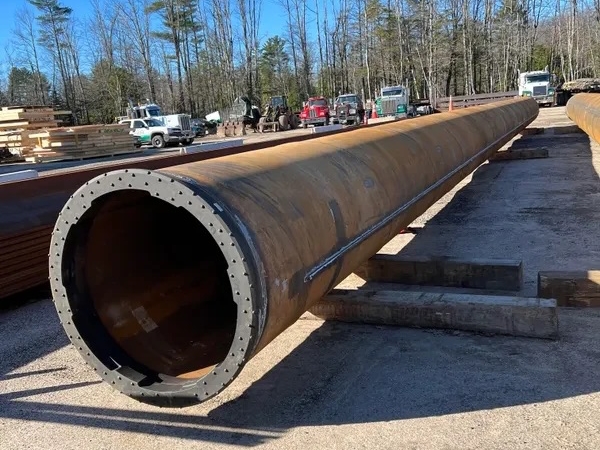
O-Pile® systems are presented as having a higher strength-to-weight ratio than other combined sheet pile walls because they can be made using high strength coiled steel. That matters because the system is available in grades such as X110, which provides 110,000 yield strength, while hot rolled sheet piling is described as being limited to less than 65,000 and typically using steel with a yield strength of 50,000. According to the technical description, choosing stronger steel grades has a direct impact on the structural resistance of the wall.
This is one of the main reasons the system is positioned as a high performance solution. When higher strength steel is used, engineers may be able to reduce pile diameter and wall thickness while still maintaining the required resistance. That creates a more efficient section, not simply a heavier one.
Why Strength-to-Weight Ratio Matters
A stronger wall is not always the one that uses the most steel. In many retaining and barrier applications, the goal is to achieve the required bending resistance as efficiently as possible. O-Pile® emphasizes this by combining the geometry of pipe sections with higher strength steel options, allowing the system to deliver strong section modulus values and resist high bending moments more effectively. The system overview specifically states that this load-bearing geometry is one of the reasons engineers and designers often prefer it over other sheet pile or concrete options.
The same overview also notes that O-Pile® systems are stronger, more cost-effective, and easier to install than combined wall systems such as OZ and IZ. In the context of bending performance, that claim is tied to both section efficiency and the way the wall is configured. The system overview also highlights quality assurance through the Certified O-Pile® system, which includes test reports with an official seal confirming authenticity at the time of purchase and proper functionality, along with an international product warranty covering load-bearing capacity, corrosion resistance, and connector interlocking performance.
The Role of Section Geometry
Geometry is at the center of the O-Pile® concept. That pipe-based shape is what gives the system its load-bearing characteristics and contributes to its section modulus performance. The product literature points to this superior load-bearing geometry as a major reason the system performs well under high bending moments.
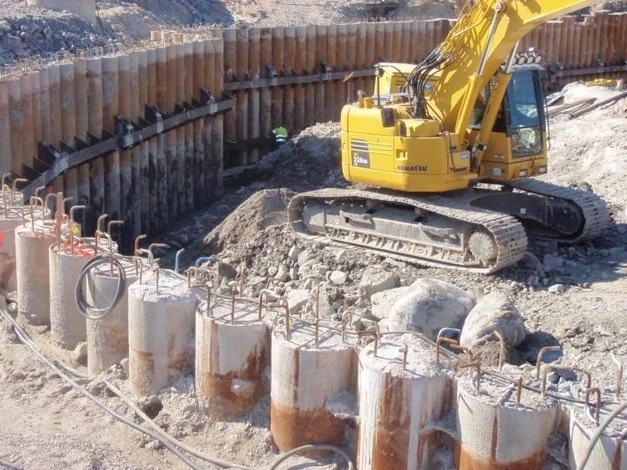
The geometry also supports durability. Because the interior of the pipe can be capped or filled with concrete, only the exterior face remains exposed to corrosive elements. That can reduce the amount of surface area requiring corrosion protection, which is described as a potential cost-saving advantage. While this is a durability benefit first, it also supports the long-term structural role of the wall by helping preserve the section where it matters most.
Steel Grade Selection and Structural Resistance
The technical description makes clear that steel grade selection has a marked impact on structural resistance. O-Pile® can be produced in higher grades such as X70 or X110, and that flexibility gives designers another way to tune the wall to project demands. Instead of relying only on larger or heavier sections, the system can use stronger material to achieve the required performance.
That design flexibility becomes even more meaningful when paired with the system’s adjustable pipe thickness. O-Pile® allows the thickness of the pipe to vary so that more steel can be placed where durability demands are highest, such as in the zone of high attack, while the remainder of the pile is sized to meet load-bearing needs. In a 100-foot pipe example, the upper 10 feet can be increased in thickness while the lower 90 feet can be reduced accordingly. This approach is presented as a way to target both design life and efficient steel use.
Connection Strength Supports Wall Performance
Bending performance does not depend only on the pipe section itself. Connection behavior matters too. O-Pile® an extra strong ball and socket connection the has tested to 27 kips/in in recent 2026 psychical testing in Boston, Ma. The technical comparison says this is more than 6 times stronger than a typical Larssen hot rolled sheet pile interlock of the AZ, NZ or ZZ sections.
The product literature also states that O-Pile® systems do not account for the load capacity of the joining connectors, allowing them to be calculated separately for strength with full thickness considered sacrificial. That distinction matters because it shows the wall’s structural concept is not based on overstating the contribution of the connection. Instead, the connection is presented as exceptionally robust while remaining separate in the way strength is considered.
A Wide Range of Section Possibilities
Another reason O-Pile® is suited to bending-driven design is the variety of available section configurations. The technical tables show many combinations of diameter, thickness, section modulus, panel weight, and bending moment by grade. That range allows the wall to be configured around project-specific strength and stiffness demands instead of forcing a one-size-fits-all approach.
The broader system description also notes that pipe manufacturing facilities are widespread globally, unlike the more limited number of factories producing Z- and U-shaped sheet piles. As a result, locally produced pipe can often be sourced to create the system. While that is largely a supply and cost advantage, it also supports broader design flexibility because the wall is not restricted to a narrow set of rolled sections.
Section Performance That Can Be Tuned to the Job
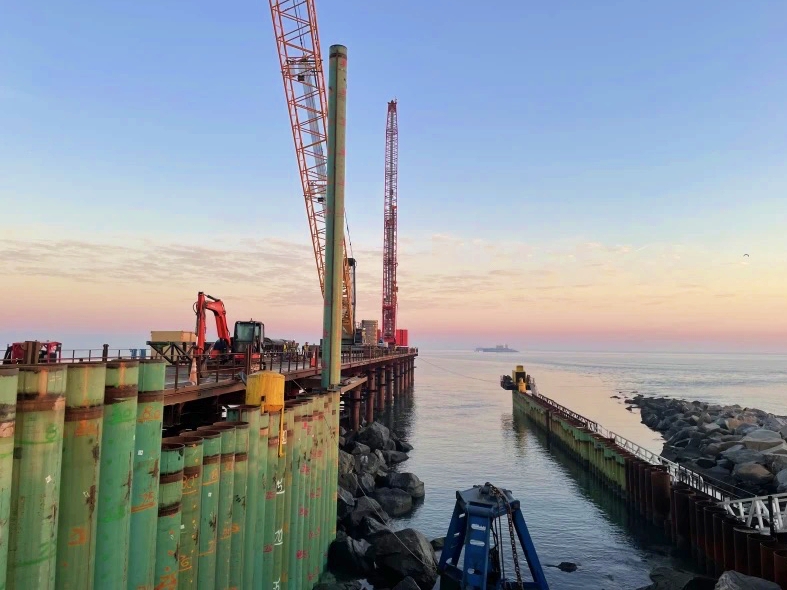
O-Pile® is presented as a system that separates and refines key design variables. The literature specifically says it allows users to dial in corrosion needs and bending moment needs separately. That is a meaningful distinction in wall design, where structural performance and durability often compete for control of section size and material use. By using pipe geometry, higher strength steel grades, adjustable thickness, and a wide range of configurations, the system is positioned as a flexible solution for demanding wall applications.
O-Pile® improves bending moment capacity by combining efficient pipe geometry, high strength steel options, strong interlocking connectors, and a wide range of section choices. Rather than depending on added weight alone, the system is designed to increase structural resistance through section efficiency and material selection. For projects where bending performance is a primary concern, that makes O-Pile® a compelling option in pipe sheet pile wall construction.
What makes O-Pile® walls watertight?
The welded ball-and-socket connectors create a continuous, fully sealed sheet pile wall.
Why does O-Pile® have a high strength-to-weight ratio?
It uses efficient pipe geometry and high-strength steel grades to deliver strong performance with less material.
