






20 Essential Tips for Safe and Efficient Diesel Pile Hammer Operation
View the complete article here.
Diesel hammers remain one of the most reliable and powerful tools in deep foundations and marine construction. They deliver high striking energy through a straightforward thermodynamic cycle while operating independently of external power sources. Getting the best performance, however, requires disciplined adherence to proven procedures.
The following 20 tips emphasize key best practices drawn from detailed manufacturer operator guidance, with particular reference to the comprehensive resources provided by American Piledriving Equipment (APE). These recommendations apply broadly to diesel hammer operations across the industry. Always consult your specific model’s manual, complete manufacturer-approved training, and follow all applicable site safety regulations and OSHA requirements.
Safety & Crew Readiness
- Only trained and authorized personnel may operate or maintain the hammer. Operators must fully understand the equipment’s behavior, controls, and emergency procedures before any work begins. Untrained use is a leading cause of incidents.
- Establish and enforce strict exclusion zones. No one should stand or work directly under the hammer while it is operating or suspended. Limit access to essential personnel only (typically the crane operator, hammer operator, and foreman in charge). Maintain safe distances from the unit being driven.
- Wear the right PPE for the conditions. Hard hats, hearing protection (critical during continuous piling), safety boots, and gloves are baseline. Add fall protection harnesses for work at height, life jackets for marine or over-water operations, and insulated gear for any electrical maintenance tasks.
- Stop work for adverse weather or poor visibility. Do not operate in strong winds, heavy rain, snow, fog, or thunderstorms. Ensure adequate lighting (at least 100 lux in work areas) for night or low-visibility shifts. Secure the site properly before leaving.
- Equip the site with appropriate fire suppression. Have at least two suitable fire extinguishers (minimum 6 kg capacity, rated for oil and electrical fires) positioned accessibly near the operator and between the operator and higher-risk areas. Know their locations and how to use them.
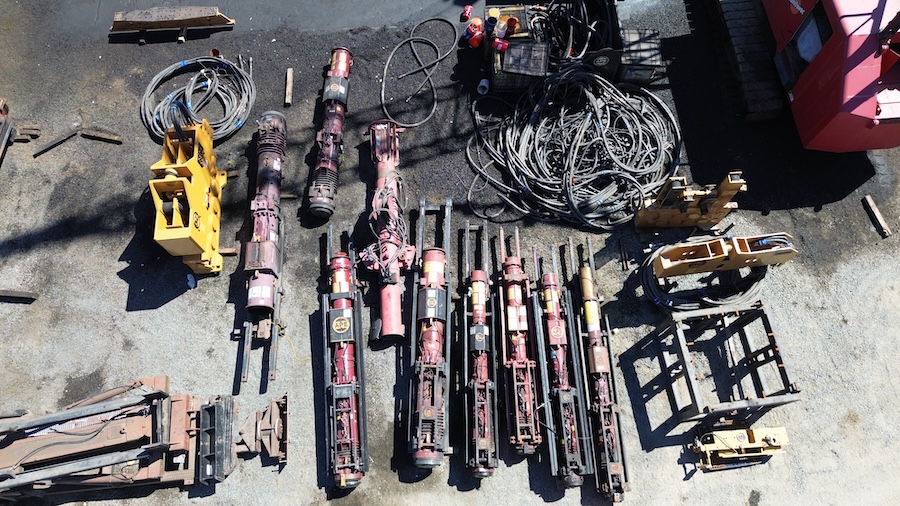
Pre-Operation & Setup
- Perform a thorough pre-use inspection every time. Check leads, guide clamps and gibs, wire ropes, shackles, pile helmet, cushions, and all connections. Replace any worn, buckled, or damaged components before starting. Never use a seriously compromised lead.
- Verify perfect alignment before every drive. The centerline of the pile must match the centerline of the hammer exactly, with the same line of travel. Eccentric driving reduces efficiency, increases wear, and raises the risk of damage or accidents.
- Confirm fuel and lubricant quality and system cleanliness. Use only the grades and types specified by the manufacturer. Contaminated or incorrect fluids are a common source of poor performance and premature wear. Bleed pumps and lines properly.
- Ensure the hammer is properly supported before starting. A diesel hammer must never be started unless it is resting on a pile or a specially prepared test stand. Never start a hammer that is disconnected from the lead or resting on a skid or unstable surface.
- Inspect and test the tripping device and safety locks. Confirm the tripping mechanism functions correctly and that all transport/locking devices have been fully removed before operation.
During Operation & Piling
- Understand the four-stage operating cycle. Most modern diesel hammers follow this sequence: (1) fuel injection and compression as the piston falls; (2) impact on the anvil/block followed by combustion/explosion that drives the pile and returns the piston; (3) exhaust; and (4) scavenging. Consistent, powerful blows depend on proper fuel metering and clean combustion.
- Monitor penetration rates closely and respond appropriately. If the pile advances less than the thresholds outlined in the manual (commonly referenced around 50 mm per 10 blows, with lower values such as 20–30 mm on certain larger models), investigate or consider a higher-energy hammer. Slow or stalled penetration accelerates wear and can indicate problems. Shut down immediately if progress nearly stops or if damage is suspected.
- Watch for excessive rebound and adjust or stop as needed. If the piston rebounds too high and risks striking the arrester groove, regulate fuel or shut down promptly to avoid damage.
- Keep guides, clamps, and lubrication in top condition throughout the job. Frequent checks are essential. Replace worn guide clamps and gibs immediately—failure here can allow the hammer to jump out of the leads. Maintain proper lubrication at all times.
- Respect batter limits and never exceed manufacturer recommendations. Operating beyond approved batter angles for your specific hammer model creates serious safety and equipment risks.
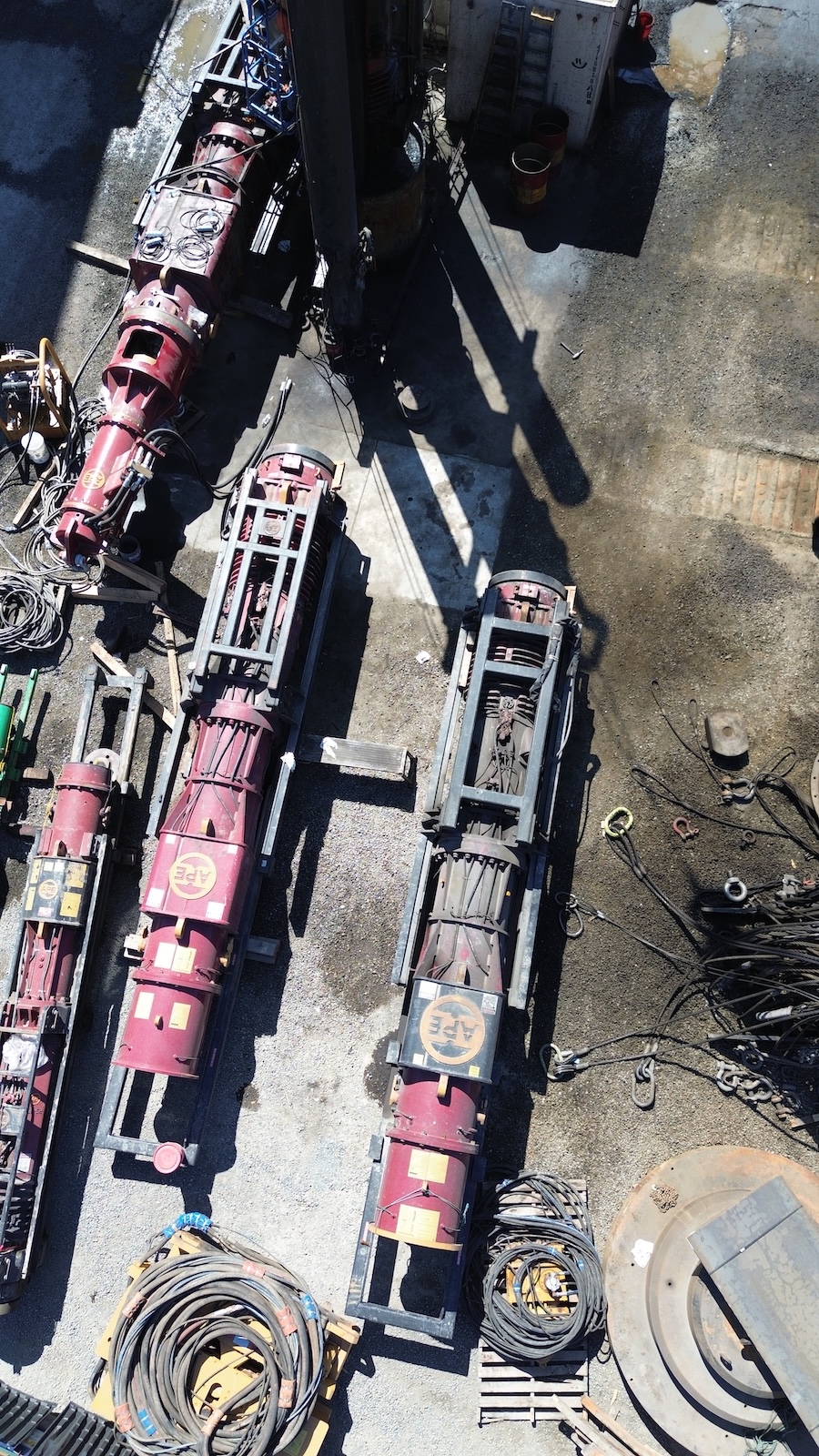
Maintenance, Care & Longevity
- Follow a disciplined inspection and maintenance schedule. This includes daily visual checks plus periodic (monthly/annual) detailed examinations of connections (torque to specification), pumps, filters, catch groove, piston rings, damping rings, and the tripping device. Address issues before they become failures.
- Use only manufacturer-designated wearing parts, lubricants, and fuel. Substituting non-approved components or fluids can void warranties, reduce performance, and create safety hazards.
- Clean the combustion chamber properly when required. When cleaning, maintain a safe distance and wear appropriate eye protection—the mixture expelled can be under pressure and contains fuel, exhaust gases, and soot.
Shutdown, Transport, Storage & Close-Out
- Follow proper shutdown and securing procedures at the end of each shift or job. Lower the hammer onto solid support (crosstie or driven pile), close the fuel supply—install all covers, exhaust caps, and locking/securing clamps—and place controls in the stop position. This prevents accidental movement or damage.
- Prepare the hammer correctly for transport, long-term storage, or idle periods. Install all transport safety devices (locking screws for the piston, impact block securing, protective caps, rails, exhaust covers, and transport angles). For extended storage: drain fuel, lube, and ether tanks in a well-ventilated area (no smoking or open flames), clean thoroughly, apply rust preventative to key surfaces, and store in a dry, covered location with minimal temperature fluctuation. Inspect all lifting cables, slings, and shackles before every lift—never walk under suspended loads.
Final Thoughts
Diesel hammer operation rewards attention to detail. The difference between a productive day and a costly incident or breakdown often comes down to consistent execution of these fundamentals: proper training, rigorous inspection, precise alignment, real-time monitoring, and disciplined maintenance.
These 20 tips reflect core principles emphasized across leading manufacturer documentation, including the detailed operation instructions from American Piledriving Equipment (APE). APE has long been recognized as an expert in piledriving technology, and their manuals provide model-specific depth that every contractor should have on hand.
Safety note: These recommendations are for general guidance. Always prioritize the specific instructions in your hammer’s operator manual, follow site-specific safety plans, and comply with all local, state, and federal regulations.
