

How Engineers Choose the Right Pile Hammer for Different Soil Conditions
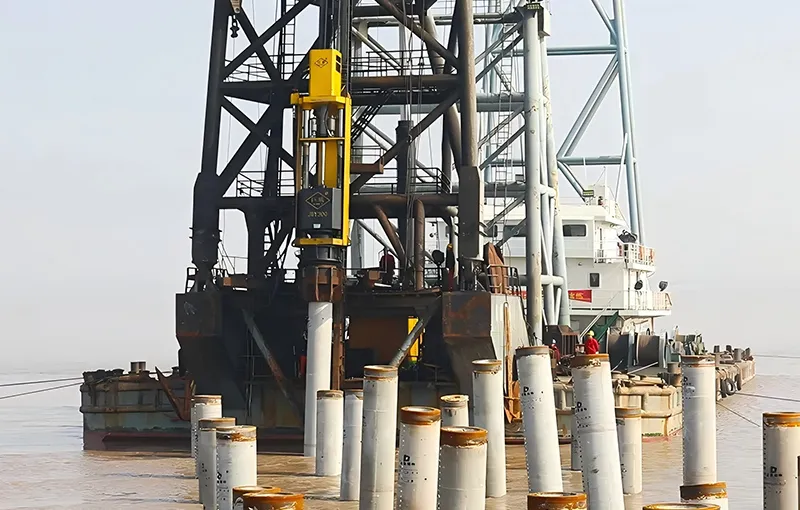
Pile driving is one of the most widely used techniques for installing deep foundations in bridges, marine structures, buildings, and energy infrastructure. Engineers must carefully select the correct hammer for each project because the driving equipment directly affects installation efficiency, pile integrity, and the final load capacity of the foundation. The interaction between the hammer, pile, and surrounding soil determines how energy is transferred during driving and how quickly a pile can reach its design depth.
Selecting the right equipment requires understanding both geotechnical conditions and the mechanics of impact driving. Engineers often evaluate hammer energy, pile type, soil resistance, and project environment before choosing suitable pile driving equipment such as a diesel pile hammer. Proper selection improves productivity, reduces the risk of pile damage, and ensures the installed foundation meets design specifications.
Why Hammer Selection Matters in Pile Driving
Pile driving hammers transfer kinetic energy to a pile so that it penetrates the ground until it reaches a target depth or bearing capacity. The hammer’s ram weight, drop height, and operating efficiency influence how much energy is delivered during each blow. If the hammer is too small, piles may refuse early and fail to reach design depth. If the hammer is too large, excessive stresses can damage the pile head or cause structural cracking in concrete piles.
Engineers must balance installation efficiency and structural safety when selecting equipment. They analyze expected soil resistance and calculate the required hammer energy to achieve the necessary penetration rate while preventing overstressing of the pile. Hammer selection is therefore a key component of driveability analysis and foundation design.
Understanding Soil Conditions Before Choosing Equipment
Soil behavior has a major influence on how piles respond to driving. Different soils absorb and resist hammer energy in different ways, which affects penetration rates and blow counts during installation. Geotechnical investigations, including borehole sampling and standard penetration tests, help engineers determine soil layers and select appropriate driving equipment.
Soft Clay and Loose Sand
Soft clays and loose sands generally offer lower resistance to penetration compared with dense soils. Piles can typically be driven relatively easily through these layers, but engineers still need to control driving stresses to avoid excessive settlement or pile misalignment. Impact hammers with moderate energy levels are often suitable for these conditions because they allow steady penetration without overstressing the pile.
Loose granular soils can also densify during pile driving, which increases resistance as installation progresses. Engineers must consider this behavior when selecting hammer energy to maintain efficient driving rates throughout the installation process.
Dense Sand and Gravel
Dense sands and gravel layers present higher resistance to pile penetration. The soil particles are tightly packed and can significantly reduce penetration per blow. In these conditions, higher hammer energy is typically required to overcome soil resistance and maintain reasonable driving rates.
Engineers also pay attention to the potential for pile refusal when piles encounter dense layers. Driveability analysis and field monitoring help ensure that the hammer delivers enough energy to advance the pile without damaging the structure or the equipment.
Hard Soil and Weathered Rock
Hard soils, cemented layers, or weathered rock can create some of the most challenging conditions for pile driving. Penetration resistance increases significantly in these layers, and blow counts can rise sharply if the hammer energy is insufficient.
In these cases engineers may select larger impact hammers or adjust hammer operating parameters to increase delivered energy. The goal is to provide enough force to advance the pile while avoiding excessive stress that could damage the pile or driving system.
Impact Energy and Blow Count Requirements
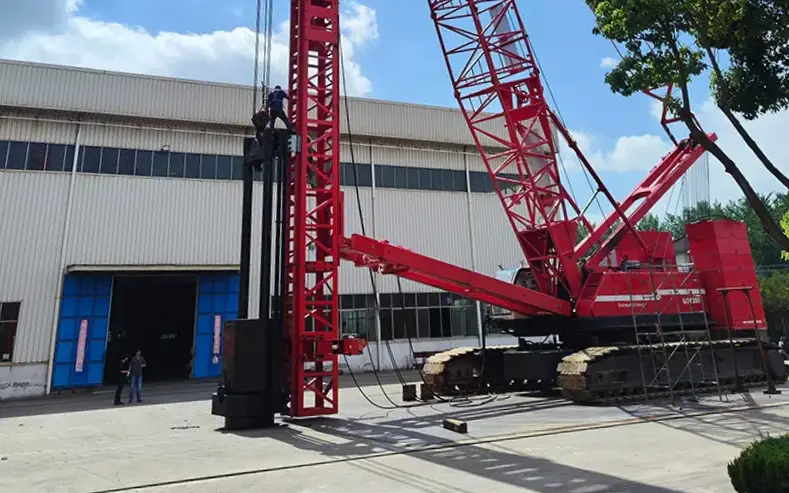
Impact energy is one of the most important factors in hammer selection. Each blow delivered by a pile hammer transfers a certain amount of kinetic energy into the pile, which helps overcome soil resistance and advance the pile into the ground. Engineers estimate the required hammer energy using soil data, pile geometry, and predicted bearing capacity.
Blow count measurements during installation provide real time feedback on driving conditions. A high number of blows per foot of penetration indicates increasing soil resistance. Engineers compare these values with predicted blow counts from driveability models to verify that the pile is reaching the desired capacity.
Accurate energy calculations help contractors avoid delays and equipment changes during construction. Proper hammer selection allows piles to be installed efficiently while ensuring the foundation meets structural design requirements.
Diesel vs Hydraulic Hammers in Different Ground Conditions
Two of the most common hammer technologies used in pile driving are diesel hammers and hydraulic impact hammers. Both systems generate repeated impacts that drive piles into the ground, but they operate differently and may be selected based on project requirements.
Diesel hammers use internal combustion to lift and accelerate the ram before each blow. They are widely used in foundation construction because of their reliability and ability to deliver high impact energy. Diesel hammers are commonly applied in bridge construction, marine projects, and large infrastructure developments where strong driving force is required.
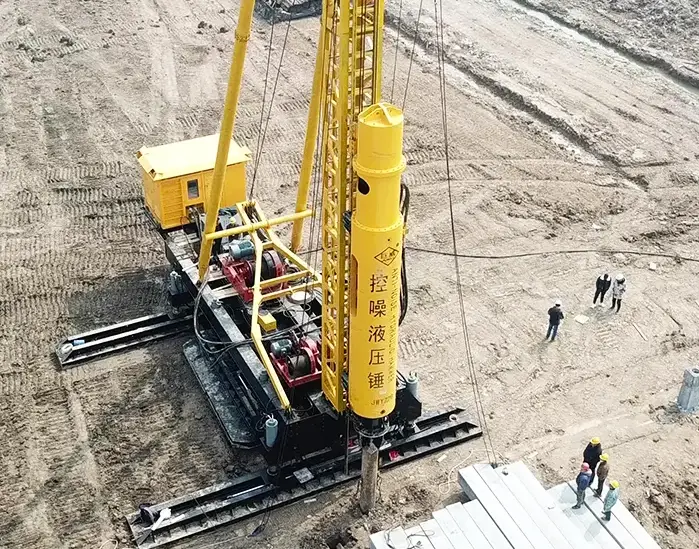
Hydraulic systems operate using controlled hydraulic pressure to lift and drop the ram. Modern hydraulic impact hammers provide adjustable energy output and precise control over hammer performance. This level of control can be beneficial in sensitive environments where noise, vibration, or pile stress must be carefully managed.
Engineers select between these systems by evaluating soil resistance, environmental conditions, and required driving energy. Both technologies remain essential tools in deep foundation construction.
Matching Hammer Size to Pile Type
Pile type also plays a critical role in hammer selection. Steel pipe piles, precast concrete piles, timber piles, and sheet piles all respond differently to impact energy during installation. Engineers must ensure that the hammer delivers enough energy to advance the pile while avoiding structural damage.
Concrete piles are particularly sensitive to excessive stress because they can crack if impact forces are too high. Engineers therefore consider hammer to pile weight ratios and use cushioning systems to distribute impact energy safely. Steel piles are generally more tolerant of high stresses but still require careful control of hammer energy to prevent deformation or structural damage.
Matching hammer capacity with pile characteristics ensures safe installation and reliable foundation performance.
Equipment Considerations for Marine and Offshore Projects
Marine and offshore construction introduces additional factors that influence hammer selection. Projects such as docks, bridges, offshore wind foundations, and port infrastructure often involve large diameter piles and challenging soil conditions beneath water.
Installation equipment must be compatible with marine cranes, barges, or specialized piling rigs. Engineers also consider factors such as water depth, wave action, and accessibility when planning pile driving operations. Reliable hammer performance becomes critical in offshore environments where equipment changes can cause significant delays.
Impact hammers with sufficient energy and durability are typically required to drive large steel piles used in marine foundations. Proper equipment selection helps ensure safe installation while maintaining productivity in demanding construction conditions.
What factors influence the selection of a pile driving hammer?
Hammer choice depends on soil conditions, pile type, required energy, and project environment
How do soil conditions affect pile driving performance?
Loose soils allow easier penetration while dense or hard soils require higher hammer energy and increase resistance
