







Modern Marine Terminals: Integrated Waterfront Construction
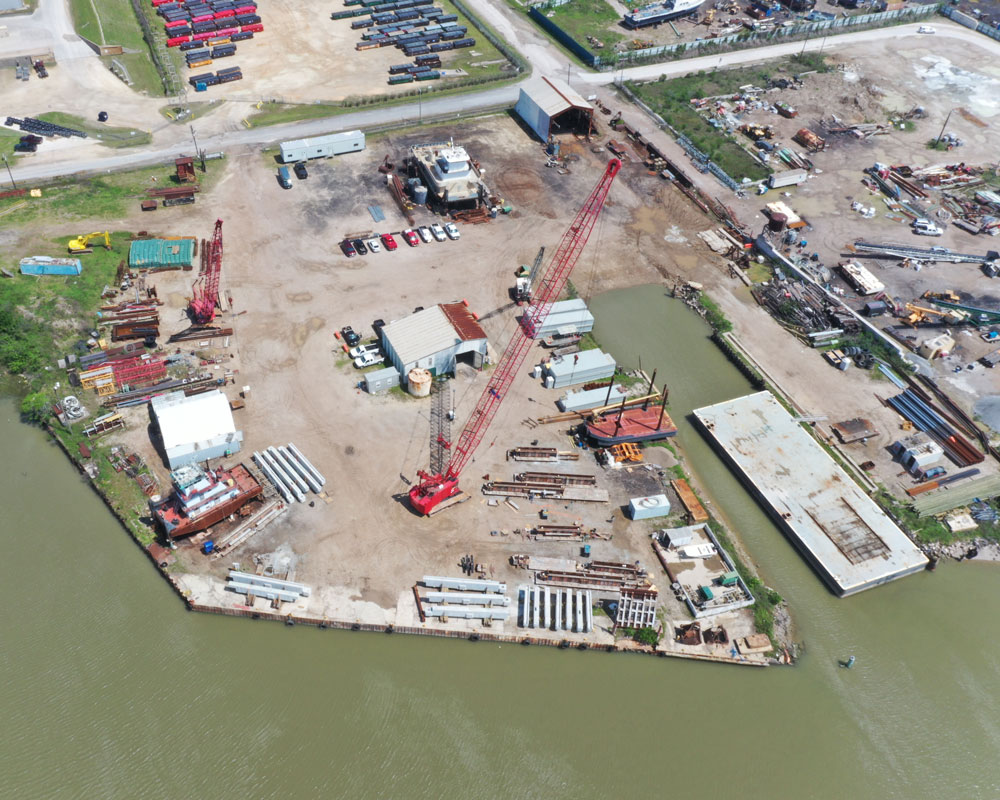
Modern marine terminals are complex waterfront structures where foundation systems, structural steel, berthing equipment, and marine construction methods must function together. A wharf or terminal may need to support cargo-handling equipment and heavy operational loads while also resisting vessel berthing forces, mooring loads, waves, currents, wind, and other environmental effects. Pile driving establishes the foundation for many of these structures, while fabricated steel provides connections, bracing, supports, and specialized components throughout the facility. Fender systems form another critical part of the structure by absorbing berthing energy and controlling the forces transferred from a vessel into the berth. Coordinating these systems during design and construction is essential to developing a marine terminal that can meet its structural and operational requirements.
Pile Driving for Marine Terminal Foundations
Driven piles are widely used to support piers, wharves, loading platforms, mooring dolphins, breasting dolphins, fender systems, and other waterfront structures. The foundation must transfer vertical loads into suitable soil while also providing resistance to horizontal and inclined forces generated by marine operations. Unlike many conventional building foundations, marine piles frequently operate in an environment where lateral loading is an important part of the design.
The appropriate pile system depends on the geotechnical conditions, structural loading, water depth, construction access, environmental requirements, and intended service of the terminal. Steel pipe piles and prestressed concrete piles are common in marine structures, while H-piles may be appropriate for certain foundation applications. Steel sheet piling is frequently used for retaining structures, bulkheads, cofferdams, and quay-wall construction rather than as a conventional load-bearing foundation pile.
Selecting Piles for Structural Demands
Pile selection begins with understanding how the terminal will be used and how loads will reach the foundation. A cargo wharf supporting cranes and heavy vehicles has different structural demands from a small service pier. A breasting dolphin receiving direct loads from a fender system must accommodate substantial lateral forces, while a mooring dolphin is designed around loads transmitted through mooring lines.
Geotechnical conditions are equally important. Piles develop resistance through combinations of shaft resistance and end bearing, depending on pile type and subsurface conditions. Required lengths can vary significantly across a waterfront site where soil layers are not uniform. Engineers must also consider drivability because a pile that satisfies the final structural design must still be capable of reaching the specified depth or resistance without unacceptable damage during installation.
Impact, Vibratory and Specialized Installation
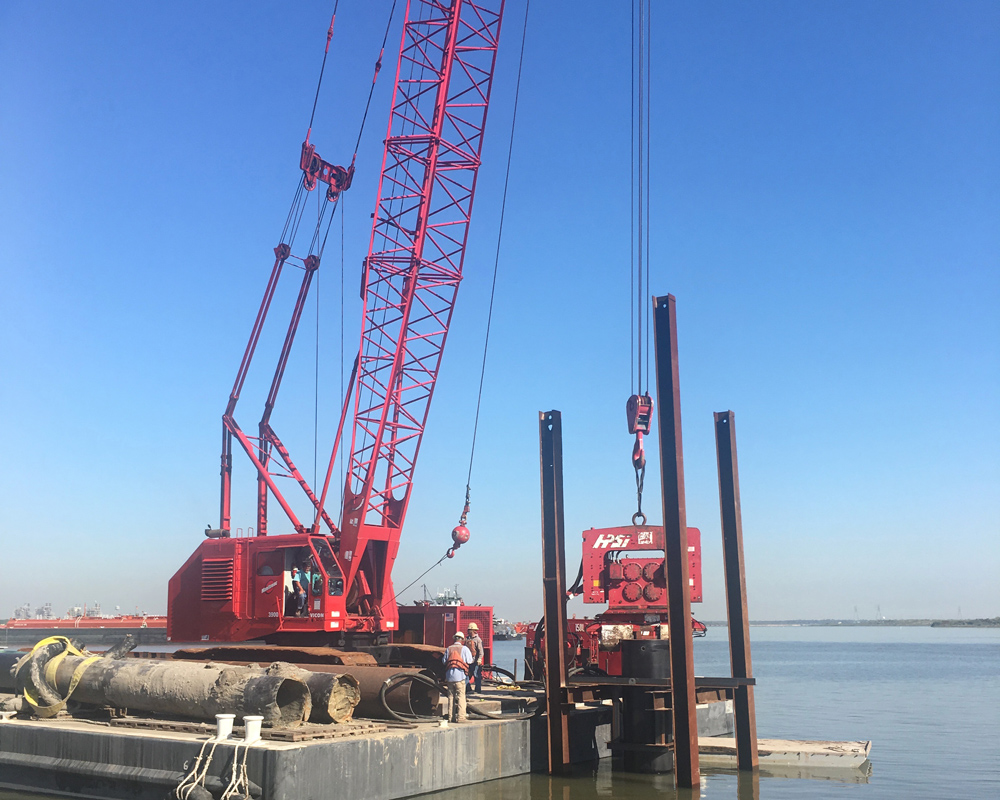
Marine pile driving commonly involves impact or vibratory equipment. Vibratory hammers are frequently used for installing and extracting sheet piles and may be used with other steel piling where site conditions permit. Impact hammers deliver repeated blows to advance the pile and are commonly used when piles must be driven to specified criteria associated with the required foundation capacity.
Installation methods may also be influenced by surrounding facilities. Projects near existing structures, utilities, occupied buildings, or other vibration-sensitive features can require additional controls. Silent pile pressing is available for some applications where reducing vibration is particularly important. Contractors may also use templates to control pile position, alignment, spacing, and inclination during marine installation. A marine construction contractor experienced in impact driving, vibratory driving, templating, inclined piles, and specialized installation methods can address these requirements within the overall construction plan.
Steel Fabrication in Waterfront Construction
Structural steel is used throughout modern marine terminals, both as a primary structural material and as a means of connecting other systems. Fabricated steel can be incorporated into pile caps, framing, bracing, walkways, access platforms, equipment supports, dolphins, fender assemblies, connection plates, ladders, and other terminal components. The exact scope depends on the facility, but fabrication and field erection frequently overlap with pile installation and other marine work.
This creates a need for close coordination between engineering drawings, field measurements, fabrication tolerances, and installation procedures. Marine structures are constructed under conditions that can complicate conventional erection. Components may need to be delivered by barge, lifted from floating equipment, fitted around previously installed piles, or connected above water. Accurate fabrication reduces the amount of adjustment required during these operations.
Fabrication and Field Conditions
Dimensions shown on design drawings do not eliminate the need to account for field conditions. Driven piles can have permitted installation tolerances, and existing waterfront structures may not match original drawings exactly after years of service, repairs, or modifications. Surveying and field verification therefore become particularly important when fabricated steel must connect to existing structures or groups of driven piles.
Prefabrication can move some work away from the waterfront and into a controlled fabrication environment. Frames, brackets, assemblies, and other components can be cut, fitted, welded, and inspected before delivery to the project. The size and configuration of an assembly still have to account for transportation, lifting capacity, barge access, crane radius, and the sequence in which the structure will be erected.
Welding and Structural Repairs
Welding is another important part of marine steel construction. New structural assemblies require welding procedures and quality controls appropriate to the project specifications and applicable standards. Field welding can be more challenging because work may occur from barges, temporary platforms, or locations with restricted access.
Existing terminals create additional fabrication requirements. Corroded or damaged steel members may require repair, reinforcement, or replacement. New plates, brackets, stiffeners, frames, and other fabricated pieces may be needed to adapt existing structures for new equipment or fender systems. Repair details must account for the actual condition of the structure rather than simply reproducing the original construction.
Fender Systems and Berthing Loads
Marine fenders provide the interface between a moving vessel and a fixed berth. As a vessel approaches a wharf or dolphin, the fender absorbs part of the vessel’s berthing energy and limits the reaction force transferred to the supporting structure. Fender design is therefore directly connected to structural design. The loads do not end at the rubber fender element but continue through panels, chains, brackets, anchors, supporting steel, concrete, pile caps, and ultimately the foundation.
Fender systems vary widely according to vessel characteristics and berth requirements. Common configurations include cone, cell, arch, cylindrical, and pneumatic systems. Many fixed rubber fender systems use a frontal panel to distribute contact pressure over a larger portion of the vessel hull. Chains and other restraint components may be required depending on the system and its operating movements.
Matching Fenders to Vessel Operations
Berthing energy is a primary consideration when selecting a marine fender. Vessel displacement, approach velocity, berthing angle, berth configuration, and hydrodynamic factors can influence the amount of energy the system must accommodate. Engineers also evaluate the reaction forces produced by the selected fender because those forces are transferred back into the wharf or dolphin.
A larger fender is not automatically a better fender. The system must provide suitable energy absorption while keeping reaction forces and hull pressures within the design limits of the vessel and berth. Terminal operators may also need to accommodate a range of vessels rather than one specific ship, making vessel mix and expected operating conditions part of the selection process.
Connecting Fenders to the Structure
Fender supports illustrate why steel fabrication, structural design, and pile foundations cannot be treated as unrelated scopes. A fender panel may require chains, brackets, anchors, plates, and supporting structural members. Those connections must fit the berth geometry while transferring the design loads safely into the supporting structure.
On a pile-supported dolphin, for example, berthing force can move from the vessel through the fender assembly into the dolphin and then into its pile group. Pile arrangement and stiffness influence how the structure responds to that force. The geometry of the dolphin also determines where fender supports and fabricated connections can be installed. Coordination between these systems can reduce the need for later structural modifications.
Coordinating Piles, Steel and Fender Systems
Marine terminals are more effectively designed when engineers and contractors consider the complete load path. Vertical operating loads may travel from the deck into pile caps and foundations, while berthing loads follow a different path through fenders and supporting structural members. Mooring loads introduce another set of forces through bollards, hooks, dolphins, and related components. Each system ultimately depends on the supporting structure.
Coordination is particularly important when design changes occur. Changing the fender type can alter reaction forces and connection geometry. Adjusting pile spacing may change the layout available for structural steel or fender supports. Modifying dolphin dimensions can affect pile configuration, fender position, and vessel interface. Reviewing these relationships before fabrication and installation can help identify conflicts while they can still be addressed through engineering rather than field modification.
Constructability as Part of Coordination
A structurally sound detail must also be practical to build in a marine environment. Contractors need sufficient access for cranes, pile-driving equipment, barges, welding crews, and material handling. Fabricated components must be sized so they can be transported and lifted into position. Pile-driving templates must accommodate the required geometry while allowing installation equipment to operate effectively.
Construction sequence can be equally important. Certain steel assemblies cannot be installed until pile locations are confirmed, while other components may need to be placed before access becomes restricted by later construction. Coordination between engineering, fabrication, pile driving, and marine operations can establish a sequence that matches both the structural design and available equipment.
Terminal Rehabilitation and Modernization
Many marine terminal projects involve existing facilities rather than entirely new construction. Wharves, piers, dolphins, bulkheads, piles, and fender systems can remain in service for decades, during which components may be repaired, modified, replaced, or subjected to changing operational demands. Rehabilitation projects require engineers to determine the existing condition of the structure before selecting appropriate improvements.
Pile deterioration, concrete damage, steel corrosion, damaged connections, and worn fender components can all affect waterfront structures. Repairs may include installing supplemental piles, replacing structural steel, strengthening existing members, repairing concrete, rebuilding dolphins, or replacing fender systems. Marine construction services that include pile driving, steel fabrication and repair, over-water structural work, and fender-related construction can support this type of coordinated rehabilitation.
Evaluating New Loads on Existing Structures
Replacing an existing component does not necessarily mean the original structural assumptions remain valid. A new fender system can have different energy-absorption and reaction characteristics from the system it replaces. Changes in vessel size or terminal operations can also create loads that were not part of the original design.
For this reason, rehabilitation requires an evaluation of how new components interact with the existing structure. The remaining piles, pile caps, concrete, steel framing, and connections must have adequate capacity for the proposed configuration. Field investigation and engineering analysis provide the basis for determining whether components can remain in service, require reinforcement, or should be replaced.
Building Marine Terminals as Integrated Systems
Modern marine terminals depend on the interaction of deep foundations, structural components, berthing systems, and marine construction equipment. Driven piles provide support and lateral resistance, fabricated steel connects and reinforces key elements, and fender systems manage the energy and forces generated during vessel berthing. Each performs a different function, but all contribute to the structural behavior of the terminal.
Treating pile driving, steel fabrication, and fender installation as coordinated parts of one waterfront project allows load paths, connection geometry, installation tolerances, lifting requirements, and construction sequence to be considered together. This approach is equally relevant to new terminal construction and the rehabilitation of existing facilities. For owners, engineers, fabricators, and contractors, understanding how these systems interact is an important part of delivering marine infrastructure suited to its vessels, site conditions, and operating requirements.
