
Advanced Installation Techniques for Sheet Piling in Challenging Soil Conditions
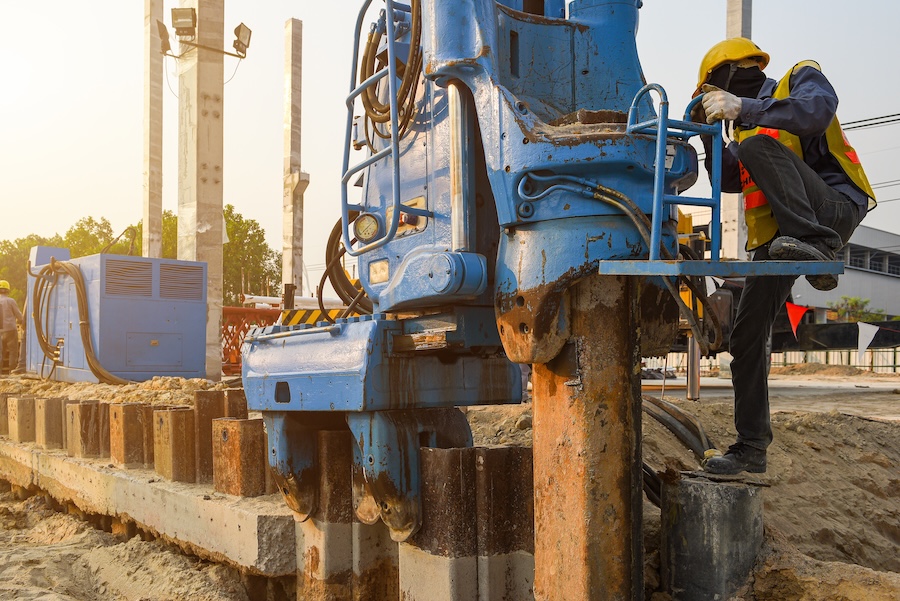
Sheet piling remains one of the fastest and most cost-effective ways to construct retaining walls, cofferdams, bulkheads, and seepage cutoffs—but when the subsurface throws dense gravels, glacial boulders, stiff over consolidated clays, or ultra-soft organics at you, conventional vibratory or impact driving can become expensive and frustrating. The contractors who consistently finish these jobs on time and on budget don’t rely on brute force alone—they deploy specialized techniques that have been refined on some of the toughest projects worldwide.
Pre-Augering and Jet-Assisted Driving
In stiff clays, dense sands, or gravelly strata, skin friction along the clutches can bring even the largest vibratory hammers to a halt. Pre-augering with a leader-guided continuous-flight auger or a purpose-built soil auger removes a controlled amount of material—typically 50 % to 70 % of the final embedment depth—creating a path for the sheet pile while leaving enough soil in place to maintain interlock friction and wall stability.
When combined with high-pressure water jetting or polymer-assisted jetting, the reduction in driving resistance can reach 60 % to 80 % in granular soils. Modern jetting systems mounted directly on the leader use automated pressure and flow controls to prevent over-excavation, which could otherwise open the interlocks and allow soil to run into the cofferdam. This combination has become standard on river and harbor projects throughout North America and Europe where glacial till or outwash deposits dominate.
Panel Driving with Template Frames
Few techniques improve accuracy and success rates in bouldery soils as dramatically as panel driving with rigid steel template frames. The process begins by setting two “king” sheets or corner piles at the ends of each panel, often with pre-drilling if necessary. Upper and lower template frames (sometimes called guide walers) are then bolted or clamped between the king piles, creating a rigid two-plane guide for every intermediate sheet.
Because each sheet is physically constrained in both the in-and-out and left-and-right directions, the pile cannot twist or walk when it encounters a cobble or boulder. Refusal rates drop by as much as 80 %, and final wall plumbness routinely stays within 1:200 or better. Major port expansions in Rotterdam, Singapore, and Vancouver have made this method the default whenever glacial erratics are expected.
Leader-Guided Hydraulic Press-In (Silent Piler) Methods
Originally developed in Japan for noise- and vibration-sensitive urban environments, hydraulic press-in rigs such as Giken’s Silent Piler, Kowan, and Tosa machines have evolved into serious production tools for difficult ground. The rig reactions against previously installed sheets and presses the next pile in with 100 to 1,200 tons of static force at noise levels below 70 dB.
In dense gravel, hard clay, or soils containing cobbles up to 400–500 mm, the latest “Super Crush” and “Giken Gyro” models incorporate a rotating auger casing that bores a 300–400 mm relief hole directly ahead of the sheet as it is pressed. Depths of 18–22 m in extremely hard strata are now routine without auxiliary drilling. Contractors on high-speed rail and metro projects across Asia and Europe report installation rates that rival or exceed traditional vibratory methods while eliminating vibration complaints entirely.
Rock Socketing and Pre-Drilling for Bouldery or Shallow Bedrock Conditions
When glacial boulders or shallow bedrock lie within the required embedment zone, refusal is almost guaranteed unless the obstruction is removed or bypassed. Down-the-hole (DTH) hammers or cluster drills mounted on the piling leader can pre-bore 150–250 mm diameter holes at each interlock location, typically overlapping by 100 mm to keep the clutch centered even if the sheet drifts slightly.
Once the holes are drilled, the sheets are driven or pressed to full depth and socketed 1–2 m into sound bedrock. This not only prevents refusal but dramatically increases lateral resistance and watertightness—critical for permanent seawalls and flood-protection structures. Rock socketing has become the standard of care on many Northeast U.S. and Canadian infrastructure projects where shallow granite or limestone is common.
Trench Cutting and Panel Replacement Techniques
Ultra-soft peats, organic silts, and fluid-sensitive clays offer almost no lateral support during driving, causing sheets to “run” or lean unpredictably. In these conditions, a reliable approach is to first excavate a narrow stabilized trench using hydraulic trench cutters, then plunge or vibrate the sheet piles into the fresh slot before it sets.
Hydromill-style cutters or cutter-soil-mixing (CSM) systems create a 600–800 mm wide bentonite-cement or slurry-filled trench along the wall alignment, providing temporary stability in cohesionless or soft ground. Sheets are installed immediately into this panel, yielding a vertical, low-permeability wall where conventional driving fails. This method has proven effective on major flood-control levees in the Netherlands and soft-ground port projects in Southeast Asia.
Hybrid Vibro-Impact Systems with Variable-Moment Technology
The newest generation of variable-moment vibratory hammers, such as Gilbert’s MG-90 series, start with zero eccentricity to eliminate ground resonance during startup, then gradually increase power. In setups with modular impact attachments, a high-frequency hydraulic hammer can engage when hard layers or obstructions are hit, allowing breakthrough without halting operations.
These hybrid configurations—often combining vibro and impact on the same leader—handle everything from soft clays to dense gravel and shallow rock sockets in one workflow. Contractors on large European and Middle Eastern infrastructure projects report cycle-time reductions of 30–50 % compared with traditional fixed-moment vibratory plus separate impact hammer setups.
Quick Decision Matrix for Challenging Soils
| Soil Condition | Recommended Primary Method | Typical Productivity Gain vs. Conventional |
| Dense sand/gravel | Jetting + variable-moment vibro | 2–3× |
| Cobbles & boulders | Panel driving + pre-drilling/rock socketing | 3–5× |
| Stiff/overconsolidated clay | Pre-augering + press-in or hybrid vibro | 2–4× |
| Soft peat/organic silt | Hydromill or CSM trench cutting | Enables installation where others fail |
| Shallow bedrock/hardpan | Silent piler or DTH socketing | 2–4× |
Bottom Line
Difficult ground no longer has to mean schedule overruns and seven-figure change orders. By selecting the right advanced installation technique—or combining two complementary methods—contractors can maintain production rates, achieve design embedment, and deliver watertight walls even in the most hostile subsurface conditions. The upfront investment in specialized leaders, templates, or silent pilers almost always pays for itself many times over in reduced driving time, fewer refusals, and elimination of costly remediation. In today’s competitive market, the contractor who masters these techniques doesn’t just survive tough soil conditions—they dominate them.
