









GRL Provides Pile Testing Services for Pensacola Bay Bridge Replacement
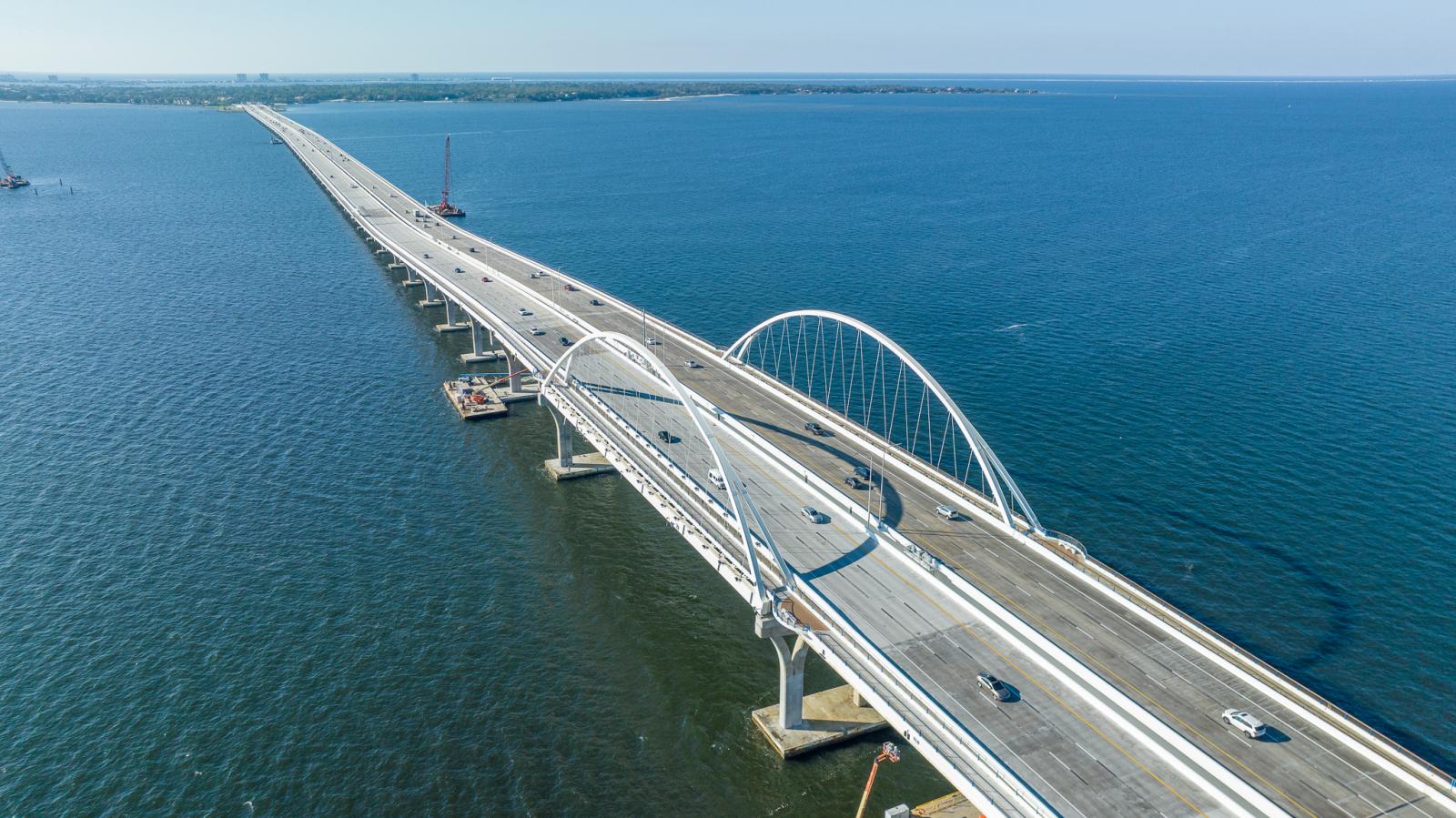
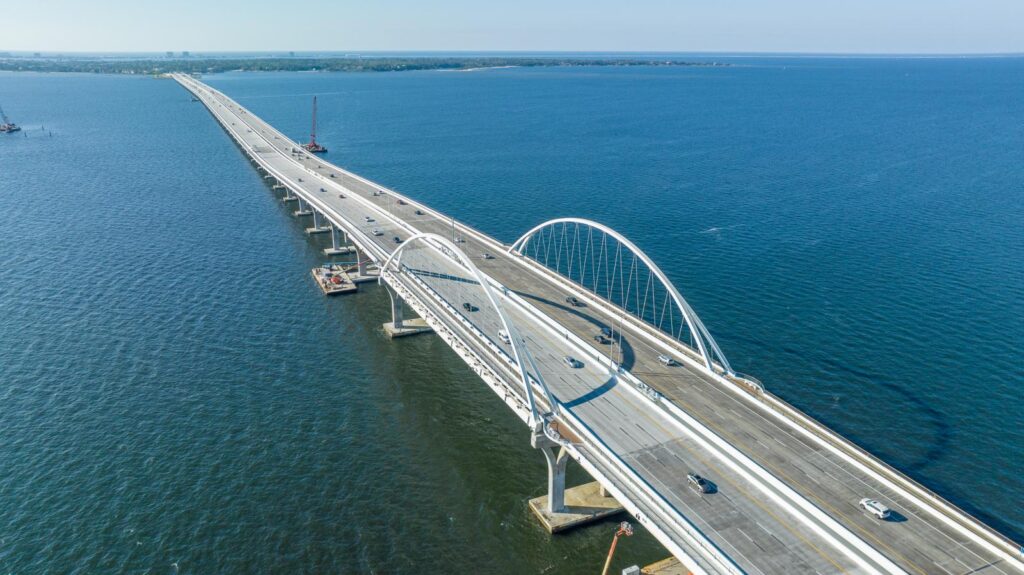
The U.S. 98 Pensacola Bay Bridge, originally constructed in 1960, reached the end of its service life and entered the replacement phase in 2017. The previous bridge served approximately 55,000 vehicles each day as an important east-west transportation corridor and a primary hurricane evacuation route. To accommodate increasing traffic demands, the replacement project expanded the bridge from two lanes to three lanes in each direction, creating an operationally safe transportation corridor for the traveling public.
The Florida Department of Transportation (FDOT) conducted a cost analysis and determined that replacing the bridge was more cost-effective than rehabilitating the existing structure. Eisman & Russo, Inc. was awarded the construction management CEI services contract for the Design-Build project, which included constructing two independent bridge structures, each approximately three miles long. The new bridges feature 10-foot inside and outside shoulders along with a 10-foot-wide multi-use path for pedestrians and bicyclists.
Eisman & Russo selected GRL Engineers, Inc. as the specialty deep foundations consultant to perform pile Verification Testing (VT) and related services. Bridge construction began in March 2017 and was near completion as of July 2023.
Deep Foundation Testing and Construction
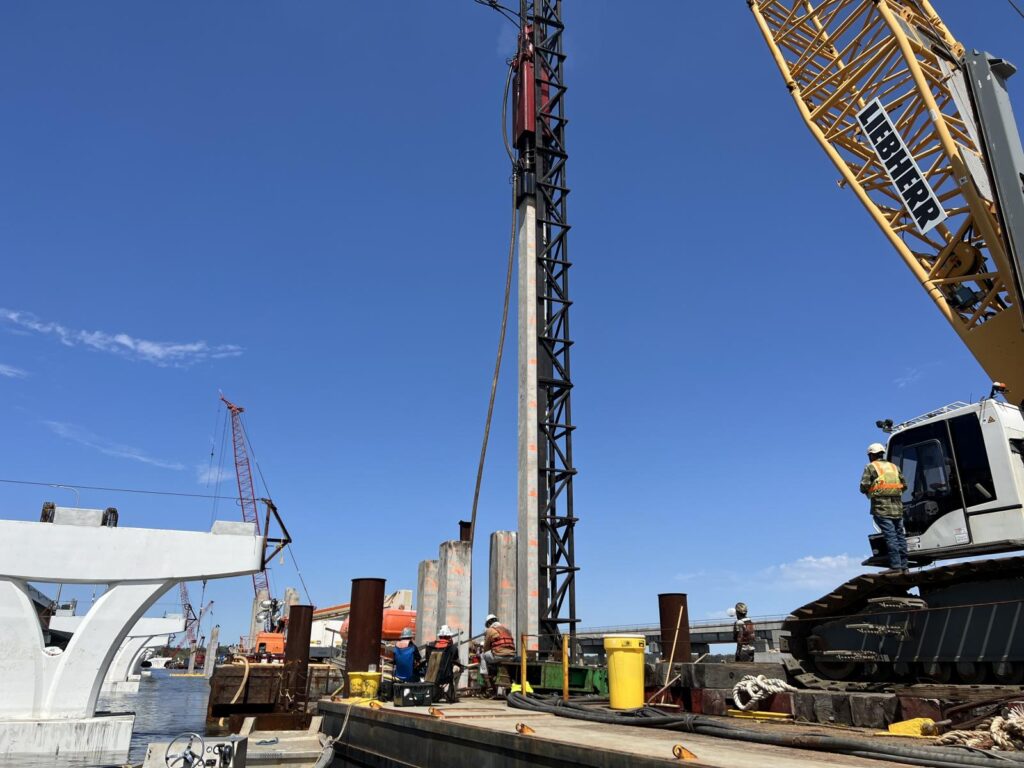
The bridge replacement project included 2,124 prestressed concrete piles measuring 30-inch and 36-inch square, with some piles exceeding 200 feet in a single piece. Foundation work included static load testing, PDA testing of test piles, and 100 percent PDA testing of production piles by the project Dynamic Testing Engineer (DTE) as part of the design-build team.
GRL Engineers performed occasional PDA Verification Testing (VT) and related CAPWAP data analyses on selected piles while serving as a member of the Eisman & Russo project CEI team representing the FDOT. Examples of the analysis results are presented in Figures 1 and 2.
Hurricane Sally’s Impact
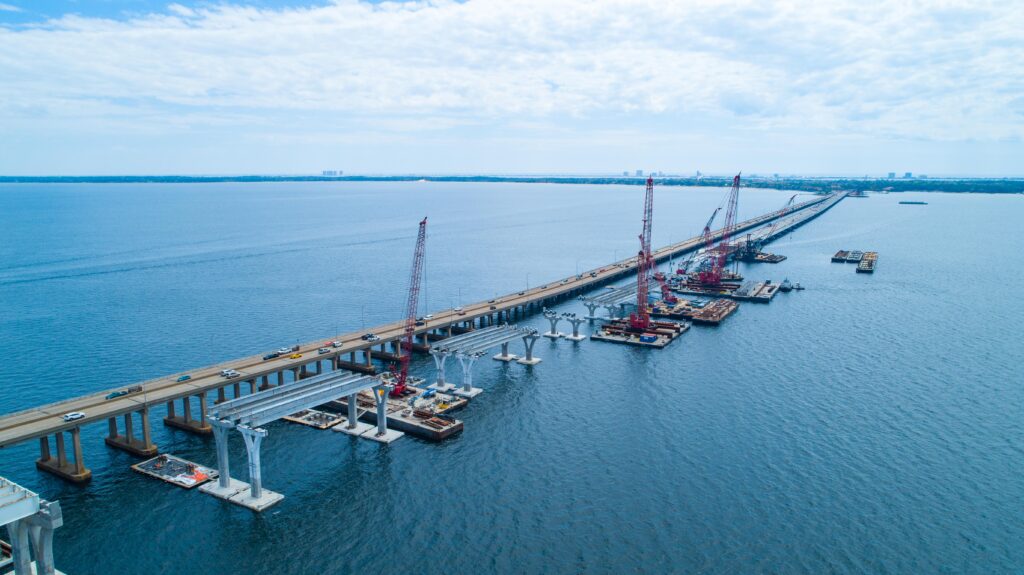
In September 2020, one of the new bridge structures was completed, and both eastbound and westbound traffic was shifted onto it while demolition of the original bridge was underway and construction continued on the second new structure.
Hurricane Sally interrupted construction and damaged the bridge structures, resulting in the bridge being closed to traffic. Numerous piles sustained damage. Low strain integrity testing was performed on many in-place piles beneath the existing bridges to assess their condition.
Where pile damage was identified, six-pile footings were used instead of the originally planned four-pile footings. As part of the restoration work following the hurricane, an additional 98 piles were installed, resulting in a project delay of more than nine months.
Project Outcome
The bridge construction cost was approximately $444 million, making it the largest transportation infrastructure improvement project in Northwest Florida history. With the expanded lane configuration, the bridge is estimated to accommodate an average daily traffic volume of more than 60,000 vehicles.
