

How to Specify DOT-Approved and Buy America-Compliant Weep Hole Filters
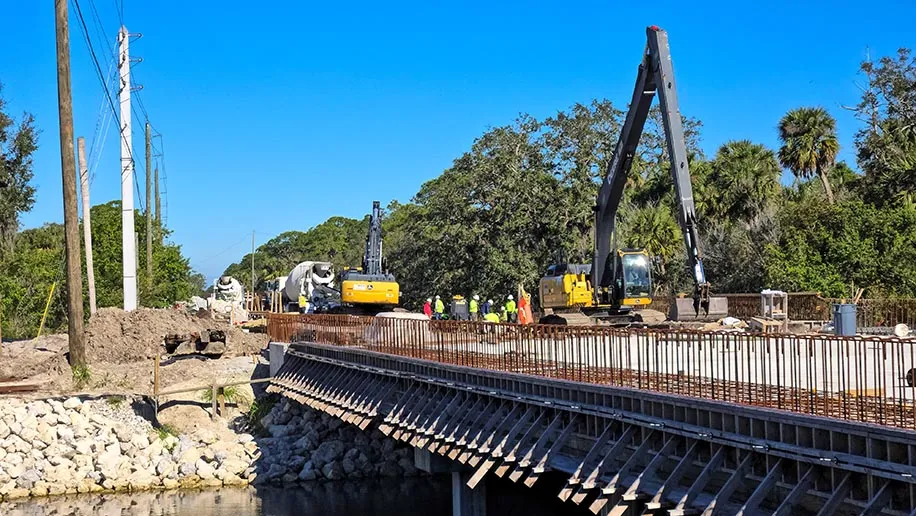
Weep hole filters may be a small item in a project specification, but selecting the wrong product can create compliance problems on federally funded infrastructure projects. An incorrect specification can delay a submittal review or raise concerns during a Department of Transportation audit.
Specifying engineers and project managers must understand what DOT approval and Buy America compliance mean for weep hole drainage systems. They must also know which performance data, material certifications, and compliance documents to request before approving a product.
What DOT Approval Means
DOT approval means a drainage product has been reviewed and accepted by a state Department of Transportation for use on its infrastructure projects. It is not a universal federal certification. Each state DOT maintains its own product approval process and approved products list. A product approved in one state may not automatically be approved in another. Before specifying a weep hole filter, engineers should request written confirmation of its approval status from the manufacturer. This documentation may include a DOT approval letter or an entry on the state’s approved products list.
If the product is not yet approved in the project’s state, the engineer should request the technical documentation package used to support approvals in other states. Providing this information can help accelerate the review process. JET Filter reports that its maintainable weep hole system has been installed across North America. The company is also working with state DOTs in locations where approval is still pending.
What to Include in a Weep Hole Filter Specification
A weep hole filter specification should require documented performance and compliance information. The manufacturer should provide flow-rate data with the testing conditions clearly stated. The reported flow rate should identify the pressure in pounds per square inch and the soil conditions at the time of testing. The specification should also require geotextile soil-retention certification under ASTM D4751. The apparent opening size of the geotextile must be appropriate for the gradation of the soil being retained.
Material selection should match the project environment. The original manufacturer guidance identifies 316L stainless steel for marine and coastal environments and ABS plastic for protected freshwater applications. A written Buy America compliance certification should be requested when the filter contains steel components and will be installed on a federally funded surface transportation project. The state DOT approval status must also be confirmed before submittal. If approval has not yet been granted, the manufacturer should provide the documentation needed for a new submission.
Maintainability is another important consideration. The engineer should confirm that the filter can be serviced without excavation or modification of the structure.
Buy America Compliance Requirements
Buy America requirements apply to iron and steel products used on federally funded surface transportation projects. The requirements state that all iron and steel manufacturing processes must occur in the United States. This begins with the initial melting and continues through the application of coatings. For a weep hole filter, these provisions apply to steel housing components. A product’s appearance or general claim of domestic production does not provide sufficient evidence of compliance. The specifying engineer should request a written Buy America compliance certification directly from the manufacturer. The documentation should be obtained before the product is submitted for approval.
JET Filter states that its stainless steel filter models are Buy America compliant. The company also recommends requesting written compliance documentation before submittal. Buy America compliance and DOT approval are separate requirements. Buy America addresses domestic iron and steel manufacturing, while DOT approval confirms that a state transportation agency has reviewed and accepted a product for use. Patent protection is also separate from both requirements. JET Filter is protected by U.S. Patents No. 7,615,148 and No. 10,124,281. According to the manufacturer, this protection prevents substitution with unlicensed equivalents during value engineering, but it does not replace DOT approval or Buy America documentation.
Testing Standards for Weep Hole Filters
A proper weep hole filter specification should reference the testing standards used to validate the individual product components.
ASTM A240 and ASTM A666 cover specifications for stainless steel plate, sheet, and strip. These standards apply to the 316L stainless steel housings used in the JF3SS, JF4SS, JF6SS, and check valve models.
ASTM D4491 addresses the water permeability of geotextiles. It applies to the Mirafi Filter-Weave FW 300 geotextile cartridge used in the JET Filter system.
ASTM D4751 covers the apparent opening size of a geotextile. It also applies to the replaceable Mirafi Filter-Weave FW 300 cartridge.
GRI-GS36 provides a specification for maintainable weep hole systems. It applies to the complete JET Filter system, including the housing and cartridge.
GRI-GC18 addresses geocomposite drainage and the performance of drainage layers in composite systems.
Steel standards apply specifically to the 316L stainless steel models. The geotextile standards apply to the replaceable filter cartridge.
JET Filter Models and Performance Data
All JET Filter stainless steel models use 316L-grade housings. The manufacturer states that these models are Buy America compliant and suitable for DOT, marine, and high-moisture environments.
Check valve models are available in each size for tidal and backflow applications.
| Model | Size | Flow Rate at 1 PSI | Improvement Over Traditional Weep Hole | Maintenance Interval |
|---|---|---|---|---|
| JF3SS | 3 inches | 33 GPM | 35% | 3 to 5 years |
| JF4SS | 4 inches | 77.1 GPM | 92% | 4 to 7 years |
| JF6SS | 6 inches | 166.6 GPM | 87% | 6 to 10 years |
The flow rates were measured at 1 psi without soil, according to TRI Environmental Report MAPP-LSH 2020-003. The percentage comparison represents the reported improvement over a standard two-dimensional weep hole of the same diameter.
Documentation for a Complete Submittal
JET Filter provides product cut sheets, CAD drawings, dimensions, specifications, and engineering drawings for its filter models. The company also offers downloadable three-dimensional STEP files for integration into project modeling environments. Optimal placement guidance is based on the University of Missouri’s 2017 research titled Design of Maintainable Drains for Earth Retaining Structures. The research was funded by the U.S. Dxepartment of Transportation.
Complete project submittal packages are also available for DOT and federally funded projects. These packages are intended to provide engineers with the technical and compliance documentation required for review. Before approving a weep hole filter, engineers should confirm its DOT status, request written Buy America certification, review its test data, verify its materials, and ensure it can be maintained without excavation or structural modification.
