







Composites Meet Marine Challenges in the Sunshine State
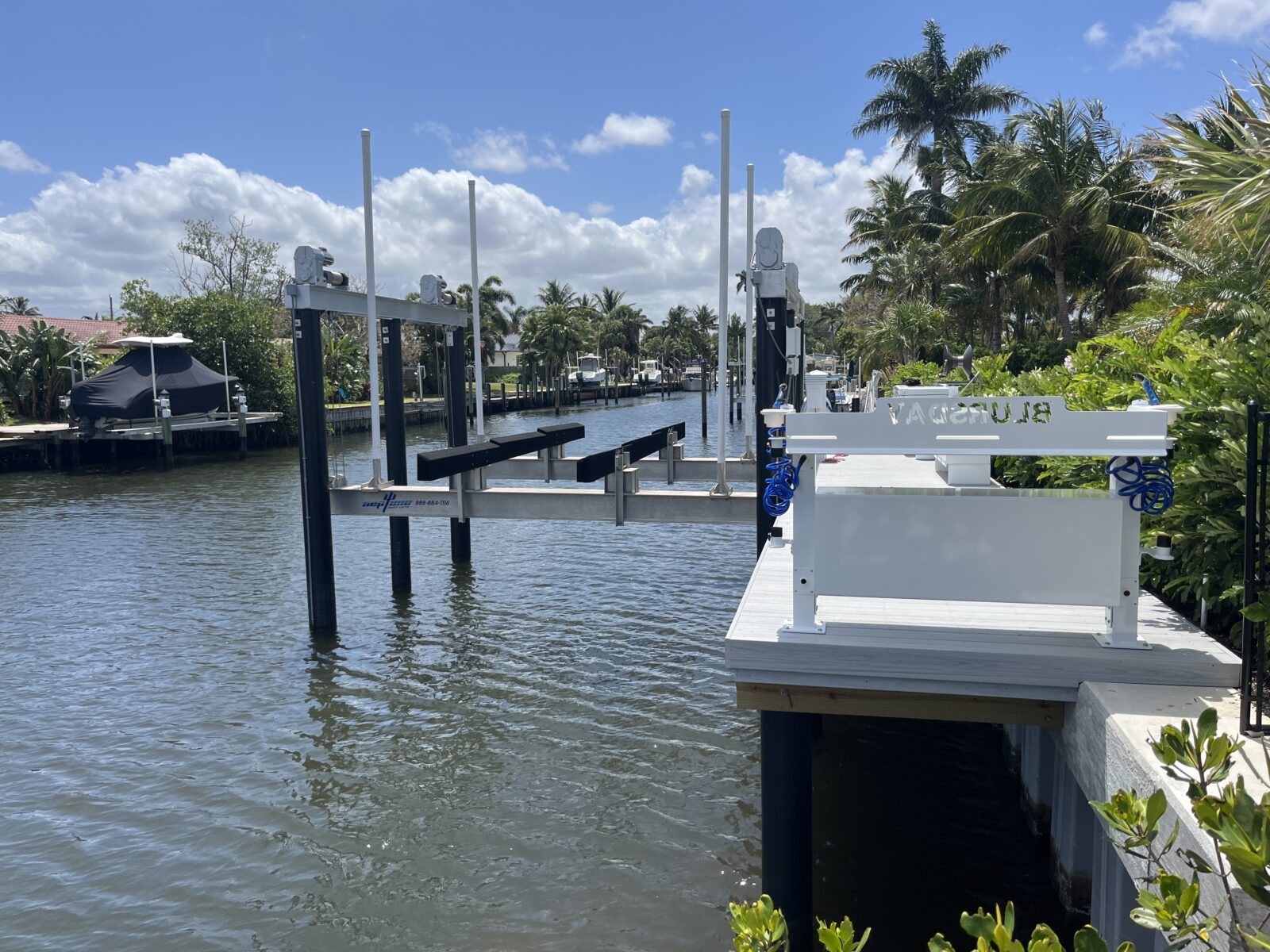
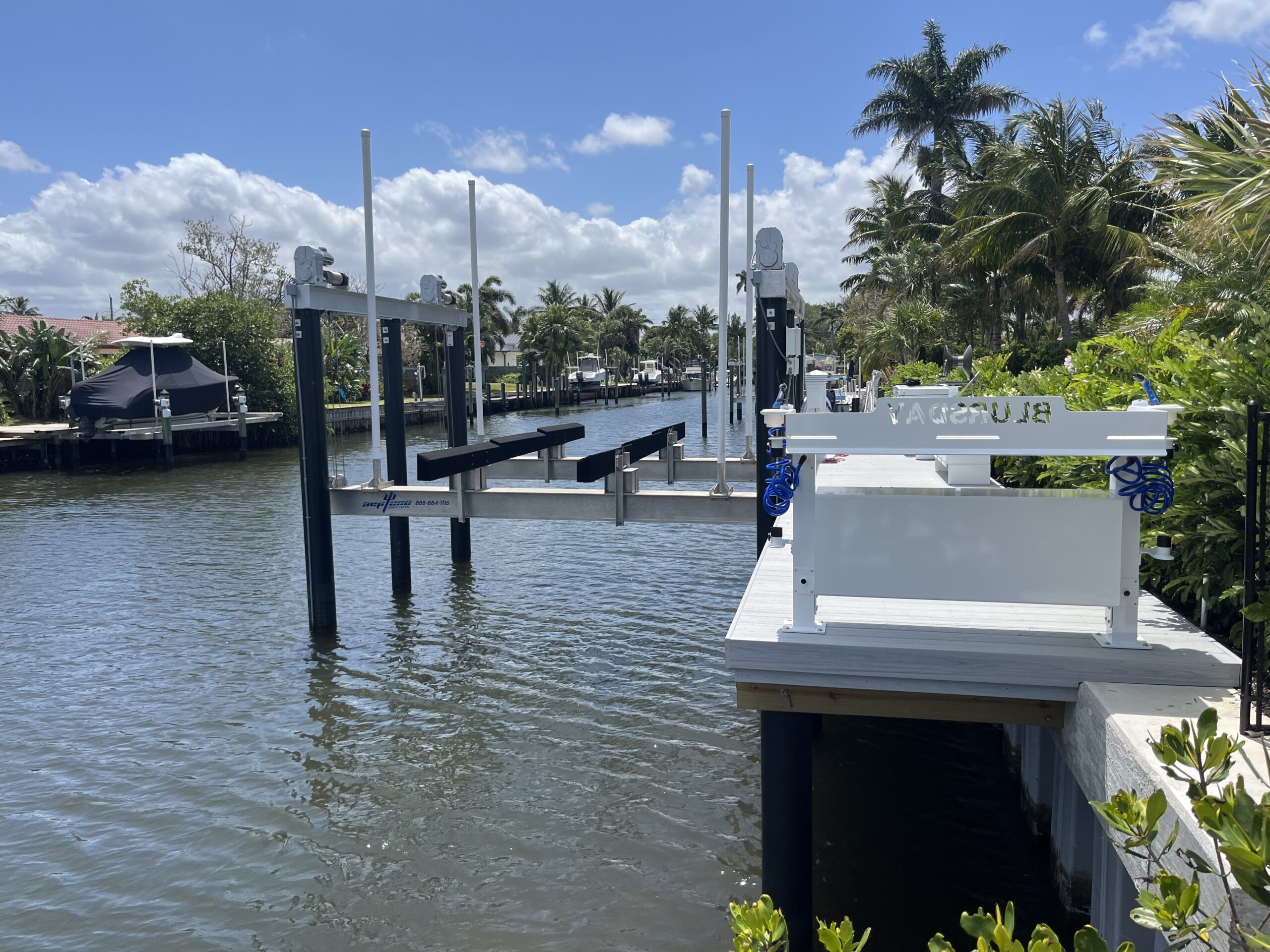
Coastal Design & Contracting knows how to hit the bullseye: While they operate within a small, 10-mile radius in Palm Beach and Martin Counties, their projects are substantial, serving some of Florida’s most affluent shoreline properties. From boat lifts to docks and retaining walls, Coastal Design focuses on perfection for its clients.
This pursuit of excellence led Manager Paul Jablonski to Creative Composites Group’s Fiber Reinforced Polymer (FRP) waterfront products. What started as a single project has grown into a long-term partnership based on quality and trust.
The Coastal Challenge
In 2019, Coastal Design was hired to build a boat lift. And not just any boat lift: this would service a 50-foot, $2 million luxury vessel on the shore of a beautiful waterfront property. The lift needed to be strong, long-lasting, extremely reliable and visually appealing.
Conventional materials—concrete and wood—made it difficult to achieve all four qualities. While wood pilings have long been the standard, the salinity of seawater and presence of shipworms in the tidal zone often cut the service life of wood pilings to barely five years. This short lifespan persisted even with the use of vinyl wrap, which requires significant extra labor as workers need to enter the water after the piles are driven into the sea floor, wrap the pole in the water, cut the vinyl to size and affix the wrap to the pole every three inches. Even if wooden poles are supplied with a vinyl coating already affixed, great care is needed to ensure that the protective coating is not damaged, which would allow marine borers to degrade the piles.
Concrete resists worms but still struggles with longevity. Precast concrete piles have steel rebar in them, and water will eventually permeate the concrete, causing the rebar to swell, which in turn causes the concrete spalling and piling deterioration. Another factor is weight. A concrete piling weighs 150 pounds per foot, meaning a full 30-foot piling weighs around 4,500 pounds. This not only means more fuel to get the pilings to the site and heavier-duty machinery to lift and place these poles, but there are also additional complications, as many of these homes are built very close to the waterfront property line, leaving little room for piling rigs and jetting systems. The weight additionally presents safety risks. It’s hardly an exaggeration to say that a wrong move with a concrete pile can severely injure workers or damage equipment.
Composites Meet the Moment
Coastal Design stands out from the competition for its innovative spirit. Jablonski is unafraid to try cutting-edge techniques, designs and products and doesn’t let a price tag limit his specifications. He researched Fiber Reinforced Polymer (FRP) composite pilings and thought he found what he needed: strength, longevity, extreme reliability and aesthetics plus a much lighter weight.
Jablonski chose 12-inch StormStrong® FRP pilings by Creative Composites Group for the boat lift project. Manufactured with SuperTuf™ polyurethane resin, the StormStrong pilings inherently resist corrosion and deliver optimal strength, toughness and impact resistance at a fraction of concrete’s weight. And “StormStrong” isn’t just a marketing name; it’s a description of the testing these pilings have undergone. The combination of electrical-grade fiberglass and high-impact, high-strength resin give StormStrong pilings mechanical properties derived from extensive testing to ASTM protocols, including ASTM D6109 and D7290.
There was initial concern about the hollow design. Would the pilings sink if the weight was distributed incorrectly by the person operating the lift? However, calculations and conversations with engineers made it clear that the hollow design has a friction capacity on the outside and on the inside, essentially doubling that of a friction point. This gave Coastal Design the confidence to use StormStrong pipe piles for the boat lift project.
The lighter weight of the FRP pilings made a significant difference, too. They are lighter to lift, place and drive with a vibratory hammer (with around 10 ksi of energy) after jetting. This sped installation, improved safety and reduced the inconvenience of heavy machinery to the property owner.
The resulting structure was attractive, durable and almost completely resistant to corrosion without a vinyl wrap. Jablonski explained to the owner that these pilings could potentially outlast them, unlike concrete and wood and their need for regular replacement. Although the initial price tag was higher than wood, both Coastal Design and its customers wisely considered lifetime costs, choosing FRP for its “set and forget” qualities. Jablonski describes FRP as “a lifetime installation,” and customers agree.
The Partnership Expands
Since the initial boat lift project in 2019, Coastal Design has grown its partnership with Creative Composites Group (CCG). FRP pilings are now integrated into Jablonski’s dock piling projects in place of wood, in diameters ranging from 10 to 16 inches.
Jablonski’s pioneering spirit has gone to new heights with FRP’s potential. Coastal Design was one of the first marine contractors to use FRP rebar, setting the trend for other contractors in the area as customers began to expect a solution that wouldn’t spall and corrode.
The firm also now uses FRP for batter piles, which support and reinforce a seawall from the water side. By driving the FRP pile in at a degree, the piling sits against the seawall panel itself, and the cap is then formed and filled with concrete and FRP rebar and integrated to hold the wall back. The approach was game-changing, when the alternative required tiebacks into the property that had to be dug out into the already limited space at the property line.
In six years, customers have reported no issues, and Coastal Design credits that long-term thinking with the structures’ long-term success. The higher-quality result is worth the cost, and Coastal Design’s business has only grown over the years. So too has the partnership with CCG. Jablonski values good service as much as quality materials, and he found both in CCG. He now buys CCG FRP pilings by the truckload and has yet to find a single defect in over six years. The mutually beneficial relationship has been characterized by a responsive, collaborative supplier and a visionary who demonstrates, through real installations, what’s possible with FRP.
