
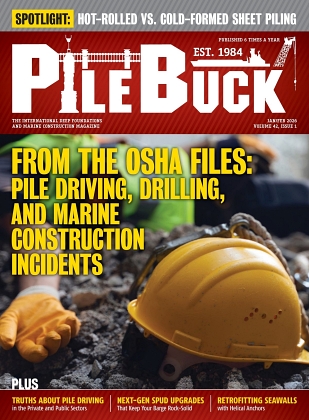

Retrofitting Seawalls with Helical Anchors: Proven Benefits for Erosion-Prone and Storm-Exposed Environments
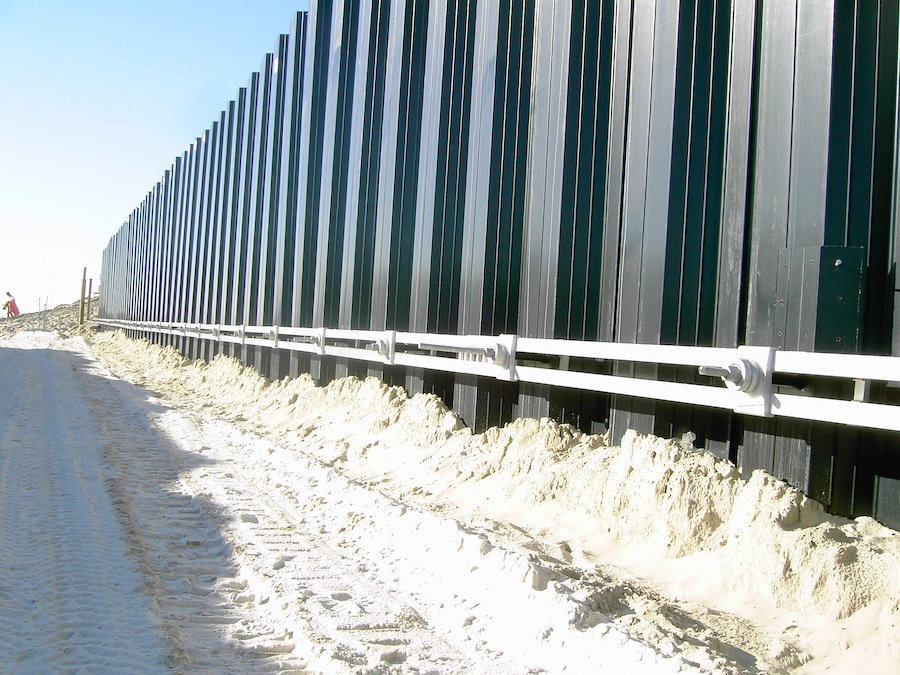
View the complete article here.
Seawalls and bulkheads along U.S. coastlines are essential barriers protecting infrastructure, properties, and ecosystems from relentless environmental pressures—including wave action from storms, daily tidal fluctuations, lateral soil pressures, ongoing erosion processes, and increasingly frequent extreme weather events like hurricanes and nor’easters.
Many of these structures—constructed decades ago using materials like timber, concrete, or sheet piles—now exhibit common signs of distress such as outward leaning due to unbalanced forces, bulging from soil buildup, or undermining from scour at the base—all of which can lead to partial collapses if not addressed.
Stabilization is critical not only to prevent catastrophic failure but also to avoid the exorbitant costs and extended downtime associated with complete demolition and replacement, which can disrupt local economies and communities reliant on waterfront access.
Helical tieback anchors represent a proven, minimally invasive retrofit solution that has gained traction in geotechnical engineering for such applications. These anchors, resembling large screws with helical plates welded to a central shaft, are torqued into stable soil strata behind the wall using specialized equipment—creating a secure mechanical bond that provides immediate tension resistance. This counters lateral earth pressures and hydrostatic forces from water, effectively pulling the wall back into alignment and enhancing overall structural integrity without requiring extensive ground disturbance.
Why Helical Tiebacks Excel in Retrofits
Rapid, Low-Impact Installation
Helical tiebacks are typically installed using portable hydraulic torque motors operated from the landside or even in confined, limited-access areas such as behind existing structures or near utilities. Unlike traditional deadman anchors, which involve digging large trenches for concrete blocks, or grouted systems that require drilling and injecting cementitious materials, helical anchors can often be advanced with minimal to no excavation—sometimes in as little as a few hours per unit depending on soil conditions. This approach significantly reduces site disturbance, shortens overall construction timelines to days rather than weeks, and minimizes disruptions in busy marine or coastal zones—such as ports or recreational waterfronts, where heavy machinery access might be restricted.
Cost-Effectiveness
By circumventing the need for major demolition of the existing wall, deep excavations that could encounter groundwater issues, or extensive backfill operations that add material and labor expenses—helical tieback systems frequently emerge as a more economical choice for targeted repairs on aging infrastructure.
Government evaluations, such as those in various coastal engineering and permitting documents, have identified helical anchor designs as advantageous for certain complex or constrained sites—reducing the need for extensive excavation or temporary shoring in some applications and allowing for faster installation phases. Similarly, the Washington State Department of Ecology’s Shoreline Master Program documents recommend helical anchors for minimizing substrate disturbance in coastal projects.
Versatility in Challenging Conditions
Helical tiebacks are adaptable to a wide range of soil types, from loose sands and gravels to cohesive clays and even mixed strata with boulders—as their capacity is derived primarily from the bearing pressure on the helical plates rather than friction or grout bonding alone. This makes them especially effective in marine-influenced environments, where fluctuating water tables and saline conditions can degrade other systems over time. Incorporating corrosion-resistant coatings like hot-dip galvanization or epoxy further extends their service life to 50-75 years or more in aggressive settings.
Proven Load Transfer
The mechanism of load transfer in helical tiebacks is straightforward and reliable: tensile forces from the wall are conveyed through horizontal or inclined wales (structural beams) or capping beams—then along the high-strength steel rod or shaft to the embedded helical plates, which distribute the load into competent soil layers beyond the active failure zone. This setup effectively stabilizes the structure against modes of failure like overturning from wave impacts or sliding due to soil saturation, with immediate load-holding capacity upon installation—no curing time required as with grouted alternatives.
Design and Application Considerations
According to the Federal Highway Administration’s (FHWA) guidelines in “Ground Anchors and Anchored Systems” (FHWA-IF-99-015), the design process for anchored systems— primarily focused on cement-grouted ground anchors using high-strength prestressing steels—begins with a comprehensive subsurface investigation, including soil borings, laboratory testing for shear strength and corrosivity, and assessments of groundwater levels to identify risks like liquefaction or chemical degradation.
The document notes helical anchors as one of several alternative anchor types used in the U.S., but states that the detailed design and testing methods described may not be appropriate for them. Earth pressure theories—such as active pressures for flexible walls, at-rest for rigid ones, or seismic pseudo-static analyses—inform key parameters for grouted anchored systems.
Anchor Components
Standard helical tieback anchors consist of high-strength steel tendons or shafts (diameters from 1-3 inches) equipped with one or more helical plates (8-14 inches in diameter) for bearing. Extensions allow deeper embedment if needed. In saltwater-influenced zones, corrosion protection is paramount—often involving double barriers such as encapsulation sleeves combined with sacrificial anodes or coatings, as emphasized in FHWA documents for aggressive environments to prevent pitting and strength loss over time.
Installation Process
The process involves advancing the anchor to the target depth using rotational torque (monitored to verify soil resistance and capacity), followed by immediate torque-testing to confirm installation quality. Subsequent proof and performance tests, which may involve loading the anchor to 1.33-1.5 times the design load while measuring creep (typically limited to under 2 mm over 10 minutes), ensure long-term stability with minimal ongoing deformation. This verification aligns with practices outlined in Maine.gov bid specifications for bulkhead projects, where helical anchors are specified for equivalent protection in marine stabilization.
System Integration
Tiebacks are connected to the wall via threaded rods attached to existing or newly installed wales, which distribute loads evenly. In bulkhead applications, they often supplement sheet pile or cribbing systems by providing additional lateral restraint. For retrofits—anchors can be strategically placed to target specific distress zones, such as eroded toe areas or cracked sections, without necessitating full wall reconstruction. This allows phased implementation that maintains partial functionality during work.
Local coastal assessments, such as those in the City of Langley’s Shoreline Master Program, identify helical anchors as a low-impact anchoring option that can minimize substrate disturbance in shoreline projects—including applications for docks, piers, and similar structures. These documents emphasize the value of low-disturbance methods in sensitive habitats and areas with environmental constraints.
Benefits in Coastal/Marine Settings
In erosion-prone areas—such as sandy beaches or river deltas—or those vulnerable to flooding from sea-level rise and storm surges—helical retrofits can help extend the service life of seawalls and bulkheads by providing reliable stabilization. This aligns with broader resilience goals in federal and state coastal management plans (e.g., USACE and NOAA guidance on durable coastal protections).
These systems can support permitting under U.S. Army Corps of Engineers processes for shoreline stabilization by providing reliable anchorage against wave-induced hydrodynamic forces and soil pressures, while their low-disturbance installation helps minimize sediment impacts in sensitive coastal areas.
For engineers and contractors tasked with addressing deteriorating seawalls or bulkheads, helical tieback anchors provide a well-balanced retrofit strategy: they deliver robust stabilization against multifaceted threats, minimize environmental impacts by avoiding large-scale earthworks that could harm aquatic life, and offer favorable economics through reduced material use and faster project completion when compared to comprehensive rebuilds.
View the complete article here.
References
- Federal Highway Administration. Ground Anchors and Anchored Systems (FHWA-IF-99-015).
- U.S. Army Corps of Engineers permitting guidance for shoreline stabilization projects.
- NOAA and state coastal resilience planning documents on durable protections.
- City of Langley, Washington. Shoreline Master Program (2021).
