



10 Tips for Handling, Transporting, Driving Tropical Greenheart Piles Piles on Marine Projects

Tropical greenheart piles are widely used in marine and waterfront construction because they offer exceptional density, strength, and natural resistance to biological attack in harsh environments. Unlike softwood or preservative-treated piles, tropical hardwoods rely on inherent material properties rather than chemical protection, which makes preserving their physical condition during logistics absolutely critical. Their high density increases weight and handling stress, their hardness complicates drilling and fastening, and their low permeability prevents field treatment from penetrating damaged zones. Contractors working with these materials must approach storage, rigging, transport, and driving with greater care to avoid hidden structural damage that can shorten service life. Early coordination through specialized tropical hardwood piling supply channels allows teams to plan around pile size, moisture condition, weight, and handling requirements long before the piles reach the jobsite.
Understanding Field Risks With Tropical Greenheart Piles
Tropical hardwood species commonly selected for piling are among the densest structural timbers in commercial use. This density improves resistance to abrasion and marine borers, but it also means piles behave very differently during fabrication and installation. The fibers are tight and brittle compared to softer species, so impact, improper fastening, or uneven drying can produce cracks that compromise performance. Once damage occurs, it cannot be repaired with preservatives due to the wood’s impermeability, which raises the stakes during handling and transport.
Tip 1: Seal All Cut Ends Before Storage
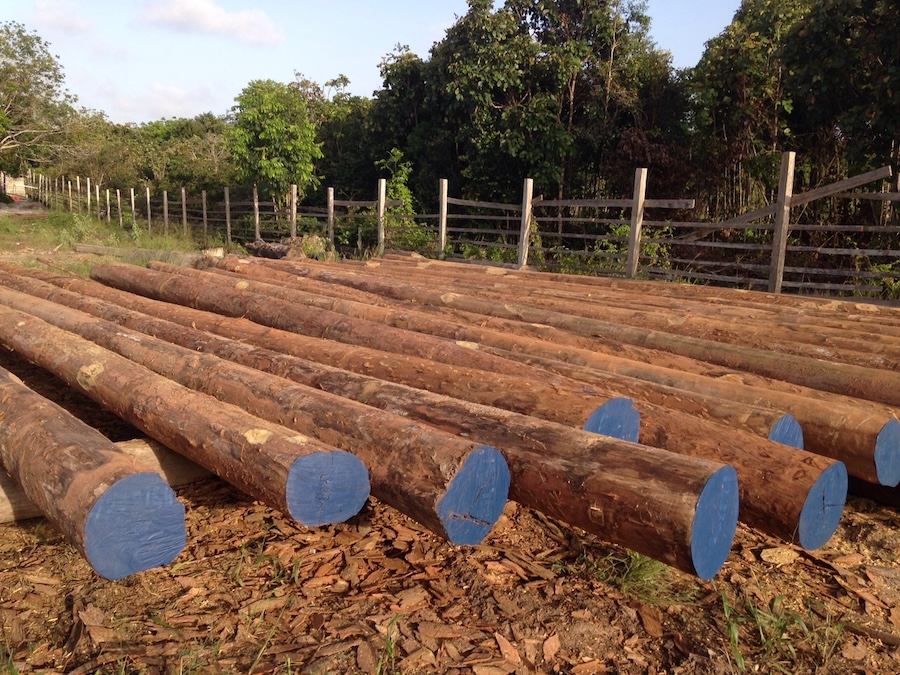
When tropical hardwood piles are cut to length, moisture immediately begins escaping through the exposed end grain. Because these species dry slowly but unevenly, the ends are highly susceptible to checking and splitting that can extend deep into the pile. Sealing freshly cut ends reduces rapid moisture loss, stabilizes internal fibers, and helps prevent structural cracks that later propagate under driving stresses.
Tip 2: Rig Piles Using Multiple Pick Points
The extreme weight of dense hardwood piles makes single-point lifting unsafe, particularly for long members. When lifted improperly, piles can sag under their own mass, creating internal stress fractures that may not be visible from the surface. Using multiple pick points and spreader bars distributes the load evenly, minimizes bending, and protects the structural integrity of the timber before it ever reaches the water.
Tip 3: Use Wide Slings to Prevent Surface Crushing
Hardwood fibers are dense and strong, yet they can still be damaged by concentrated compression at rigging points. Narrow chains or cables dig into the wood surface and create localized crushing that weakens the pile at lift locations. Wide synthetic slings spread the pressure across a larger area, reducing indentation and preserving full cross-sectional capacity.
Tip 4: Design Transportation Around Weight Load Limits
Tropical hardwood piles weigh significantly more than comparable softwood piles, which affects hauling capacity and regulatory compliance. Loads that appear manageable by dimension alone can exceed trailer axle ratings and create unsafe transport conditions. Proper planning ensures correct trailer selection, balanced load distribution, and securement systems designed for high-density timber shipments.
Tip 5: Fully Support Piles During Haul
Long hardwood piles transported without full support can flex and vibrate during travel, leading to micro-cracks within the dense fibers. Repeated movement increases the likelihood of internal damage that compromises structural performance during driving. Continuous blocking and tight bracing keep piles stable and prevent stress buildup across their length.
Tip 6: Store Piles Off Ground with Uniform Blocking
Direct ground contact exposes hardwood piles to uneven moisture absorption and potential biological activity, even in durable species. Over time, unsupported spans can also sag due to their weight. Elevating piles with evenly spaced blocking preserves straightness, maintains consistent moisture conditions, and prevents long-term deformation before installation.
Tip 7: Pre Drill All Bolt and Fastener Locations
Dense tropical hardwood is extremely resistant to fastener penetration, and forcing bolts or screws directly into the wood can create splitting along the grain. These splits weaken connection zones and reduce the pile’s ability to transfer load. Pre drilling pilot holes ensures clean penetrations, prevents cracking, and allows hardware to seat properly without damaging fibers.
Tip 8: Maintain Moisture if Piles Are Delivered Green
Greenheart piles can dry unevenly when left exposed to sun and wind in staging areas. Rapid surface drying causes checks that extend inward and weaken the pile prior to driving. Keeping piles shaded or lightly wetted slows moisture loss and maintains structural stability until installation.
Tip 9: Use Adequate Driving Cushions
Tropical hardwood pile heads are stiff and dense, making them vulnerable to crushing or fiber shattering under direct hammer impact. Without proper cushioning, repeated blows can damage the head and reduce load-bearing capacity. Driving cushions and helmets absorb shock and protect the pile during installation.
Tip 10: Adjust Driving Plans for High Resistance
Dense greenheart piles generate higher penetration resistance and friction than softwood piles, which slows driving and increases stress on both equipment and timber. Contractors must carefully monitor hammer energy and penetration rate when installing marine-grade round timber piles to avoid overdriving and pile head damage while achieving proper embedment.
Why are tropical hardwood piles more difficult to handle and install?
Their high density and hardness increase weight, driving resistance, and risk of cracking or damage.
How can contractors protect tropical hardwood piles during storage and installation?
By sealing ends, using multiple pick points, wide slings, proper blocking, moisture control, and driving cushions.
