




The Role of Wood-Based Concrete Forming Systems in Foundation Construction

Foundation construction depends on precision, structural integrity, and sequencing. Before concrete reaches its design strength, it must be shaped, supported, and protected by temporary systems that can withstand pressure, vibration, and environmental exposure. Wood-based concrete forming systems continue to play a central role in this process across commercial, infrastructure, and heavy civil projects, providing flexibility, strength, and efficiency during critical foundation phases.
Why Concrete Forming Systems Matter in Foundations
Concrete foundations rely on forming systems to define geometry, maintain alignment, and resist hydrostatic pressure during placement. Whether forming footings, walls, piers, or columns, these systems must hold fresh concrete in place until curing is complete. Errors at this stage can lead to dimensional inaccuracies, surface defects, or structural issues that are costly to correct later.
Wood-based forming systems remain widely used because they can be adapted to complex foundation layouts while maintaining consistent performance under load. Their role is not permanent, but their impact on final foundation quality is long lasting.
Common Types of Wood-Based Forming Systems
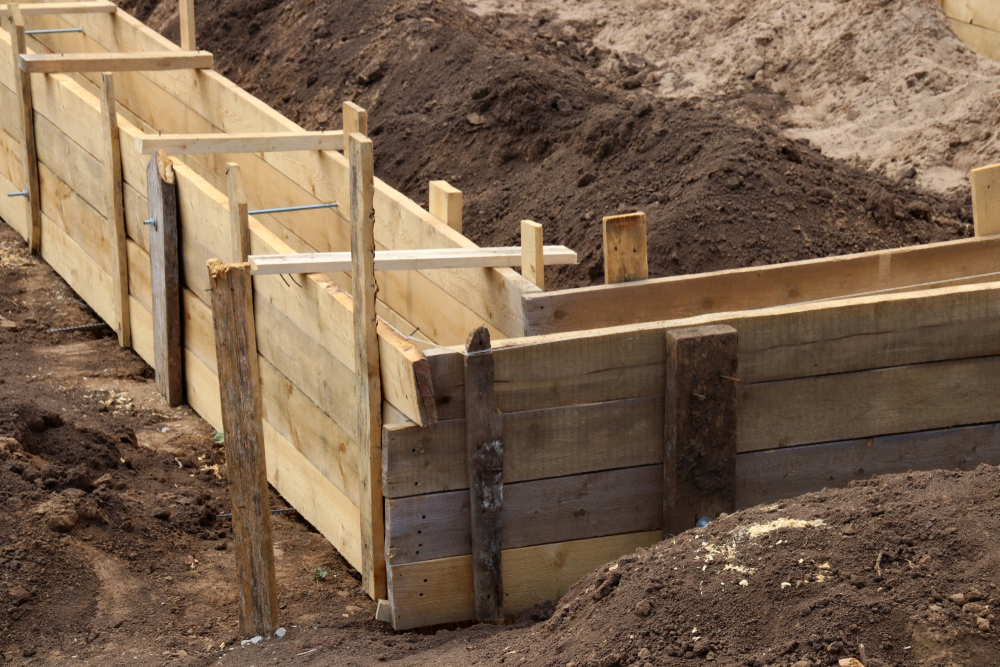
Wood-based concrete forming systems typically include dimensional lumber, engineered wood panels, and prefabricated forming assemblies. These components are configured to create vertical and horizontal forms that shape concrete elements at or below grade.
In foundation construction, these systems are often used for spread footings, retaining walls, elevator pits, and deep foundation caps. Their modular nature allows crews to adjust layouts quickly as site conditions change, which is especially valuable on projects with tight tolerances or phased pours.
Structural Performance During Concrete Placement
Fresh concrete exerts significant lateral pressure on formwork, particularly during vertical pours. Wood-based forming systems are designed to resist these forces through panel strength, framing configuration, and proper bracing. When installed correctly, they maintain shape and alignment throughout the pour and curing process.
This performance is critical for foundation elements that support axial loads from superstructures above. Consistent form stability ensures that load paths remain aligned as designed, reducing the risk of uneven stress distribution once the structure is complete.
Adaptability on Complex Foundation Sites
Foundation construction rarely occurs on uniform terrain. Sloped sites, confined excavations, and irregular layouts are common challenges. Wood-based forming systems offer adaptability that allows crews to respond to these conditions without extensive reengineering.
Forms can be cut, reinforced, or reconfigured on site to accommodate changes in elevation or geometry. This flexibility supports efficient progress without sacrificing structural accuracy, making wood-based systems a practical choice for complex foundation work.
Integration With Reinforcement and Embedments
Foundations often contain dense reinforcement cages, anchor bolts, sleeves, and embedded hardware. Forming systems must accommodate these elements while maintaining concrete cover and alignment. Wood-based forms allow precise placement of blockouts, openings, and penetrations without excessive customization.
This integration is especially important for deep foundation projects where columns, piers, or piles transition into caps or grade beams. Accurate forming ensures that reinforcement and embedments align properly with downstream construction phases.
Reuse and Jobsite Efficiency
One of the key advantages of wood-based forming systems is their potential for reuse. Panels and framing components can be stripped, cleaned, and redeployed across multiple pours or projects. This reuse improves jobsite efficiency and helps contractors manage material costs.
Many contractors rely on wood-based concrete forming solutions that balance durability with ease of handling, allowing crews to move quickly between foundation phases while maintaining consistent quality.
Performance in Heavy Civil and Infrastructure Work
Beyond building foundations, wood-based forming systems are widely used in infrastructure projects such as bridge piers, abutments, and retaining structures. These applications demand forming systems capable of handling large volumes of concrete and extended pour durations.
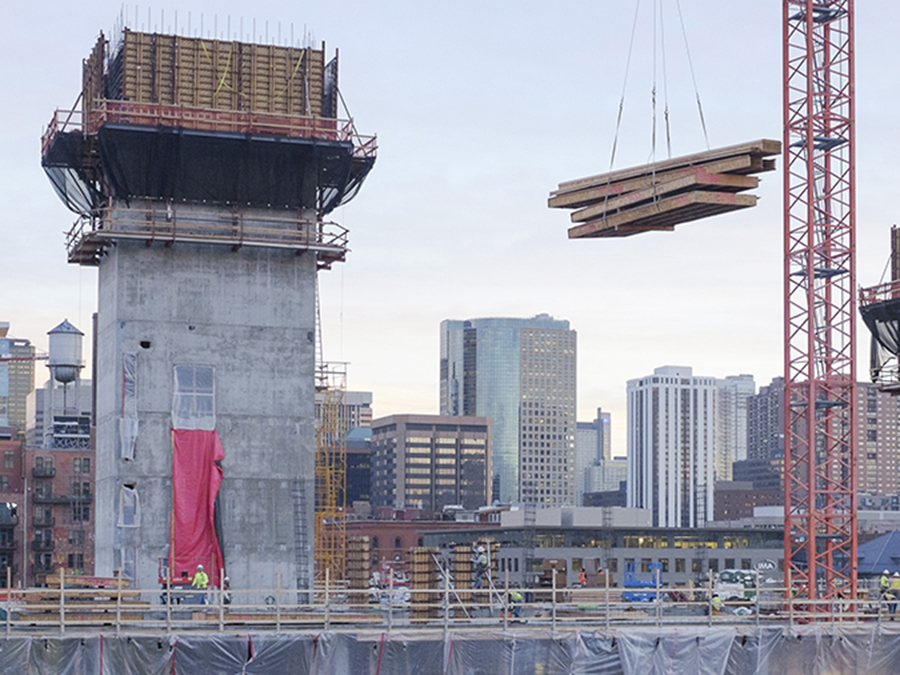
Wood-based forms are often used in combination with cranes and lifting equipment, allowing prefabricated panels to be set efficiently at elevation. Their performance in these environments demonstrates their continued relevance in heavy civil foundation construction.
Environmental and Sustainability Considerations
Sustainability considerations increasingly influence material selection on construction projects. Wood-based forming systems can support sustainability goals when sourced responsibly and reused effectively. Compared to permanent forming materials, temporary wood systems reduce long-term material consumption and facilitate site restoration after construction.
Their temporary nature allows foundations to be constructed without introducing permanent foreign materials into the surrounding environment. This approach aligns with broader industry efforts to reduce waste and improve resource efficiency on job sites.
Quality Control and Finish Outcomes
Forming systems directly affect concrete surface finish and dimensional accuracy. Wood-based forms provide smooth, consistent surfaces when properly maintained, supporting both structural and aesthetic requirements for exposed foundation elements.
Attention to form alignment, joint sealing, and release agents helps ensure clean stripping and minimal surface defects. These factors contribute to higher overall foundation quality and reduced rework.
Supporting Reliable Foundation Construction
Foundation construction sets the stage for every structure that follows. Wood-based concrete forming systems play a vital role in shaping, supporting, and protecting concrete during its most vulnerable phase. Their adaptability, strength, and efficiency make them a reliable choice across a wide range of foundation applications.
As construction projects continue to grow in scale and complexity, the demand for dependable forming systems remains constant. Contractors and engineers often turn to concrete forming systems for foundation construction that deliver consistent performance while supporting efficient jobsite operations.
Why are wood-based concrete forming systems important for foundations?
They maintain shape, alignment, and resist concrete pressure to ensure structural accuracy and surface quality.
Can wood-based forming systems be reused on construction sites?
Yes, panels and lumber can be cleaned and redeployed across multiple pours, improving efficiency and reducing waste.
