




Wire Sawing Techniques and Equipment for Marine Structure Deconstruction
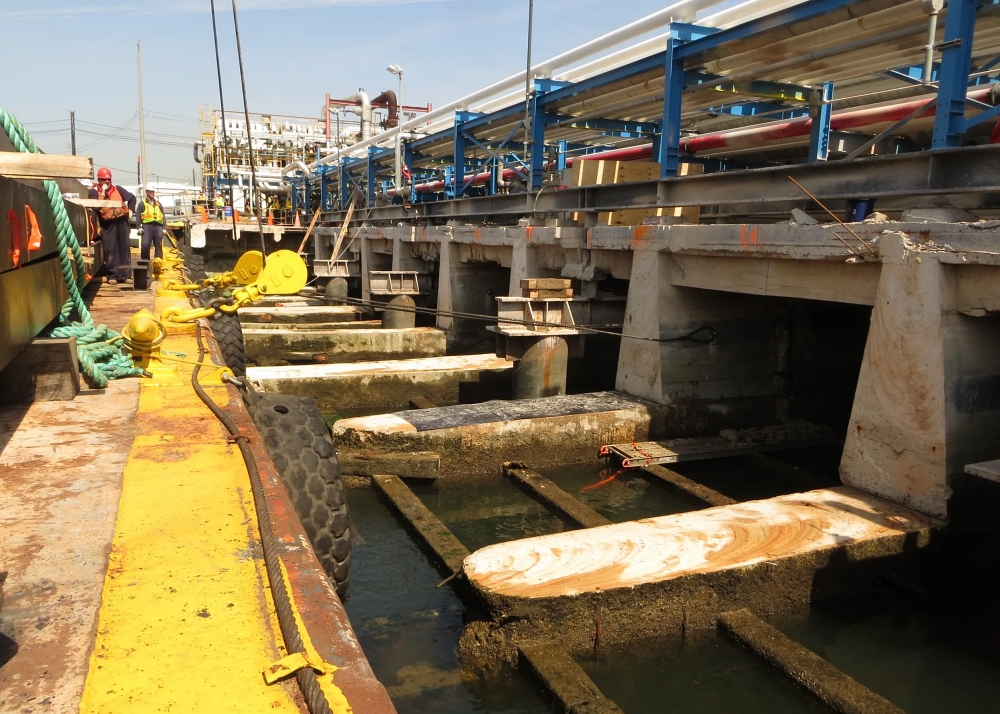
Marine infrastructure eventually reaches the end of its service life, whether due to structural deterioration, redesign requirements, or environmental restoration efforts. Removing these massive concrete and steel elements demands cutting methods that are precise, controlled, and capable of operating in harsh waterfront conditions. Wire sawing has become one of the most reliable solutions for dismantling marine structures where vibration limits, access challenges, and environmental sensitivity all play critical roles.
Marine Wire Sawing Techniques Overview
Wire sawing is a cutting method that uses a continuous loop of diamond-embedded wire to slice through reinforced concrete, steel, and composite marine materials. Unlike impact-based demolition, the technique relies on abrasion rather than force, allowing operators to execute controlled cuts with minimal disturbance to surrounding structures. In marine environments, this level of precision is essential for protecting adjacent piers, navigation channels, and active facilities.
The technique is frequently applied in projects involving bridge piers, quay walls, offshore platforms, dolphins, and heavy marine foundations. Because the wire can be routed around irregular shapes, it allows engineers to plan segmental removal strategies that improve safety and material handling. Specialized diamond wire sawing services are often used early in deconstruction planning to establish clean separation points before lifting or removal operations begin.
Why Wire Sawing Fits Marine Deconstruction
Marine structures present unique demolition challenges that differ from land-based projects. Constant water exposure, tidal variations, and limited equipment access make traditional saw cutting or hammering methods less effective or even impractical. Wire sawing offers a solution that adapts well to these conditions.
Precision in Sensitive Environments
Many marine demolition projects occur near active ports, industrial facilities, or environmentally protected waterways. Wire sawing produces low vibration and minimal noise compared to mechanical breaking, reducing the risk of structural damage or regulatory violations. This makes it especially suitable for projects where underwater life, sediment control, or adjacent infrastructure must be preserved.
Handling Reinforced and Mass Concrete
Marine structures are typically designed with dense reinforcement to withstand wave action, vessel impact, and long-term exposure. Wire sawing easily cuts through heavily reinforced concrete, prestressed elements, and embedded steel without tool deflection or performance loss. This capability allows engineers to segment large components into manageable sections for crane removal.
Equipment Used in Marine Wire Sawing
Effective wire sawing in marine applications depends on specialized equipment designed for durability, control, and adaptability. Each component plays a role in maintaining cutting efficiency under demanding conditions.
Diamond Wire and Bead Configurations
The cutting wire consists of steel cable fitted with diamond beads spaced along its length. Bead size, spacing, and bonding are selected based on material hardness and reinforcement density. For marine deconstruction, wires are often chosen to handle abrasive aggregates and high steel content without excessive wear.
Drive Units and Tensioning Systems
Wire saw drive units provide consistent power and speed control throughout the cut. Hydraulic or electric systems are commonly used depending on site access and power availability. Tensioning systems maintain optimal wire pressure, ensuring straight cuts and reducing the risk of wire failure during long cutting cycles.
Anchoring and Guide Assemblies
Marine wire sawing setups require stable anchoring to resist movement from waves, currents, and equipment loads. Guide pulleys are strategically positioned to direct the wire path around complex geometries. These assemblies allow cuts to be executed horizontally, vertically, or at compound angles without repositioning the main drive unit.
Above-Water and Underwater Applications
Wire sawing can be deployed both above and below the waterline, making it one of the most versatile cutting methods for marine deconstruction.
Above-Water Structural Separation
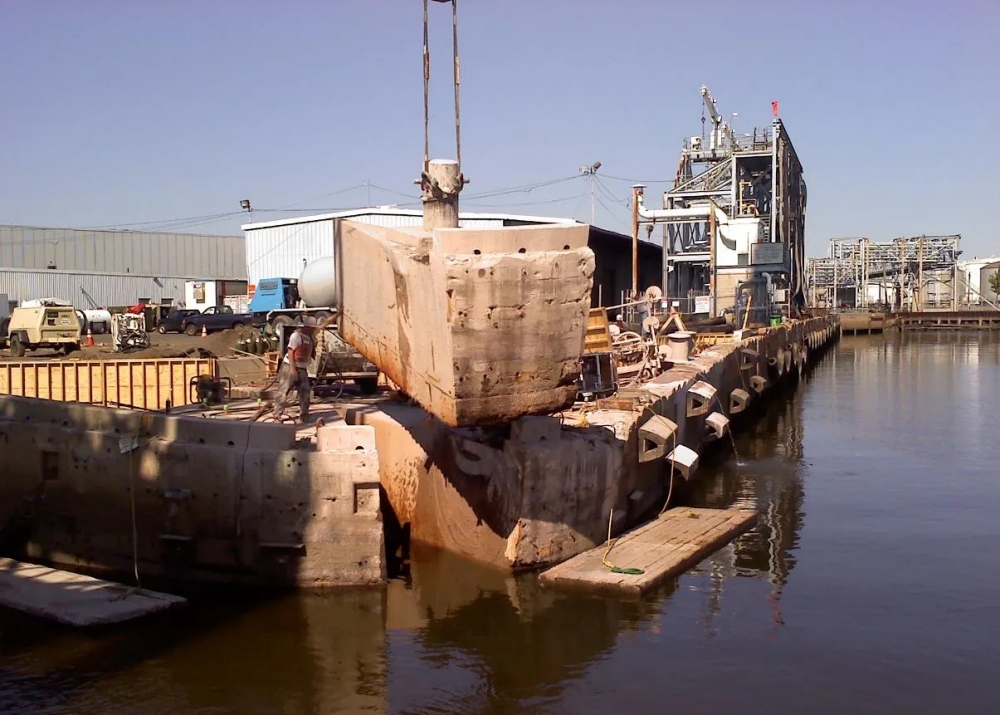
For piers, bridge decks, and wharf structures, wire sawing enables clean separation of deck sections, beams, and caps. Controlled cuts reduce debris generation and simplify lifting operations. This approach is frequently used when removing sections of active facilities in phases to maintain partial operation.
Underwater Cutting Capabilities
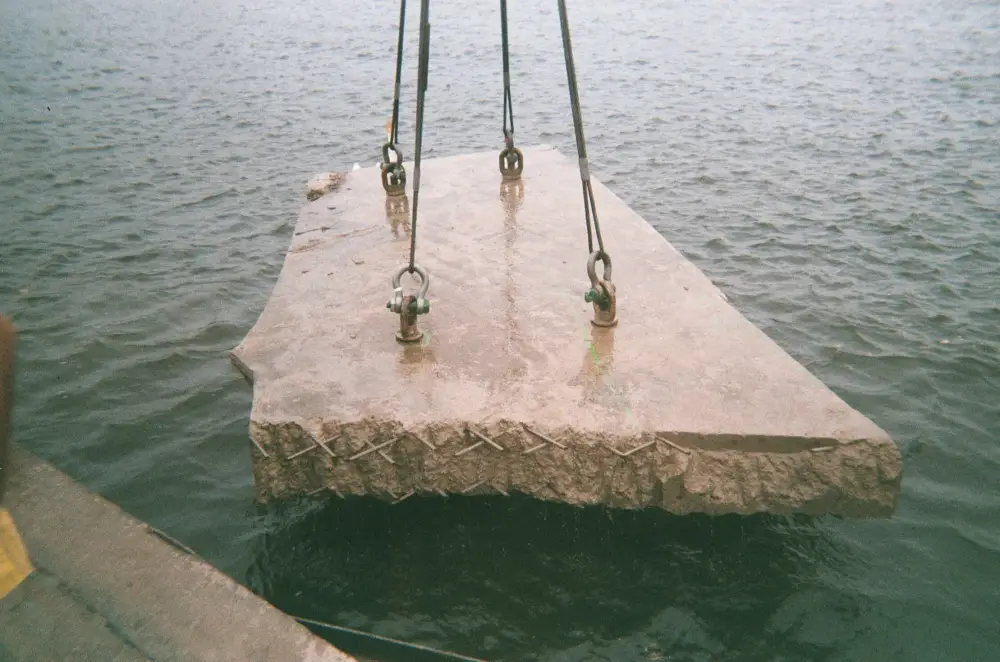
Wire sawing is also effective for submerged elements such as pile caps, caissons, and foundation blocks. With appropriate setup, cuts can be performed below the water surface without the need for cofferdams. This reduces project timelines and limits disruption to navigation and marine traffic.
Safety and Environmental Considerations
Marine deconstruction projects demand strict adherence to safety and environmental standards. Wire sawing contributes to both by offering predictable performance and reduced secondary impacts.
The controlled nature of the cut minimizes unexpected material movement, improving worker safety during lifting and removal. Reduced vibration lowers the risk of structural instability in partially demolished elements. From an environmental perspective, wire sawing generates less turbidity and debris compared to mechanical breaking, which is critical in regulated waterways.
Planning Wire Sawing for Marine Projects
Successful wire sawing operations begin with detailed planning that considers structure geometry, access constraints, and removal sequencing. Engineers often coordinate wire sawing with crane operations, barge positioning, and load calculations to ensure smooth execution.
Late-stage cuts frequently rely on specialized concrete and steel cutting solutions to finalize separation before removal. By integrating wire sawing into the overall demolition plan, project teams can reduce downtime, improve predictability, and maintain compliance with marine safety requirements.
Wire Sawing’s Role in Modern Marine Deconstruction
As marine infrastructure continues to age, the demand for precise, low-impact deconstruction methods is increasing. Wire sawing has established itself as a core technique for dismantling complex marine structures safely and efficiently. Its ability to handle reinforced materials, operate underwater, and deliver clean separation makes it an indispensable tool in modern marine construction and demolition projects.
Wire sawing uses a diamond-embedded cable to cut reinforced concrete and steel with minimal vibration and precise control.
Yes, wire sawing can cut submerged elements without cofferdams, reducing disruption to navigation and project timelines. What is wire sawing in marine construction?
Can wire sawing be used underwater for marine structures?
