


Temporary Flood Mitigation Strategies in Waterfront Piling Projects
Waterfront piling projects operate at the intersection of structural construction and unpredictable water behavior. Tidal fluctuations, storm surge, river stage variation, and rainfall runoff can all disrupt foundation work if temporary flood mitigation is not planned in advance. Unlike permanent flood protection systems, temporary mitigation strategies must remain flexible, rapidly deployable, and adaptable as piling operations move along a shoreline or waterway. Understanding how contractors manage water intrusion during these projects is essential for maintaining safety, schedule reliability, and installation quality.
Key Flood Risks in Waterfront Piling
Tidal Fluctuation and Surge Exposure
Tidal environments present one of the most persistent challenges in waterfront piling. Rising tides and storm-driven surges can inundate work zones with little warning, especially in coastal and estuarine settings. Temporary flood mitigation systems are often used to redirect or block incoming water long enough for pile installation activities to continue safely within planned tidal windows.
River Level Variability and Flow Events
River-based piling projects face different but equally disruptive conditions. Seasonal runoff, upstream precipitation, and controlled releases from dams can cause sudden increases in water level or current velocity. Temporary flood measures must accommodate both rising water and lateral flow forces that can destabilize work platforms and erode exposed soils.
Temporary Flood Barriers for Active Piling Zones
Modular Water Diversion Systems
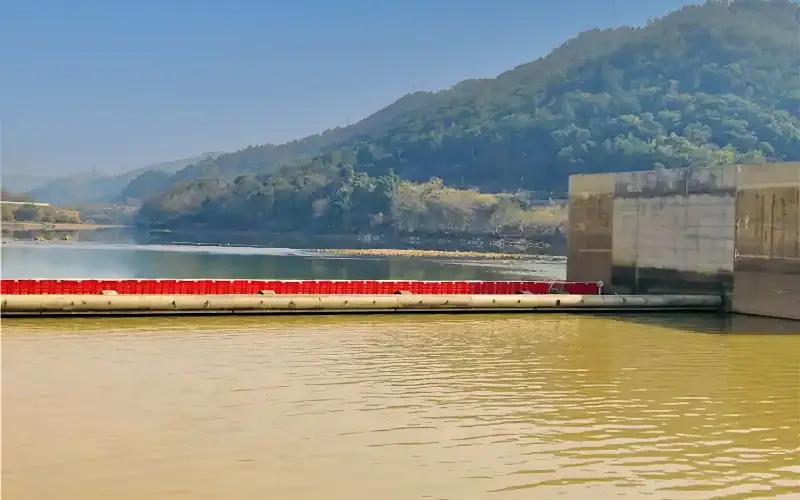
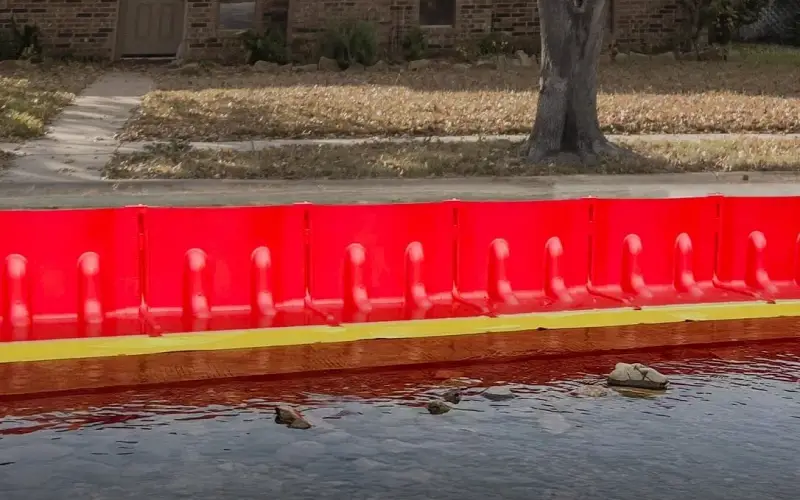
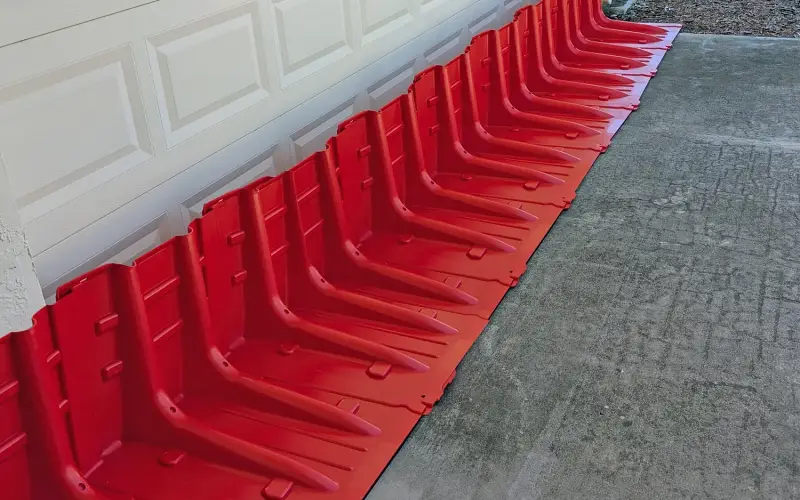
One of the most common approaches to temporary flood mitigation involves modular water diversion systems placed around active piling areas. These systems allow crews to reroute shallow floodwaters away from pile locations, pile caps, and drilling equipment without permanent anchoring. Contractors often rely on temporary flood barriers to protect excavation edges and maintain dry working conditions during short-duration installation phases. Well-designed systems can be repositioned repeatedly as pile driving progresses along a waterfront alignment, making them especially useful for linear marine structures.
In early project phases, general solutions such as temporary flood barriers can be used to establish a controllable work perimeter that adapts to changing site conditions while remaining easy to remove once installation is complete.
Inflatable and Flexible Flood Berms
Inflatable flood berms are widely used in waterfront construction due to their portability and rapid deployment. These systems are typically rolled out along the landward edge of a work zone or staging area and inflated to form a continuous berm. Their flexibility allows them to conform to uneven terrain, making them effective in environments where rigid systems would require extensive surface preparation.
For piling projects, inflatable berms are often deployed to protect equipment staging areas, access roads, and temporary cofferdam interiors from encroaching floodwater during storm events or high-water cycles.
Managing Floodwater Around Cofferdams
Temporary Containment Within Sheeted Areas
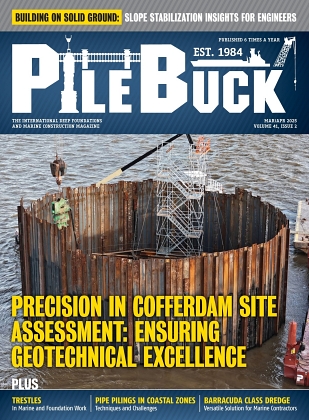
Cofferdams are commonly used in waterfront piling to create localized dry zones, but they are not immune to leakage or overtopping. Temporary flood mitigation inside cofferdams often includes secondary containment barriers that reduce water volume entering the work area. These measures help limit pumping demand and maintain safer conditions around pile templates and reinforcement cages.
Supplemental Dewatering Support
Flood mitigation does not end with blocking water entry. Effective dewatering is critical for removing accumulated water from flat work surfaces and confined spaces. Temporary drainage pumps are often used alongside flood barriers to manage seepage, rainfall, and minor overtopping events. Coordinated use of containment and dewatering allows contractors to maintain productivity even when environmental conditions are less than ideal.
Soil Stability and Erosion Control Considerations
Preventing Washout Around Pile Locations
Floodwater moving across exposed soils can quickly undermine pile alignment and embedment accuracy. Temporary flood mitigation strategies often incorporate erosion control elements that slow water velocity and redirect flow paths away from open excavations. Maintaining soil stability is especially critical during drilled shaft or augered pile installation, where sidewall integrity directly affects load capacity.
Protecting Temporary Access and Laydown Areas
Waterfront piling projects frequently rely on temporary access routes and material storage zones near the shoreline. Flood mitigation measures are commonly extended beyond the immediate piling area to protect these supporting elements. Water-filled berms and sand-filled containment systems are often used to stabilize these zones during prolonged construction phases, particularly in projects spanning multiple seasons.
Emergency Flood Response During Piling Operations
Rapid Deployment for Sudden Weather Events
Despite careful planning, unexpected storm events can still occur during piling operations. Temporary flood mitigation systems designed for rapid deployment allow crews to respond quickly when water levels begin rising faster than forecast. These systems are often stored on site and activated as part of an emergency response plan to protect partially completed foundations and installed piles.
Passive Flood Protection During Off-Hours
Some temporary flood mitigation approaches rely on passive activation, meaning they respond automatically as water levels rise. While not intended to replace active site management, these systems provide an added layer of protection during overnight periods or when crews are not present. They are often used as a supplemental measure in high-risk waterfront environments.
Integrating Flood Mitigation into Piling Project Planning
Sequencing Installation to Minimize Exposure
Successful waterfront piling projects integrate flood mitigation planning into construction sequencing. By aligning pile installation with favorable tidal or river conditions and positioning temporary barriers strategically, contractors reduce the duration and severity of water exposure. This approach minimizes downtime and limits the need for reactive flood response.
Selecting Scalable Temporary Systems
Because waterfront piling projects evolve as work progresses, scalable temporary flood mitigation systems offer a significant advantage. Systems that can be extended, repositioned, or combined allow contractors to adjust protection levels as site conditions change. Toward project completion, these same systems can be relocated to protect final tie-in areas or removed entirely without permanent site alteration.
In later stages, broader solutions related to waterfront flood mitigation systems are often applied to ensure exposed piles, caps, and adjacent infrastructure remain protected until permanent elements are in place.
Temporary Solutions Supporting Long-Term Performance
Temporary flood mitigation plays a critical role in ensuring the long-term performance of waterfront piling installations. By maintaining dry and stable working conditions during construction, these strategies help preserve alignment accuracy, embedment quality, and material integrity. While temporary in nature, their impact on project outcomes is lasting, making flood mitigation planning a core component of successful waterfront piling projects.
