

The Role of Steel Reinforcement in Long-Lasting Coastal and Marine Structures
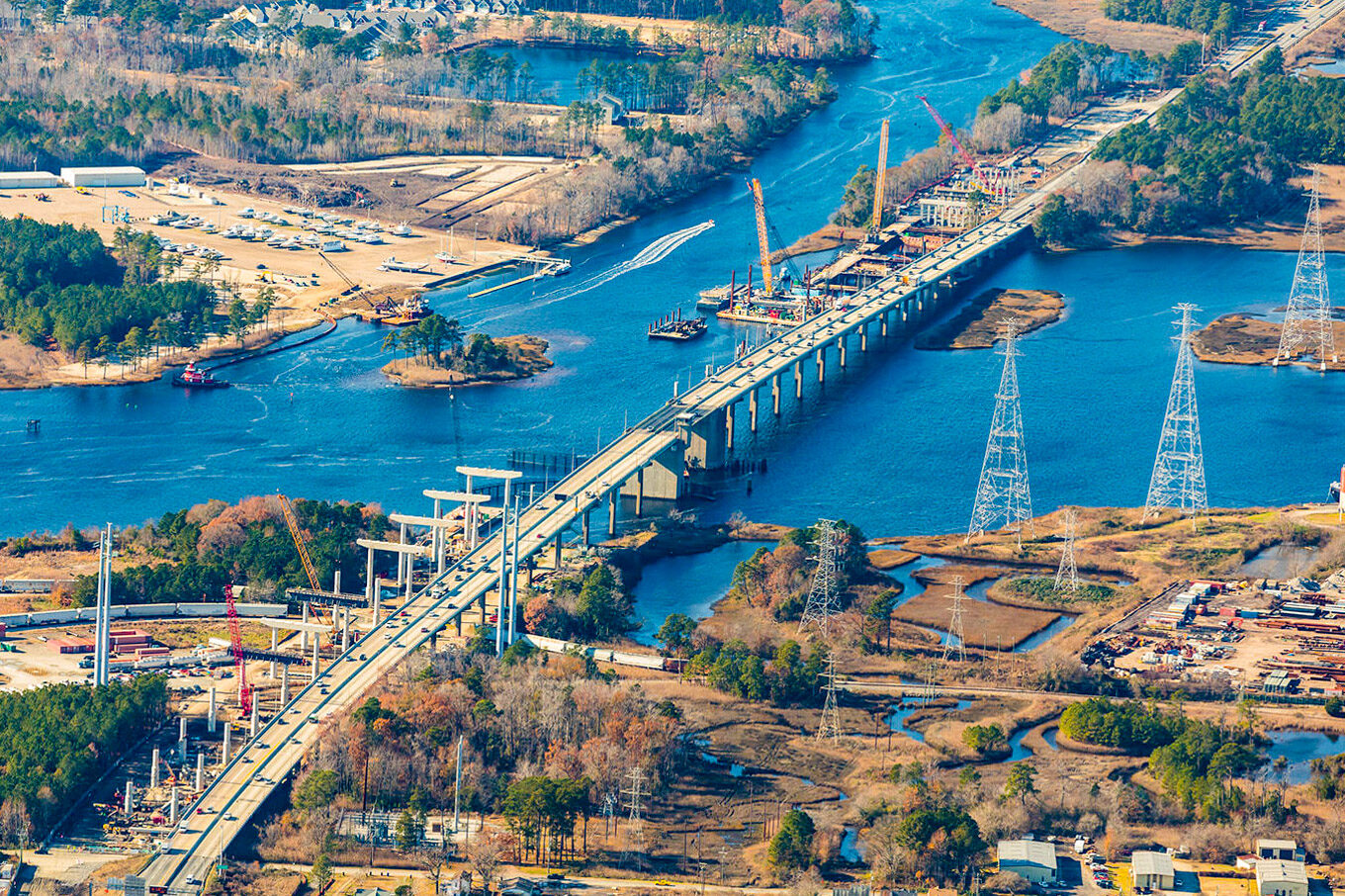
Coastal and marine structures operate in some of the most demanding environments faced by civil infrastructure. Bridges, elevated roadways, tunnels, and waterfront structures must withstand constant exposure to moisture, chlorides, cyclic loading, and temperature variation. Reinforced concrete remains a primary construction material for these applications, but its long-term performance depends heavily on the quality, detailing, and placement of steel reinforcement. Understanding how reinforcement systems contribute to durability and structural reliability is essential for extending service life in coastal and marine settings.
Environmental Forces Affecting Coastal Infrastructure
Chloride Exposure and Moisture Intrusion
Marine and coastal environments introduce chloride ions through seawater, tidal action, and airborne salt spray. These chlorides gradually penetrate concrete and can initiate corrosion once they reach embedded steel reinforcement. Corrosion products expand, generating internal stresses that lead to cracking, spalling, and eventual loss of structural capacity. This deterioration mechanism has been widely documented in coastal bridges and marine structures across the world.
Cyclic Loads and Structural Fatigue
Bridges and marine structures are subjected to repeated loading from traffic, wind, waves, currents, and thermal movement. Over time, these cyclic forces contribute to fatigue in reinforced concrete elements, particularly in flexural and shear-critical zones. Steel reinforcement plays a key role in managing these stresses by maintaining structural continuity and controlling crack development under repeated loading.
Steel Reinforcement as a Structural System
Load Resistance and Structural Continuity
Steel reinforcement allows concrete to resist tensile and bending forces that it cannot handle alone. In coastal bridges and marine structures, reinforcement is essential for supporting dead loads, live loads, and lateral forces generated by wind and water movement. Longitudinal reinforcement provides flexural strength, while transverse reinforcement enhances shear resistance and structural integrity under complex loading conditions.
Crack Control and Serviceability
Cracking in reinforced concrete is expected, but reinforcement detailing directly influences crack width and distribution. Narrow, well-distributed cracks reduce the rate of moisture and chloride ingress, slowing corrosion initiation. Proper reinforcement spacing and anchorage therefore contribute not only to strength but also to long-term serviceability in coastal environments.
Reinforcement Considerations for Marine Structures
Corrosion Resistance Strategies
Because steel corrosion is a leading cause of deterioration in coastal infrastructure, reinforcement selection is a critical design decision. Engineers often specify reinforcement systems that improve resistance to chloride-induced corrosion, particularly in bridge substructures, piers, and elements exposed to splash and tidal zones. These strategies are most effective when combined with adequate concrete cover and low-permeability concrete mixtures.
Integration With Concrete Design
Reinforcement performance is closely tied to concrete quality. Dense, well-cured concrete with appropriate cover thickness slows chloride penetration and protects embedded steel. Reinforcement detailing must account for construction tolerances to ensure cover requirements are consistently met, especially in large-scale bridge and marine projects where access for repairs can be limited.
Reinforced Concrete in Coastal Bridges
Substructures and Load Transfer
Bridge substructures such as piers, columns, pile caps, and abutments rely heavily on steel reinforcement to transfer loads safely to the foundation. In coastal and river crossings, these elements often experience prolonged exposure to moisture and fluctuating water levels. Reinforcement detailing in these zones is critical for maintaining structural performance over decades of service.
Superstructures and Deck Systems
While superstructure elements are often less exposed than substructures, they still face chloride exposure from deicing salts and marine air. Reinforced concrete decks, girders, and diaphragms depend on well-designed reinforcement to control cracking and limit long-term deterioration. Coordination between reinforcement layout and deck drainage systems further enhances durability.
Construction Quality and Reinforcement Placement
Fabrication and Installation Accuracy
Reinforcement cages and assemblies must be fabricated and installed accurately to achieve design intent. Misalignment, inadequate tying, or displacement during placement can reduce concrete cover and create localized corrosion risks. Quality control during reinforcement installation is essential for coastal and marine projects where environmental exposure accelerates the consequences of construction errors.
Coordination With Structural Steel and Decking
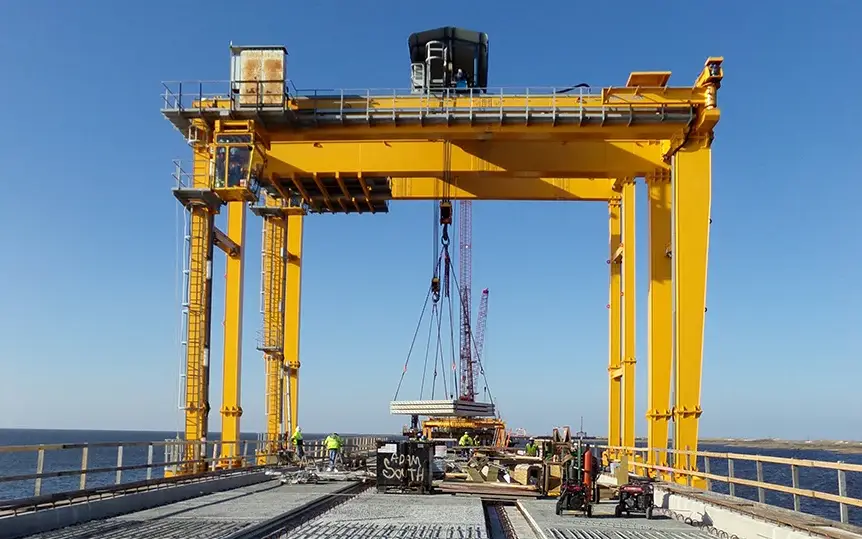
Many coastal bridges and marine structures incorporate a combination of reinforcing steel, structural steel, and stay-in-place decking systems. Effective coordination among these components ensures load paths remain continuous and that reinforcement performs as intended within the overall structural system. Proper sequencing during construction helps preserve reinforcement alignment and concrete consolidation.

Long-Term Performance and Lifecycle Benefits
Reduced Maintenance and Repair Needs
Structures designed with durable reinforcement systems experience fewer corrosion-related repairs over time. By limiting crack propagation and slowing corrosion initiation, reinforcement contributes to lower maintenance demands and reduced lifecycle costs. This is particularly important for coastal bridges and marine structures where access for repairs can be disruptive and expensive.
Extending Service Life in Harsh Environments
Research and field performance data consistently show that reinforced concrete structures with appropriate detailing outperform those built to minimum exposure standards. In coastal and marine environments, reinforcement selection and placement function as long-term risk management tools that improve reliability and predictability throughout a structure’s service life.
Reinforcement Expertise in Coastal Construction
Importance of Installation Experience
Successful reinforcement performance depends not only on design but also on proper execution in the field. Experienced reinforcing steel installation teams understand the challenges associated with large-scale civil projects, including tight tolerances, complex geometries, and demanding schedules. Well-executed reinforcing steel installation supports the durability goals established during design and helps ensure consistent performance across bridge and marine structures.
Reinforcement as a Foundation for Resilient Infrastructure
Steel reinforcement remains a foundational element in the construction of long-lasting coastal and marine structures. When properly designed, installed, and integrated with high-quality concrete, reinforcement systems enable bridges, tunnels, and waterfront infrastructure to withstand harsh environmental exposure while maintaining structural safety and serviceability.
Modern coastal and marine construction increasingly emphasizes durability as a primary design objective. By prioritizing robust reinforcing systems and proven installation practices, project teams can extend service life, reduce maintenance costs, and deliver resilient infrastructure capable of performing reliably in some of the most challenging environments.
Why is steel reinforcement important for coastal and marine concrete structures?
Steel reinforcement allows concrete to resist tensile and flexural stresses while controlling cracking and corrosion in harsh marine environments.
How can reinforcement durability be improved in saltwater-exposed structures?
Using corrosion-resistant steel, proper concrete cover, and low-permeability concrete slows chloride-induced corrosion and extends service life.
