



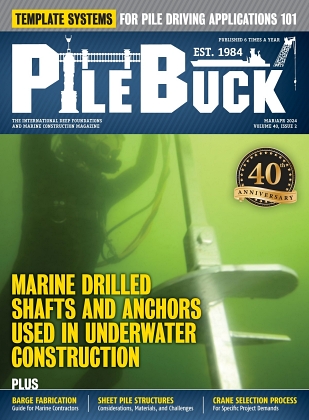

Locking It Down: Next-Gen Spud Upgrades That Keep Your Barge Rock-Solid
View the complete article here.
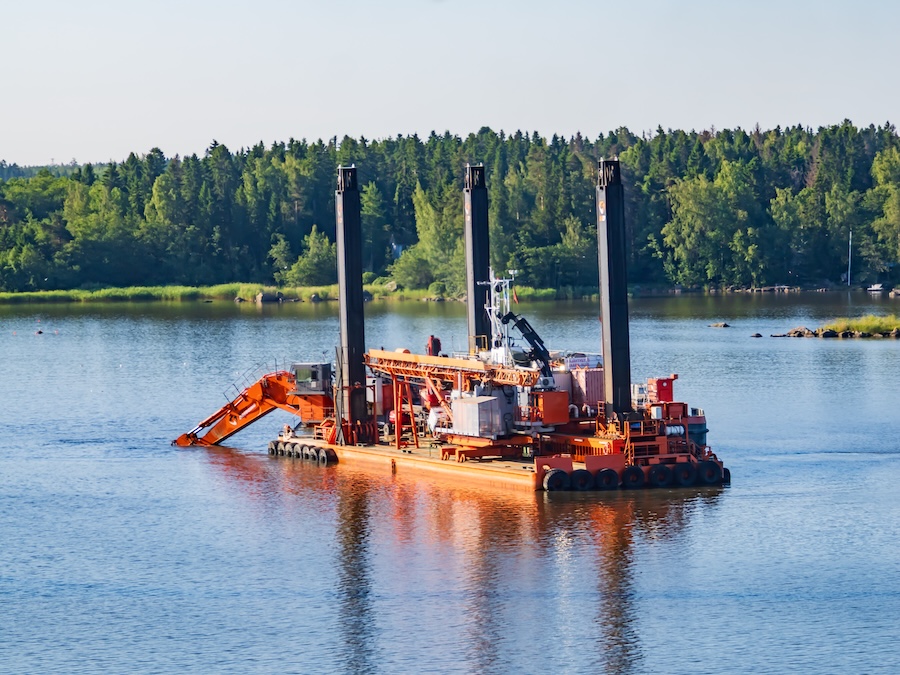
Nothing kills a marine job faster than a barge that won’t stay put. Wind, current, tide—every shift means lost time, misdriven piles, frustrated crews, and blown budgets. That’s why smart contractors are considering next-level hydraulic, electric, and modular systems that lock the barge down like it’s on solid ground. These upgrades aren’t just nice-to-haves—they’re game-changers that deliver faster setups, pinpoint stability, and the confidence to tackle tougher sites without repositioning every hour.
Modern Design Advancements
Hydraulic and Rack-and-Pinion Systems
Traditional cable winches are giving way to hydraulic rack-and-pinion drives for powered up/down/free-fall operation. These offer precise control, eliminate cable wear issues, and allow spuds to swing horizontally when raised (useful under low bridges or overhead obstacles).
Power Spud Winches
Self-contained hydraulic or electric winches (diesel/electric power packs) mount directly to spudwells, enabling rapid deployment without cranes. Models handle multiple spuds simultaneously for faster mooring in tidal areas.
Modular and Heavy-Duty Spudlegs
In sectional/modular barges, larger-diameter spuds (e.g., 762–1000 mm) with extended lengths (up to 33 m) support higher payloads (75–400+ tons) and deeper water. Designs integrate with perimeter lock systems for easy reconfiguration.
Rotating and Retractable Options
Some systems allow spuds to rotate or retract fully, improving transportability and reducing draft in shallow or sensitive environments.
Installation Best Practices
Placement Strategy
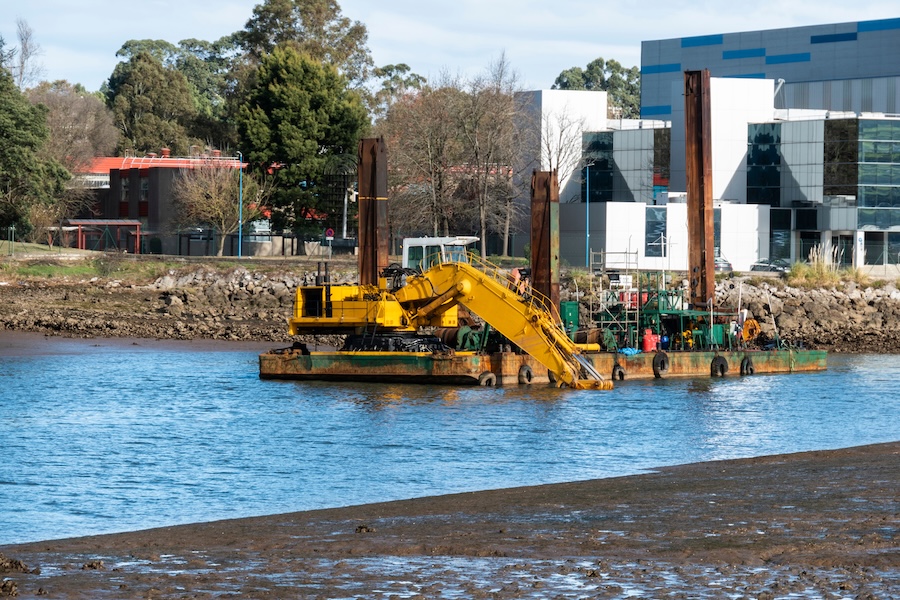
Position spudwells at corners or opposite sides (e.g., two forward/aft on one side for better longitudinal stability). Minimum: 2–4 spuds; use 4 for heavy crane/pile ops.
Mounting and Alignment
Bolt or weld spudwells securely to deck edges/perimeter. For external setups, align guide sleeves vertically. Ensure winch lead blocks are tack-welded forward for smooth cable routing.
Winch Integration
Mount hydraulic winches directly to spudwells or via brackets. Use high-strength cables (e.g., 5/8″) and pulleys. Test free-fall and brake systems before ops.
Safety Protocols
Remove securing pins before lowering. Use multiple redundancies (winch brake latch, pawl, pin) to prevent accidental drops. Clear area during deployment. Inspect for wear regularly.
Stability Enhancements
Reduced Lateral Movement
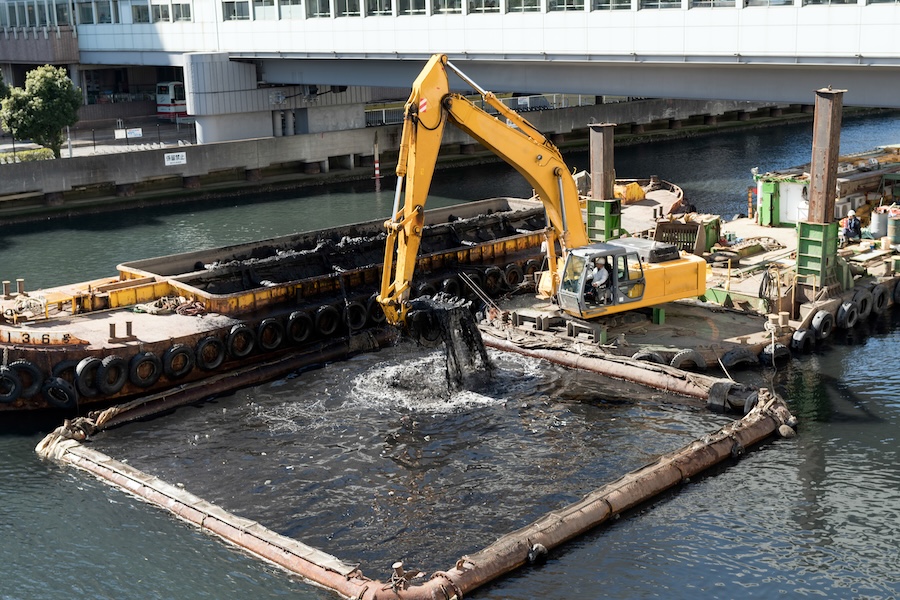
Modern systems pin barges firmly, minimizing drift for accurate pile placement—even in strong currents or variable depths.
Lower Center of Gravity
Heavier/longer spuds embed deeper, improving resistance to heave/pitch/roll from on-deck machinery.
Environmental Adaptability
Upgrades handle shallow inland to deeper coastal work. Hydraulic precision reduces repositioning needs, cutting time and fuel.
Overall ROI
Faster spudding (no crane dependency), less maintenance (fewer cables), and safer ops lead to quicker project turns and lower risks.
These upgrades make spud systems more efficient and contractor-friendly than ever, especially for pile driving where platform stability directly impacts accuracy and speed. If you’re upgrading a fleet, starting with hydraulic winch retrofits on existing barges often delivers the biggest immediate gains.
View the complete article here.
Why are modern hydraulic spud systems important for marine construction barges?
They provide precise, rapid deployment and superior stability, reducing drift and repositioning time in wind, current, and tidal conditions.
What is the main return on investment when upgrading to hydraulic or electric spud systems?
Contractors gain faster setup, lower maintenance, improved safety, and greater pile-driving accuracy, leading to shorter project durations and reduced operating costs.
