

Hydraulic vs. Mechanical Dredging: Options for Harbor and Coastal Cleanups
Harbors, navigation channels, and coastal waterways require regular dredging to maintain depth, manage contamination, and support safe marine operations. As sediment accumulates over time from natural deposition, storm events, and industrial activity, dredging becomes essential for both environmental protection and economic continuity. Among the most widely used approaches are hydraulic dredging and mechanical dredging, each offering distinct advantages depending on site conditions, sediment characteristics, and project goals. Understanding how these two methods differ is critical when planning effective harbor and coastal cleanup projects.
Understanding Modern Dredging Approaches
Dredging methods have evolved significantly to address environmental regulations, sediment management challenges, and efficiency demands. Today’s dredging projects often balance navigational improvement with ecological protection, particularly in sensitive coastal zones. Selecting the appropriate technique depends on sediment type, contamination levels, disposal requirements, and proximity to shore facilities. In many cases, dredging contractors evaluate both hydraulic and mechanical systems before determining the most suitable solution.
Early in project planning, engineers often review available dredging equipment and sediment removal systems to match operational capabilities with environmental constraints. This evaluation plays a critical role in determining project timelines, costs, and long-term site performance.
Hydraulic Dredging Explained
Hydraulic dredging removes sediment by mixing it with water to form a slurry, which is then pumped through pipelines to a designated placement or treatment area. This method is commonly used in maintenance dredging, beach nourishment, and large-scale sediment relocation projects.
How Hydraulic Dredging Works
Hydraulic dredges use centrifugal pumps to transport sediment-water mixtures from the seabed to shore or to offshore containment areas. Cutter suction dredges loosen compacted material with a rotating cutter head, while plain suction dredges rely on naturally loose sediment. Hopper dredges collect material onboard and transport it for offshore placement, making them suitable for open water environments.
Because sediment remains submerged throughout the process, hydraulic dredging can reduce rehandling and minimize direct exposure to contaminated materials when compared to dry excavation methods.
Benefits of Hydraulic Dredging
Hydraulic dredging is particularly effective for fine-grained sediments such as silt, clay, and sand. The continuous pumping process allows for efficient material movement over long distances, which is advantageous when disposal or reuse sites are located far from the dredging area. This method is frequently used in beach nourishment projects, where dredged sand is directly placed along shorelines to combat erosion.
Hydraulic systems also support sediment treatment processes such as dewatering, separation, and stabilization when contamination is present. These capabilities make the method suitable for large remediation projects that require controlled material handling.
Limitations and Environmental Considerations
Despite its efficiency, hydraulic dredging can generate turbidity plumes that impact water quality if not properly managed. Regulatory agencies often require monitoring and control measures such as silt curtains and turbidity limits. Additionally, hydraulic dredging may be less effective for debris-laden sediments or heavily compacted materials that resist suction.
Mechanical Dredging Explained
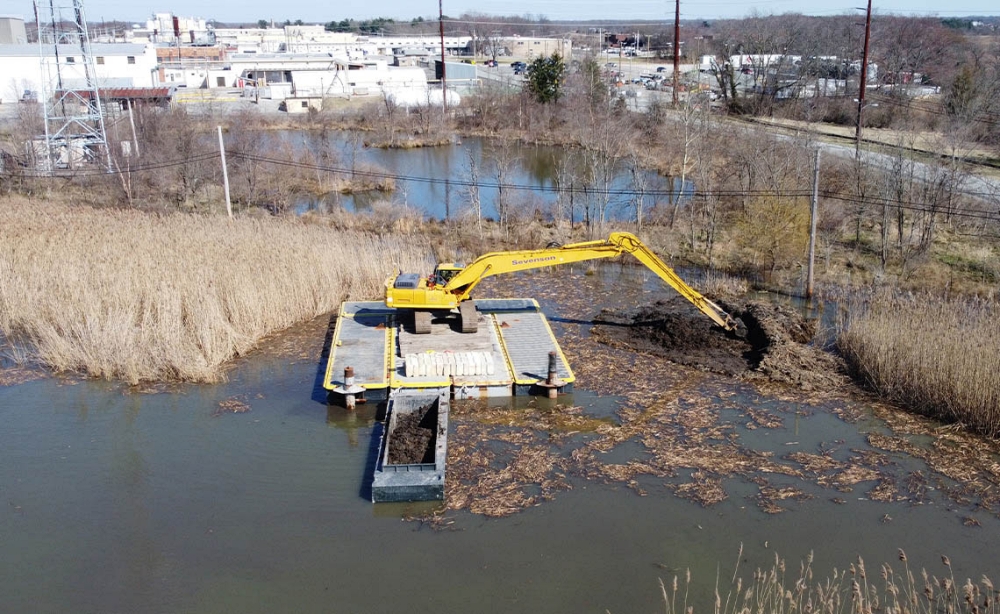
Mechanical dredging relies on physical excavation tools to remove sediment from the seabed. This approach is commonly used in confined areas, contaminated sites, and projects requiring precise material removal.
How Mechanical Dredging Works
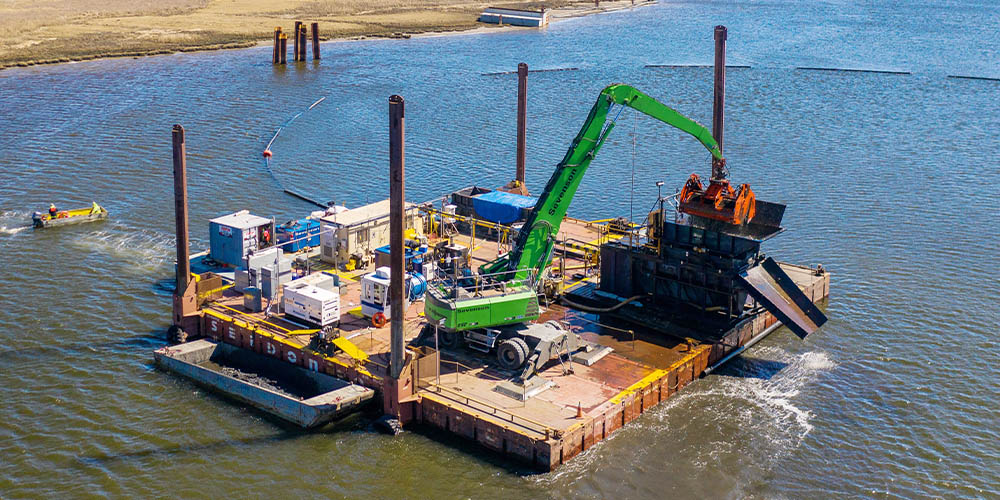
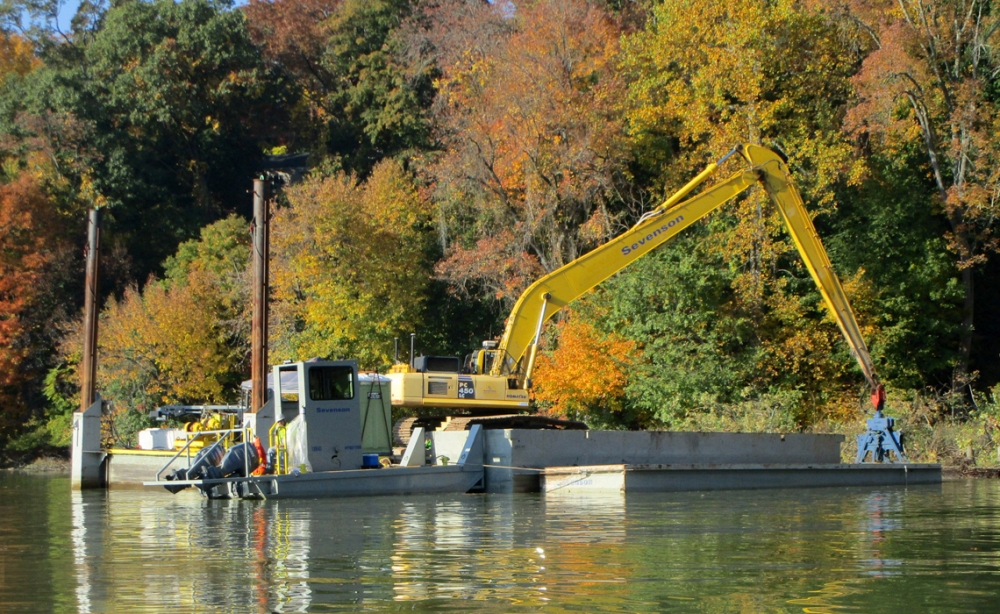
Mechanical dredges use buckets, clamshells, or backhoes mounted on barges to excavate sediment directly. The material is lifted out of the water and placed into scows or trucks for transport to disposal or treatment facilities. Clamshell dredges are widely used in harbors and berths, while backhoe dredges offer greater control in shallow or restricted areas.
Because material is removed in discrete loads, mechanical dredging allows for targeted excavation and selective removal of contaminated sediments.
Benefits of Mechanical Dredging
Mechanical dredging provides high accuracy and control, making it ideal for environmental remediation projects where contaminated sediment must be isolated and removed without excessive disturbance. The method is well suited for sediments containing debris, rubble, or dense materials that are difficult to pump hydraulically.
This approach also allows for visual confirmation of sediment removal, which can be valuable during regulatory inspections and quality assurance processes.
Limitations and Environmental Considerations
Mechanical dredging can result in greater sediment resuspension during bucket closure and lifting, particularly if improper techniques are used. It also typically involves higher handling costs due to the need for transport and disposal of solid material. Compared to hydraulic dredging, mechanical methods may be slower for large-volume projects.
Comparing Hydraulic and Mechanical Dredging
Sediment Type and Site Conditions
Hydraulic dredging performs best with loose, fine-grained sediments and large, open areas where continuous pumping is feasible. Mechanical dredging excels in confined spaces, hard materials, and debris-laden environments. Harbor maintenance projects often favor mechanical methods near docks and structures, while navigation channels may benefit from hydraulic systems.
Environmental Control and Compliance
Both methods can meet environmental regulations when properly designed and managed. Hydraulic dredging requires turbidity control and slurry management, while mechanical dredging focuses on minimizing sediment loss during handling. The choice often depends on regulatory permits, contamination levels, and monitoring requirements.
Cost and Operational Efficiency
Hydraulic dredging can offer cost advantages for large volumes due to continuous operation and reduced rehandling. Mechanical dredging may involve higher unit costs but delivers precision that can reduce overall remediation scope. Project scale and disposal logistics play a major role in determining cost effectiveness.
Hybrid and Project-Specific Solutions
Many modern dredging projects combine hydraulic and mechanical methods to optimize performance. Mechanical dredging may be used for initial removal of debris or contaminated layers, followed by hydraulic dredging for bulk sediment removal. This hybrid approach allows engineers to address complex site conditions while maintaining efficiency.
Advances in harbor dredging technology and coastal remediation solutions continue to improve sediment control, monitoring, and material handling. These innovations support safer operations and more sustainable outcomes for coastal infrastructure projects.
Choosing the Right Dredging Method
Selecting between hydraulic and mechanical dredging requires careful evaluation of environmental goals, sediment characteristics, site constraints, and regulatory requirements. No single method is universally superior, and successful harbor and coastal cleanup projects often rely on informed planning and adaptive execution. By understanding the strengths and limitations of each approach, project stakeholders can achieve effective sediment management while protecting surrounding ecosystems and infrastructure.
Hydraulic dredging moves fine sediments as a slurry for channel maintenance, beach nourishment, and large-scale sediment relocation.
Mechanical dredging is ideal for confined areas, debris-laden sediments, and projects requiring precise or selective material removal. What is hydraulic dredging used for?
When is mechanical dredging preferred over hydraulic dredging?
