

Hot-Rolled vs. Cold-Formed Sheet Piling: A 2026 Guide
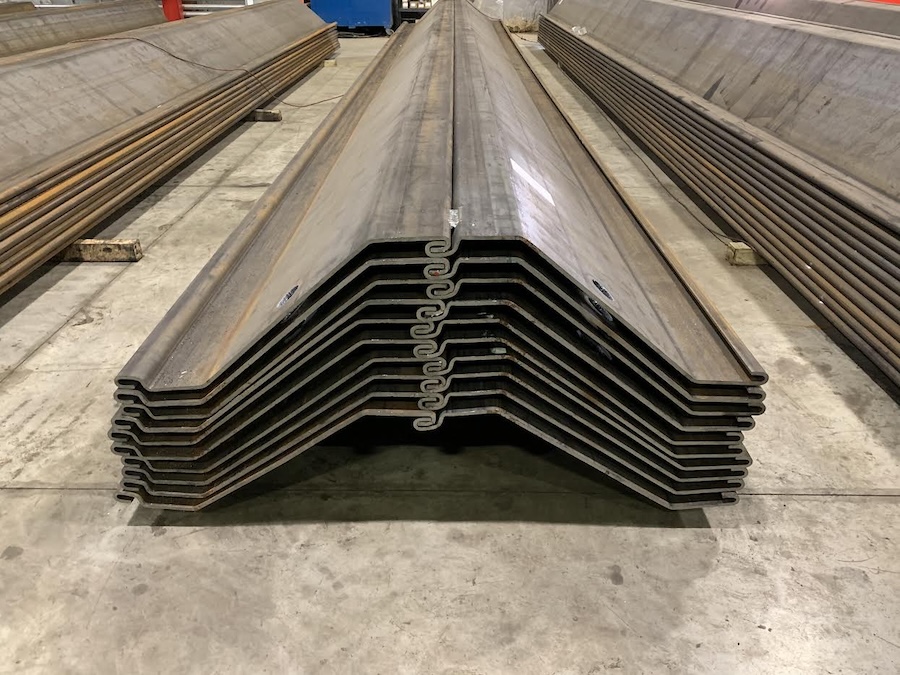
View the complete article here.
Within the sheet piling industry, few topics spark as much debate as the choice between hot-rolled and cold-formed steel sections. As a staple in retaining walls, cofferdams, bulkheads, and other geotechnical applications—sheet piling plays a critical role in infrastructure projects. The controversy often stems from differences in manufacturing, performance, and cost—with strong opinions on both sides.
This guide draws heavily from established engineering principles outlined in resources like Sheet Pile Design by Pile Buck—emphasizing factual comparisons to help engineers, contractors, and project managers make informed decisions. We’ll explore the key distinctions without favoring one over the other, recognizing that both types have proven their value in the field.
Manufacturing Processes
The fundamental difference between hot-rolled and cold-formed sheet piling lies in how they’re produced.
Hot-Rolled Sheet Piling
This type is manufactured by heating steel billets or beam blanks to extremely high temperatures (around 2,200°F) and then rolling them into the desired shape in one or two steps. The process allows for precise forming of complex profiles—such as Z-shapes, U-shapes (Larsen types), and straight-web sections. As noted in industry manuals, hot-rolling integrates the interlocks during the high-heat phase—resulting in tighter connections. This method has been the standard for over a century, with roots in early 20th-century innovations.
Cold-Formed (or Cold-Finished) Sheet Piling
In contrast, cold-forming starts with hot-rolled steel coils that are then processed at room temperature through a series of rollers to shape the pile sections. This two-step approach—coiling first, then forming—offers efficiencies in production time and cost. According to design references, cold-finished piling is highlighted for its adaptability in creating lighter sections—though it requires careful control to maintain structural integrity.
The manufacturing variance affects everything from material tolerances to final product weight. Hot-rolled piles typically adhere to standards like BS EN 10248, which specify dimensions and interlock behaviors rigorously. Cold-formed piles follow BS EN 10249, but this standard omits some details on tolerances and declutching—leading to potential variability.
Interlock Designs
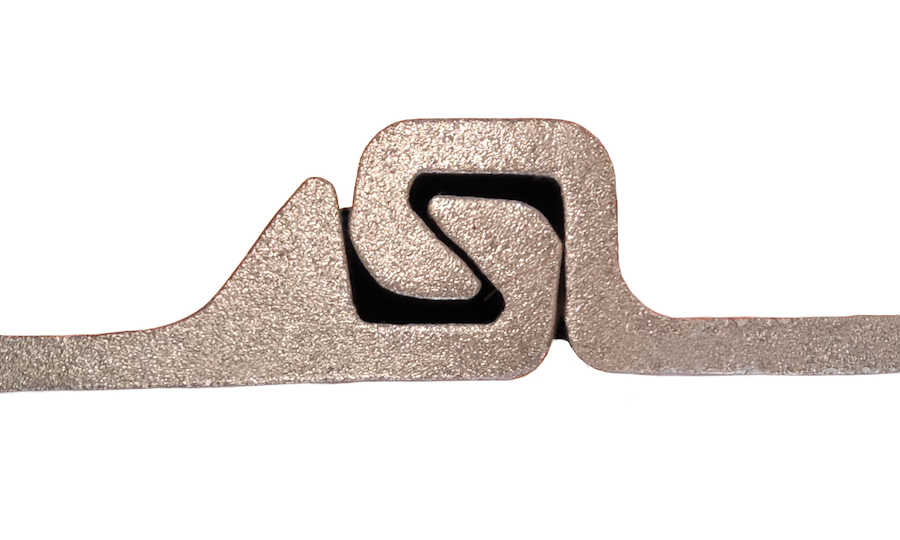
Interlocks are the heart of sheet piling, ensuring walls remain continuous and resistant to separation under load.
Hot-Rolled Interlocks
Hot-rolled interlocks commonly feature ball-and-socket or Larssen designs, formed under heat for a snug fit. These provide high impermeability, making them effective against water leakage in marine or flood-control applications. Studies show they have proven declutching resistance, with standardized shapes that allow predictable performance. However, compatibility between manufacturers often requires custom transition pieces.
Cold-Formed Interlocks
Cold-formed interlocks often use a hook-and-grip mechanism, which is looser by design. This looseness facilitates easier threading during installation and reduces friction during driving or extraction—ideal for temporary works. While not as tight, the surface area in contact under pressure is comparable to hot-rolled types—and they can achieve similar sealing with hydraulic assistance or sealants. The lack of standardization in shape can complicate sealant selection, and excessive swing might occur if not driven plumb.
In practice, no interlock is 100% watertight. Sealing relies on soil pressure and trapped particles. Hot-rolled may seal faster in wet conditions without additional load, but cold-formed has demonstrated longevity in installations lasting over 40 years—such as bulkheads in Louisiana and Mississippi.
Structural Properties and Performance
Both types generally use the same steel grades, like ASTM A572 Grade 50—ensuring equivalent base material strength. However, performance diverges due to forming methods.
Flexural and Bending Strength
Hot-rolled piles often exhibit superior flexural behavior under soil pressure. A Virginia Tech study on simulated soil loading found that hot-rolled sections had higher moment capacity, attributed to lower transverse strains. Longer spans reduced these strains further, enhancing performance. Cold-formed piles, while lighter, may be classified as Class 4 sections—requiring extra checks for local buckling. They can’t always transmit forces between elements as effectively, potentially limiting use in high-load scenarios.
Driving and Durability
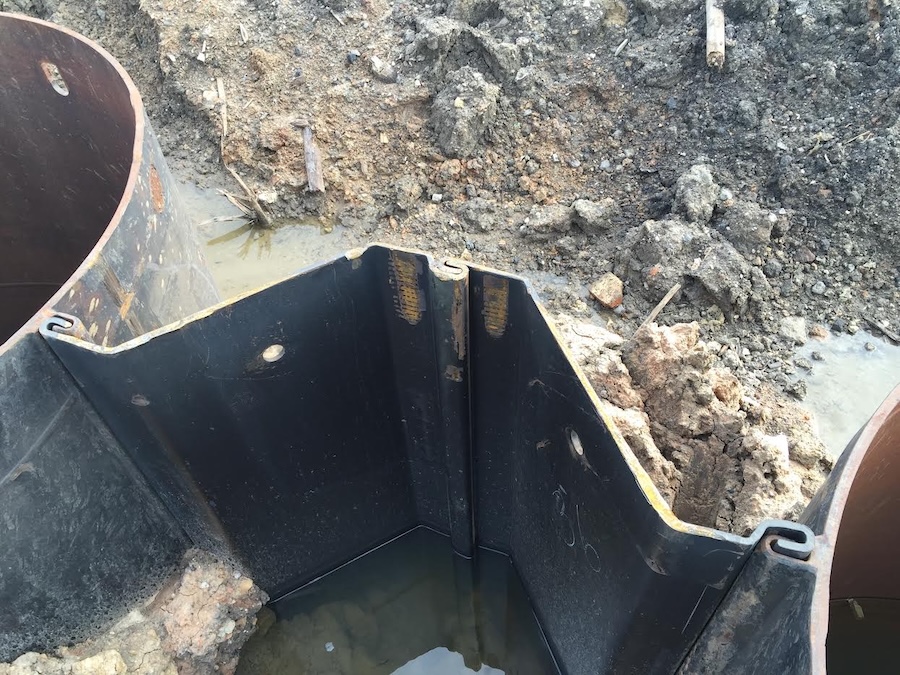
Hot-rolled’s tighter interlocks make them robust for hard driving in dense soils, with less risk of deformation. Cold-formed’s looser design speeds up installation but demands experienced crews to maintain alignment. In terms of corrosion, both benefit from grades like ASTM A690—though lighter cold-formed sections might corrode faster in aggressive environments without protection.
Transverse Bending and Shear
Design manuals emphasize that transverse bending, a newer consideration in sheet piling, can lead to failure if not accounted for. Hot-rolled sections handle combined axial and flexural stresses better, per theoretical bending applications.
Academic tests confirm that transverse stresses from soil reduce overall capacity, but hot-rolled piles mitigate this more effectively.
Applications and Suitability
Choosing between the two depends on project demands.
Hot-Rolled Applications
Hot-rolled piles excel in permanent, high-stakes structures like marine bulkheads, cellular cofferdams, retaining walls, and load-bearing foundations. Their proven track record suits mainstream uses, including seismic-prone areas where stability is paramount.
Cold-Formed Applications
Cold-formed piles are ideal for temporary trenching, small-scale retaining walls, waterfront erosion protection, and dike reinforcements. They’re popular in pipeline projects requiring multiple drives and pulls, where ease of handling saves time and labor.
For instance, in coastal construction or highway abutments, hot-rolled might be preferred for durability—while cold-formed shines in quick-setup scenarios like land cofferdams or trench excavations.
Pros and Cons
In most cases, the following pros and cons apply:
- Hot-rolled pros:
- Long history and widespread acceptance.
- Tighter interlocks for better watertightness and stability.
- Superior flexural performance in demanding conditions.
- Greater weight efficiency in many Z-shaped profiles: flanges can be thicker than the web, placing more mass farther from the neutral axis to optimize section modulus per unit weight.
- Reinforced shoulders available in heavy sections (e.g., some AZ series), which improve driving performance in challenging soils.
- Hot-rolled cons:
- Variable cost (often higher, but dependent on raw material prices—hot-rolled typically uses more scrap steel, while cold-formed starts from hot-rolled coils that may derive from iron ore; scrap vs. iron ore pricing fluctuates).
- Manufacturer-specific interlocks limit flexibility.
- Heavier sections increase handling challenges.
- Cold-formed pros:
- Cost-effective with faster manufacturing.
- Lighter weight and easier installation/removal.
- Uniform interlocks across suppliers.
- Cold-formed cons:
- Looser interlocks may increase leakage risk.
- Potential for declutching if not installed precisely.
- Shorter history leads to skepticism in some specifications.
Conclusion
The hot-rolled vs. cold-formed debate isn’t about one being inherently better—it’s about matching the product to the project. Factors like soil types, loading conditions, and failure modes (e.g., rotational or flexural) must guide selection. Various associations stress that hot-rolled suits continuous, high-performance walls—while cold-formed fits lighter duties.
Ultimately, consult licensed engineers for site-specific analysis—considering standards like ASTM and EN codes. By weighing these elements—you can avoid common pitfalls and ensure safe, efficient designs. Whether you’re building a seawall or a temporary excavation, both options contribute vitally to the industry.
View the complete article here.
What is the main difference between hot-rolled and cold-formed sheet piling?
Hot-rolled sheet piles are shaped at extremely high temperatures with integrated tight interlocks, while cold-formed sheet piles are formed at room temperature from steel coils, making them lighter and typically more cost-effective.
Which type of sheet piling is better for permanent high-load structures?
Hot-rolled sheet piling is generally preferred for permanent, high-load applications due to its superior flexural strength, tighter interlocks, and proven performance in demanding conditions.
