

Rapid-Install Mechanical Anchors for Seawall and Bulkhead Reinforcement
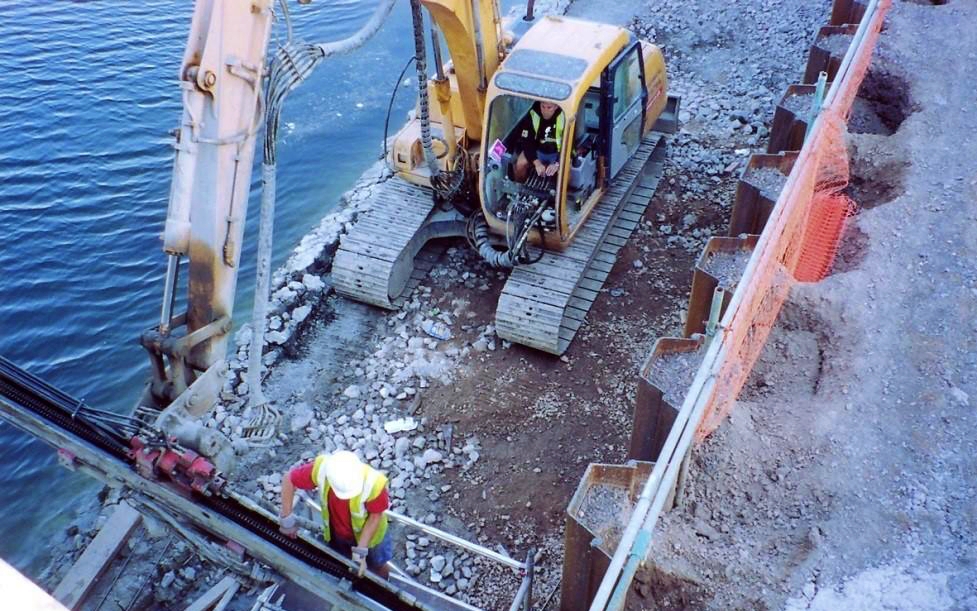
Aging seawalls and bulkheads are a growing concern along developed coastlines, ports, and inland waterways. Many of these structures were built decades ago using timber, sheet pile, or concrete systems that now face increased loading from erosion, vessel traffic, and rising water levels. Full replacement is often disruptive and expensive, which is why reinforcement strategies that can be installed quickly and with minimal site disturbance are increasingly favored. Rapid-install mechanical anchors have become a practical solution for extending the service life of seawalls and bulkheads without large-scale reconstruction.
Why Seawalls and Bulkheads Fail Over Time
Seawalls and bulkheads are designed to resist lateral earth pressures while retaining soil at the shoreline. Over time, loss of backfill due to erosion, fluctuating groundwater levels, and repeated surcharge loading from vehicles or structures can reduce their stability. Timber systems may experience biological decay, while steel components are vulnerable to corrosion in aggressive marine environments. As these factors combine, walls begin to rotate, settle, or crack, signaling a need for structural intervention.
Common Structural Distress Indicators
Visible signs of distress typically include wall deflection, separation between wall elements, sinkholes behind the structure, and tension cracks along the retained soil surface. In many cases, these symptoms indicate insufficient tieback capacity rather than failure of the facing itself. Reinforcement strategies often focus on restoring or increasing anchorage to stabilize the wall and prevent further movement.
What Defines Rapid-Install Mechanical Anchors
Rapid-install mechanical anchors are load-bearing elements installed into soil or rock using rotary drilling or driven methods, followed by mechanical expansion or grouting to develop capacity. Unlike traditional deadman systems or cast-in-place tiebacks, these anchors can often be installed with compact equipment and require minimal excavation. Their installation speed makes them suitable for repair projects where access, time, or environmental constraints limit construction windows.
Installation Speed and Site Efficiency
One of the primary advantages of mechanical anchors is the ability to install and load them within a short timeframe. Many systems allow for same-day installation and testing, reducing downtime for waterfront facilities. This efficiency is especially valuable in tidal zones or active ports where work windows are limited and prolonged construction can disrupt operations.
Load Transfer Mechanisms in Marine Soils
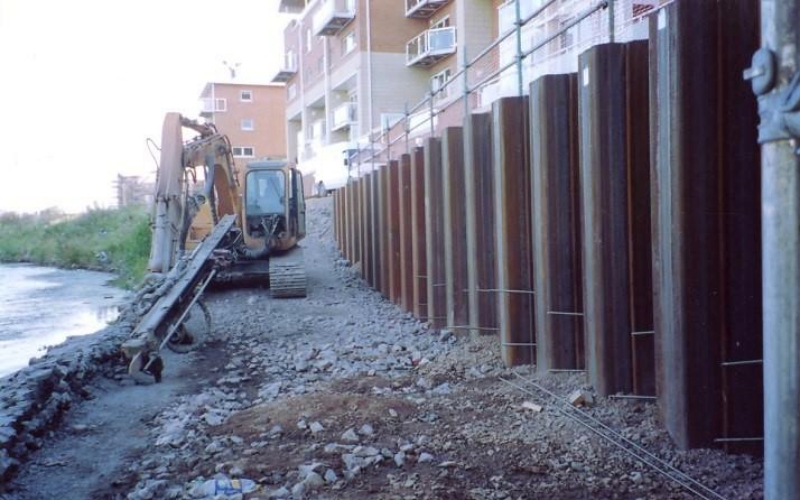
The performance of mechanical anchors depends on how load is transferred into the surrounding soil or rock. In granular soils, load resistance is typically mobilized through friction and bearing along the anchor body. In cohesive soils, adhesion plays a larger role, while anchors installed into rock rely on mechanical interlock or bonded length within competent strata. Proper geotechnical evaluation is essential to ensure anchors are designed for site-specific conditions.
Marine and waterfront sites often exhibit highly variable subsurface profiles, including soft clays, loose sands, fill materials, and weathered rock. Mechanical anchor systems can be adapted to these conditions by adjusting embedment depth, anchor diameter, and installation method. This flexibility allows engineers to design reinforcement solutions without extensive ground improvement or excavation.
Applications in Seawall and Bulkhead Rehabilitation
Mechanical anchors are commonly used to stabilize existing seawalls and bulkheads by providing additional tieback resistance. Anchors are typically connected to walers or brackets attached to the wall face, distributing loads evenly across the structure. This approach allows engineers to arrest wall movement and restore acceptable factors of safety without replacing the entire wall.
Because mechanical anchors require limited excavation and smaller equipment footprints, they are well suited for environmentally sensitive shorelines. Reduced disturbance to aquatic habitats, vegetation, and adjacent properties is a significant advantage when working in regulated coastal zones. In many cases, this approach simplifies permitting compared to full wall replacement.
Performance Compared to Traditional Tieback Systems
Traditional tieback systems often involve excavating behind the wall to install deadmen or cast-in-place anchors. These methods can be effective but are time-consuming and disruptive, particularly in developed waterfront areas. Mechanical anchors provide comparable load capacity while avoiding large excavations and extensive site restoration.
When properly designed and protected against corrosion, mechanical anchors can provide long-term performance in marine environments. Protective coatings, sacrificial thickness allowances, and corrosion-resistant materials are commonly used to address durability concerns. These measures align with established marine engineering practices and help ensure anchors perform throughout the intended service life of the structure.
Design Considerations for Reinforcement Projects
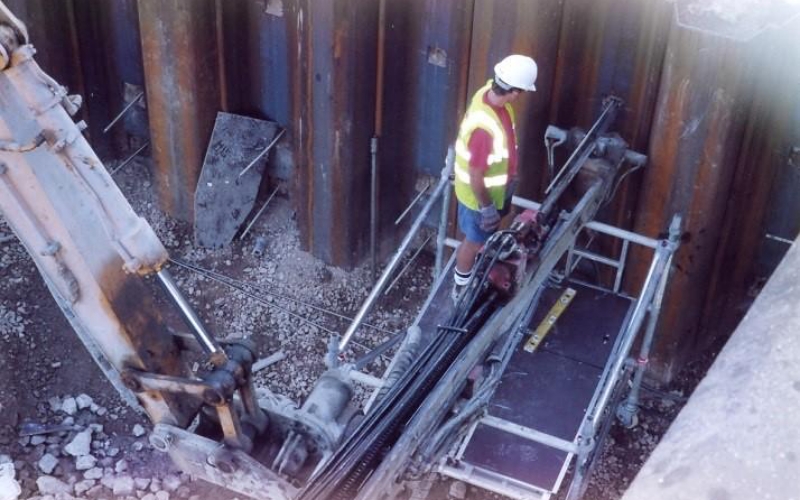
Successful reinforcement projects depend on accurate load assessment and anchor layout. Engineers must evaluate existing wall geometry, retained soil pressures, and any additional surcharges to determine required anchor capacities. Load testing is often performed to verify performance and confirm that design assumptions are met.
Mechanical anchors are typically designed to integrate with existing wall systems using brackets, plates, or walers. This allows reinforcement to be added without altering the original wall alignment. Careful detailing ensures loads are transferred efficiently while avoiding localized overstressing of aging wall components.
Construction Planning and Safety
Waterfront construction presents unique safety challenges, including tidal fluctuations, unstable soils, and limited access. Rapid-install anchor systems reduce exposure by shortening construction durations and limiting open excavations. This contributes to safer working conditions for crews and reduced risk to adjacent infrastructure.
Industry Trends and Adoption
As coastal infrastructure continues to age, owners and engineers are increasingly seeking rehabilitation methods that balance cost, performance, and constructability. The growing use of mechanical ground anchors in marine applications reflects this shift toward efficient, targeted reinforcement solutions. These systems are now widely accepted in seawall and bulkhead repair projects across ports, marinas, and flood protection structures.
Extending Service Life Through Targeted Reinforcement
Reinforcing existing seawalls and bulkheads with mechanical anchors can significantly extend their service life while deferring costly replacement. By addressing the root causes of structural instability, owners can maintain shoreline protection and operational continuity. For many projects, integrating seawall tieback systems through rapid-install methods offers a practical balance between performance and constructability.
Why are rapid-install mechanical anchors used in seawall reinforcement?
They restore lateral tieback capacity quickly with minimal excavation, making them ideal for active and tidal waterfront environments.
How do mechanical anchors improve aging seawalls and bulkheads?
They transfer load into stable soil or rock to stabilize wall movement and extend service life without full reconstruction.
