

On this page8 sections
- Understanding the Challenges of Marine Construction Equipment
- Protecting Hydraulic Systems in Marine Environments
- Preventing Gearbox Wear and Corrosion
- Protecting Bearings, Pins, and Exposed Components
- Comparing Lubrication Requirements Across Marine Equipment
- Understanding Environmental Requirements for Marine Lubricants
- Maintenance Practices That Help Reduce Equipment Downtime
- Keeping Marine Construction Equipment Reliable
Understanding the Challenges of Marine Construction Equipment
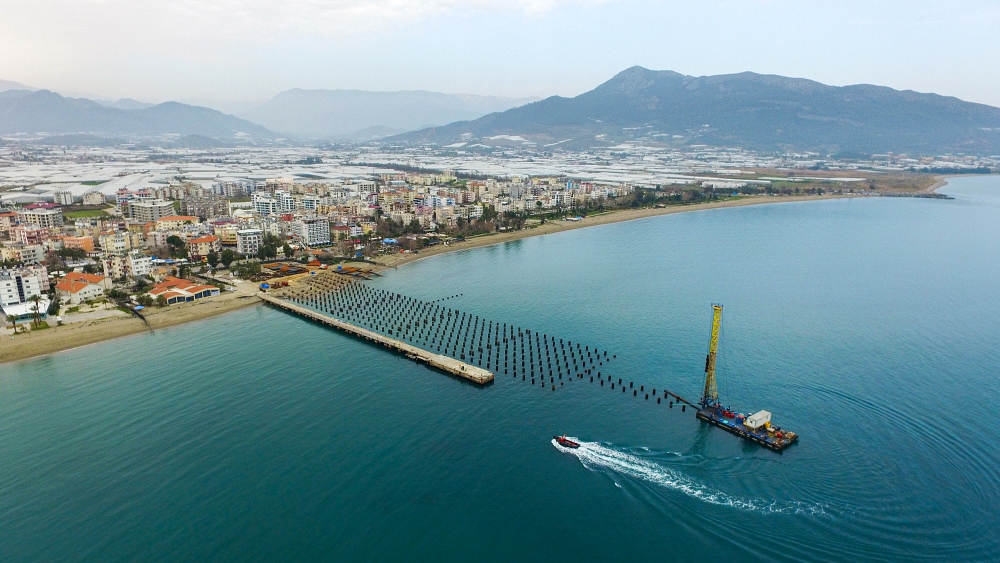
Marine construction combines demanding mechanical operations with environmental conditions that can accelerate equipment deterioration. Hydraulic systems provide the force required for lifting, digging, and positioning materials, while gearboxes transfer power and control rotational speed. Bearings, pins, and other moving components rely on suitable lubricants to limit friction and wear.
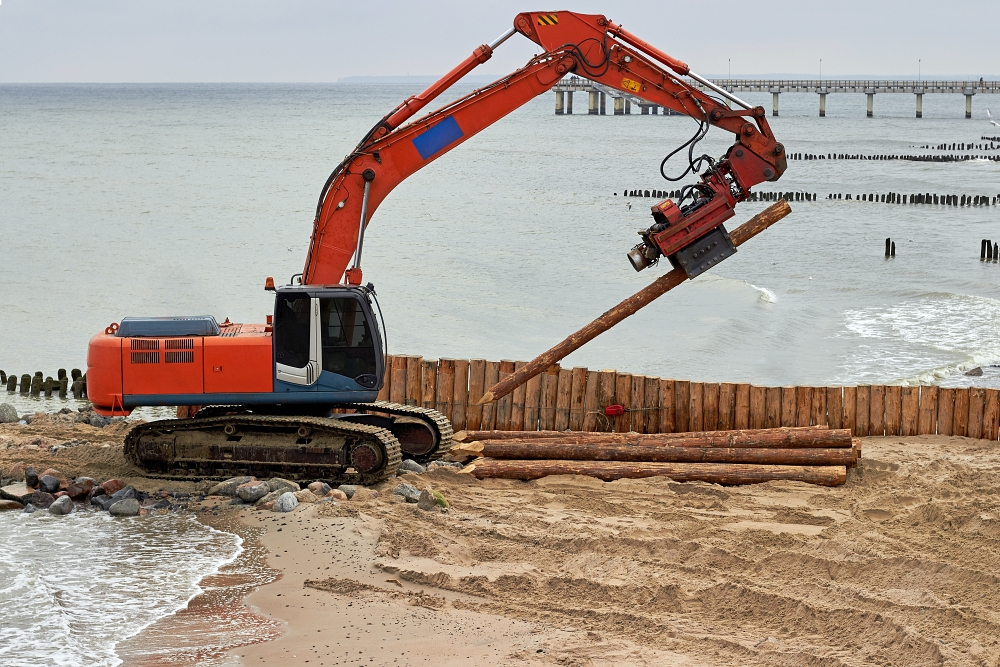
Unlike equipment operating at inland construction sites, marine machinery may be exposed to salt spray, humidity, wave action, and direct contact with water. These conditions increase the importance of corrosion protection, contamination management, and regular lubrication maintenance.
How Moisture and Saltwater Affect Equipment
Water contamination can affect lubricant performance in several ways. Depending on the formulation and operating conditions, moisture can contribute to corrosion, interfere with additives, reduce effective film strength, and accelerate lubricant degradation.
Saltwater exposure presents additional concerns because dissolved salts can promote corrosion when moisture reaches vulnerable metal surfaces. Equipment seals, breathers, and lubrication-system components therefore require careful inspection, particularly when machinery operates on floating platforms or near tidal waters.
The environmental consequences of leakage are also important. Hydraulic hoses, seals, fittings, and lubricated mechanical assemblies may release oil into surrounding water if they fail. Selecting an appropriate lubricant can reduce the potential environmental impact of these releases, although it does not eliminate the need for effective spill prevention.
Protecting Hydraulic Systems in Marine Environments
Hydraulic systems are among the most important lubrication applications in marine construction and hydropower projects. Equipment such as excavators, cranes, winches, and hydraulic power units used in marine operations, dam construction, and hydroelectric facility maintenance depends on hydraulic fluid to transmit force while lubricating pumps, valves, motors, and other internal components.
Hydraulic oil selection must account for operating temperature, pressure, viscosity, component compatibility, and the equipment manufacturer’s requirements. In environmentally sensitive applications, contractors may also need to evaluate whether an environmentally acceptable hydraulic fluid is appropriate.
Maintaining Proper Viscosity Under Changing Conditions
Viscosity describes a fluid’s resistance to flow and is a fundamental consideration when selecting hydraulic oil. A lubricant that is too viscous for the operating conditions may increase flow resistance and affect cold-start performance. A fluid with insufficient viscosity at operating temperature may not maintain the protective film required by certain components.
Marine contractors should select the viscosity grade specified by the equipment manufacturer, taking into account expected operating temperatures and duty cycles. Synthetic hydraulic lubricants may offer useful viscosity-temperature characteristics, but performance varies by formulation.
BioMax Hydraulic EAL is formulated for hydraulic and circulating-oil systems requiring environmentally acceptable lubricants. Such products can be considered for marine construction equipment where environmental characteristics are important, provided the selected grade and formulation meet the equipment’s requirements.
Reducing Wear in Hydraulic Pumps and Motors
Hydraulic pumps and motors contain precisely manufactured components operating under pressure and repeated movement. Maintaining an appropriate lubricant film helps limit metal-to-metal contact and protect surfaces against wear.
Anti-wear performance is particularly important for equipment experiencing frequent load changes or extended operating periods. However, a lubricant’s suitability depends on more than its advertised wear protection. Contractors must verify viscosity, performance specifications, seal compatibility, and any required equipment approvals before selecting a replacement fluid.

Preventing Gearbox Wear and Corrosion
Gearboxes used in marine construction can experience substantial contact loads, sliding friction, and repeated changes in operating speed. These conditions make lubricant film strength, viscosity, oxidation resistance, and extreme-pressure performance important selection factors.
Applications may include enclosed gearing in deck machinery, winch systems, and other marine mechanical equipment. Each application has its own operating conditions, and the lubricant must match the gearbox manufacturer’s specifications.
Maintaining Gear Protection Under Heavy Loads
Gear teeth transfer force through relatively small contact areas. Under heavy loading, the lubricant must maintain a protective film and provide appropriate additive protection to help control wear and surface damage.
Extreme-pressure additives are used in certain gear lubricants to protect contacting surfaces under severe loading conditions. However, not every gearbox requires the same additive chemistry or viscosity grade.
Contractors should evaluate the gear arrangement, expected loads, operating temperature, and manufacturer specifications rather than assuming that a higher-viscosity oil or stronger additive package is always preferable.
Controlling Moisture and Corrosion
Marine gearboxes may encounter moisture through condensation, damaged seals, or environmental exposure. Water contamination can contribute to corrosion and affect lubricant performance, making moisture control an important part of gearbox maintenance.
The ability of a lubricant to separate from water, resist degradation, and protect against corrosion depends on its base oil chemistry and additive formulation. These properties should be considered alongside the operating requirements of the gearbox.
BioMax Gear EAL is a synthetic environmentally acceptable lubricant intended for enclosed gear systems. Contractors evaluating this type of product should consider viscosity, wear protection, corrosion resistance, environmental characteristics, and equipment compatibility.
Protecting Bearings, Pins, and Exposed Components
Not all marine construction equipment relies exclusively on circulating oil systems. Grease is commonly used where lubricants must remain in place around bearings, pins, bushings, and other moving components.
Examples include crane pivot points, excavator linkage pins, and certain exposed mechanical assemblies. These applications may experience oscillating movement, heavy loading, moisture exposure, and contamination from dirt or abrasive materials.
Why Water Resistance Matters
Water resistance is an important characteristic for grease used in marine environments. Depending on the application, grease may be exposed to rain, washdown, salt spray, or intermittent contact with water.
A suitable grease must provide lubrication while resisting displacement and maintaining the consistency required by the equipment. Mechanical stability, corrosion protection, and the ability to remain in the lubrication point should be evaluated alongside load-carrying performance.
Grease selection also requires attention to thickener compatibility. Different grease formulations are not automatically compatible, and mixing them can alter consistency or performance. Contractors changing products should follow the equipment and lubricant manufacturers’ recommendations for cleaning, purging, and relubrication.
Selecting Grease for Equipment Near Waterways
When grease may enter surrounding water, environmental characteristics become another consideration. Environmentally acceptable greases are available for certain marine applications, but their suitability must still be verified against the equipment’s operating requirements.
Contractors should confirm the product’s environmental documentation, water-resistance characteristics, load performance, and compatibility before making a selection.
Comparing Lubrication Requirements Across Marine Equipment
Different lubrication systems perform different functions, making it important to select products according to the actual application rather than relying on one lubricant for every component.
| Equipment or Component | Lubricant Type | Key Selection Considerations |
|---|---|---|
| Hydraulic excavators and cranes | Hydraulic oil | Viscosity, pump protection, oxidation stability, seal compatibility |
| Marine winches and enclosed gearboxes | Gear oil | Load-carrying capability, viscosity, wear protection, corrosion resistance |
| Crane pins and bushings | Grease | Load protection, water resistance, mechanical stability |
| Bearings in exposed equipment | Grease | Corrosion protection, consistency, relubrication requirements |
| Hydraulic power units near waterways | Hydraulic oil | Equipment specifications, leakage risk, environmental requirements |
| Vessel propulsion-related lubrication systems | Application-specific lubricants | OEM requirements, oil-to-water interfaces, environmental criteria |
This comparison illustrates why marine construction equipment may require several different lubricant formulations. Even when multiple products meet environmental criteria, they are not necessarily interchangeable.
Understanding Environmental Requirements for Marine Lubricants
Environmentally acceptable lubricants, commonly called EALs, are formulated to meet defined environmental performance criteria. These include biodegradability, aquatic toxicity, and bioaccumulation characteristics.
According to the U.S. Environmental Protection Agency, these characteristics help distinguish EALs from conventional lubricants in applications where lubricant releases could affect aquatic environments. The EPA’s guidance explains the environmental considerations associated with different lubricant base oils and formulations.
Environmental Compliance Near Waterways
Environmental obligations depend on the equipment, operating location, type of discharge, and applicable regulations or permit conditions.
The EPA’s 2013 Vessel General Permit established requirements for EAL use at oil-to-sea interfaces on covered vessels unless technically infeasible. Contractors should not assume that these vessel-specific requirements apply identically to every shore-based excavator, crane, or piece of construction equipment.
Project specifications, contractual requirements, local regulations, and applicable discharge rules may introduce additional obligations. Contractors should review the requirements relevant to their operations before selecting lubricants.
Balancing Environmental Performance and Equipment Protection
An environmentally acceptable lubricant must still provide the viscosity, wear protection, thermal stability, and material compatibility required by the equipment.
Not every synthetic lubricant qualifies as an EAL, and not every EAL is suitable for every hydraulic system, gearbox, or grease application. Product selection must address both environmental characteristics and mechanical performance.
This distinction is especially important when replacing an existing lubricant. Switching between different base oil chemistries can introduce compatibility concerns involving seals, residual oil, and system components.

Maintenance Practices That Help Reduce Equipment Downtime
Even properly selected lubricants require routine monitoring and maintenance. Marine environments can increase the risk of moisture intrusion, contamination, and corrosion, making preventive maintenance particularly important.
Monitoring Lubricant Condition
Oil analysis can provide information about lubricant condition and equipment health. Depending on the application, testing may include viscosity, water content, particle contamination, wear metals, and oxidation indicators.
Changes in these measurements can help maintenance teams identify potential problems before they result in significant component damage. However, test results must be interpreted in relation to the equipment, lubricant formulation, operating history, and manufacturer guidance.
Preventing Contamination and Leakage
Maintaining seals, hydraulic hoses, fittings, reservoir breathers, and protective covers helps reduce the likelihood of lubricant contamination and accidental releases.
Contractors should also use appropriate storage and handling procedures to prevent moisture and debris from entering lubricants before they are installed.
Where equipment operates directly over water, inspection and spill-prevention practices are particularly important. Environmentally acceptable lubricants may reduce the potential environmental consequences of a release, but they do not make uncontrolled discharges acceptable.
Establishing Appropriate Service Intervals
Lubricant replacement intervals should reflect equipment manufacturer recommendations, operating conditions, and oil-condition monitoring.
Some high-performance synthetic lubricants may support longer service intervals under suitable conditions. However, extended intervals should be justified by the specific product, equipment requirements, and supporting analysis rather than lubricant type alone.
Keeping Marine Construction Equipment Reliable
Maintaining equipment reliability in marine construction requires a combination of proper lubricant selection, contamination control, and preventive maintenance. Hydraulic systems need appropriate viscosity and wear protection, gearboxes require lubricants suited to their loading conditions, and grease-lubricated components depend on formulations that remain effective under moisture and mechanical stress.
For projects involving barges, ports, marine foundations, bridges over waterways, and hydropower facilities, environmentally acceptable lubricants can help address environmental requirements while providing the mechanical performance required by properly matched applications.
BioMax’s product line includes synthetic environmentally acceptable hydraulic and gear lubricants developed for equipment operating in environmentally sensitive locations. Designed for applications such as marine construction, bridge projects over waterways, and hydropower construction and maintenance, these lubricants combine wear protection and reliable performance with environmental characteristics that help contractors address applicable regulatory requirements.