











Sheet Pile Installation Near Existing Utilities and Active Facilities: Controlling Vibration, Settlement, and Disruption
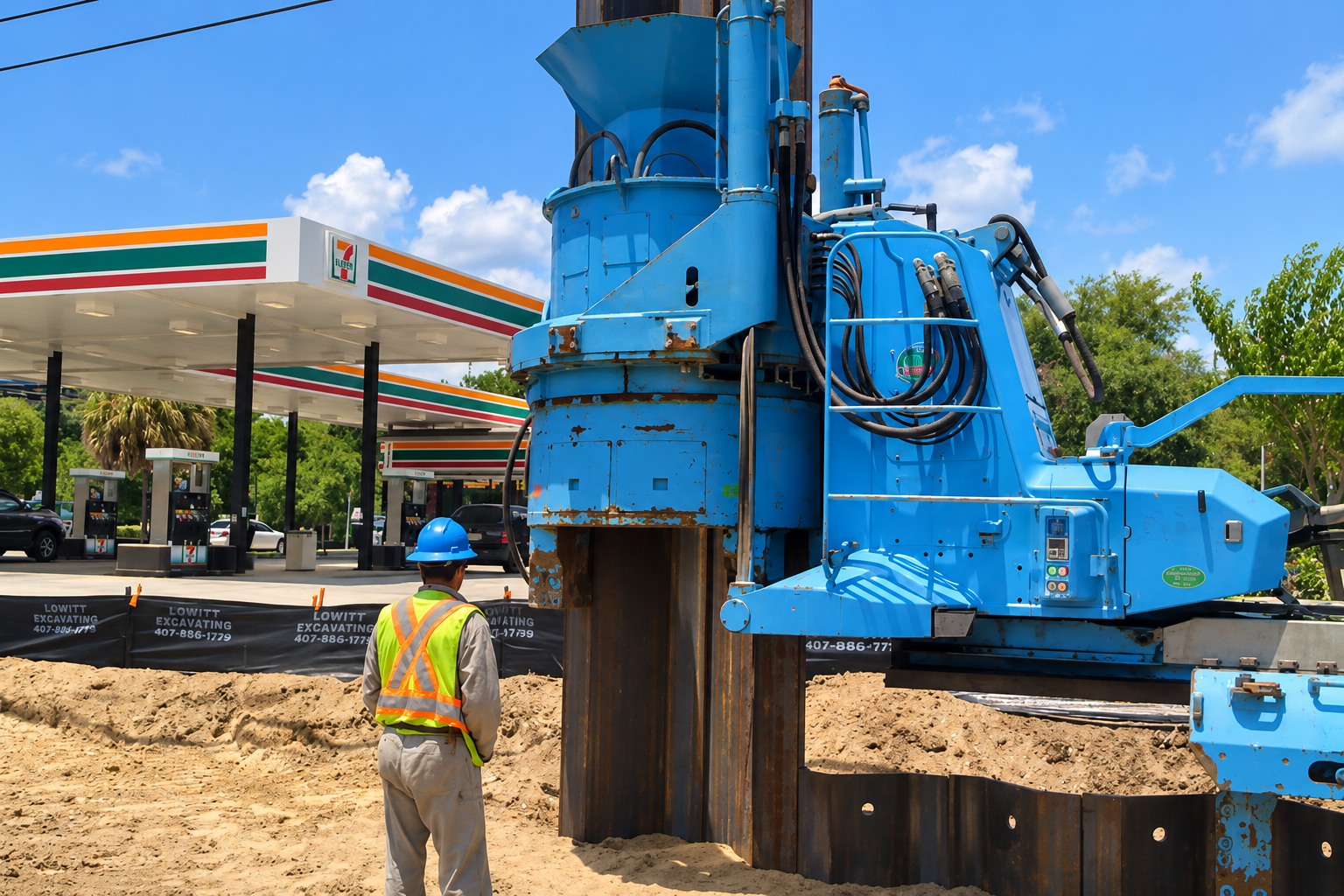
Sheet pile walls can provide excavation support, earth retention, and groundwater control where construction must take place beside pipelines, power systems, occupied buildings, transportation corridors, or operating businesses. These locations demand more than a conventional production plan. A successful low-vibration sheet pile installation begins with verified utility information, a method matched to the ground conditions, defined monitoring procedures, and close coordination with every facility that could be affected.
Why These Sites Require More Planning
Sheet pile installation introduces energy and ground displacement into an environment that may already contain vulnerable infrastructure. Buried water, sewer, gas, electrical, and communications lines can be affected by direct contact, soil movement, or changes in support. Active facilities also introduce traffic, pedestrians, emergency access, and operating schedules that must remain part of the construction plan.
Utility Records Are Only a Starting Point
Drawings, survey records, and utility markings establish the initial picture, but they may not show every abandoned line, depth change, repair, or undocumented installation. Before excavation begins, expected utilities should be identified and their owners contacted. As work approaches a utility, its exact location must be established by safe and acceptable means. The investigation may include locating equipment, vacuum excavation, test holes, or another method appropriate to the utility and site.
Verified information should be incorporated into the working drawings rather than left as field markings alone. Plans should show position, depth, service status, ownership, and required clearance. Where a utility will remain exposed, the project team must determine how it will be protected or supported.
Active Operations Change the Work Zone
An installation area beside a hospital, plant, transit facility, restaurant, or retail property cannot be planned as an isolated site. The contractor needs to understand delivery schedules, pedestrian routes, required entrances, and vibration-sensitive equipment. These requirements influence equipment placement, work hours, staging, lifting paths, and installation sequencing.
Understanding Vibration and Settlement Risk
Ground response depends on the soil profile, groundwater, pile section, equipment, penetration resistance, depth, distance, and condition of nearby assets. Because those variables change by project, a generic safe distance or vibration limit should not replace a site-specific evaluation.
Vibration Does Not Travel Uniformly
Impact and vibratory methods generate ground vibration, but its magnitude and frequency do not remain constant. Dense layers, obstructions, and difficult penetration can change the energy entering the ground. Loose granular soils may densify under repeated vibration, creating settlement without direct vibration damage. Sensitive machinery may also have limits more restrictive than those used for buildings.
The assessment should consider both the structure and what happens inside it. A laboratory, utility station, and historic building may require different monitoring locations and response criteria even at the same distance from the wall.
Ground Movement Has Multiple Causes
Vibration is not the only source of movement. Driving can displace, densify, or heave soil. Predrilling, jetting, excavation, groundwater drawdown, and sheet extraction can also alter support. Damaged interlocks may allow groundwater and soil through a wall, while excessive dewatering can contribute to settlement beyond the excavation.
Planning should therefore evaluate wall movement, settlement, heave, groundwater response, and vibration as related risks. One instrument or threshold may miss the mechanism affecting a utility or neighboring structure.
Selecting an Installation Approach
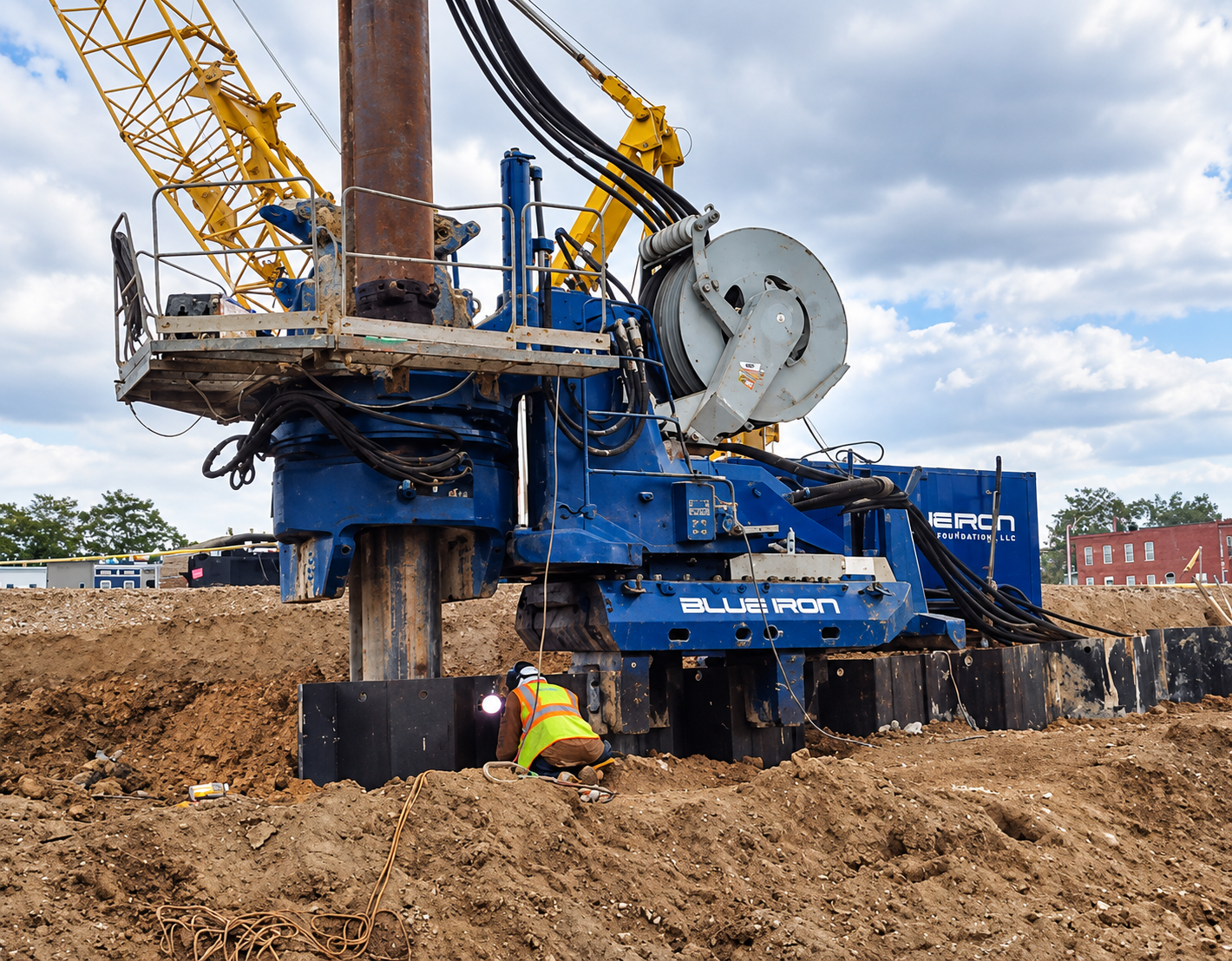
The method should follow from site constraints and geotechnical information. Vibratory or impact equipment may be suitable where predicted effects are acceptable and monitoring confirms performance. In sensitive settings, hydraulic pressing, controlled predrilling, or other low-disturbance techniques may reduce vibration and noise. Selection must still account for pile length, embedment, interlock performance, access, overhead clearance, and obstructions.
Difficult Ground Requires Controlled Responses
Unexpected refusal should trigger a planned response rather than an automatic increase in force. Continuing against an obstruction can damage the sheet, affect alignment, or separate an interlock. The team may need to probe, expose, remove, drill through, or bypass the obstruction.
Predrilling can reduce resistance in hard ground, but it must be controlled so excess soil is not removed. Water jetting also requires care because ground loss can contribute to settlement. Method changes should be reviewed against the wall design, groundwater, and protection plan.
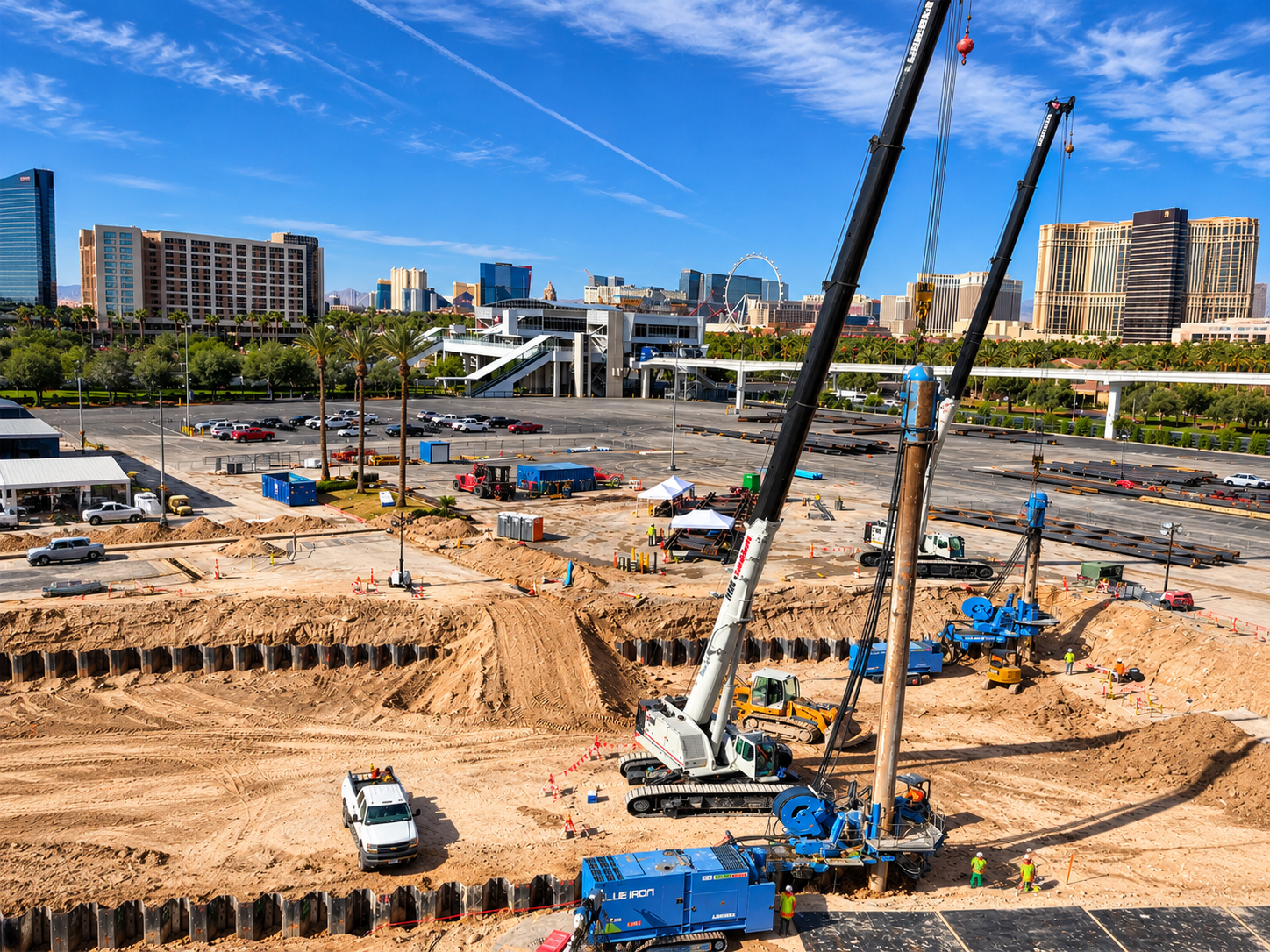
Monitoring Work Near Sensitive Assets
Monitoring is most useful when tied to decisions. A plan should identify what will be measured, where instruments will be installed, how often data will be reviewed, and who can pause the work. Responsible professionals should establish alert and action levels for the specific assets and ground conditions.
Establish Baselines Before Production Begins
A preconstruction survey records existing cracks, distortion, settlement, and other conditions. Baseline readings from survey points, vibration monitors, inclinometers, piezometers, or utility-specific instruments give later measurements context. A test pile or initial segment can confirm performance before work approaches the most sensitive area.
Respond to Trends, Not Only Exceedances
Data should be reviewed for trends as well as single readings. Increasing movement, changing penetration behavior, unexpected groundwater response, or repeated vibration events may justify investigation before an action level is reached. Records should document pile locations, depths, equipment settings, obstructions, corrective work, and relevant monitoring results.
Reducing Disruption at Active Facilities
Technical controls work best with operational coordination. The plan should establish work windows, access routes, exclusion zones, contacts, and procedures for unexpected impacts. Noisy work may be scheduled around critical operations, while deliveries and lifts can avoid peak traffic periods.
Communication is essential when facility personnel control systems the contractor cannot access. Everyone should understand notifications, stop-work conditions, and restart authority. Emergency routes, fire connections, utility shutoffs, and essential service areas must remain accessible unless an approved temporary arrangement is in place.
Completing and Documenting the Work
Final records should capture pile positions and elevations, field changes, monitoring results, utility protection, and areas requiring continued observation. For temporary sheets, the extraction sequence and method for addressing voids or ground loss should be planned before pulling begins. This gives the owner a useful record for future construction.
Sheet piling near utilities and operating facilities is a risk-management exercise built around verified information, appropriate methods, measurable performance, and timely communication. Early contractor involvement can help compare access, installation effects, and contingencies before the pile line is fixed. Projects with unusual clearance, reach, soil, or vibration constraints may also benefit from specialized pile-driving equipment selected for the conditions rather than forcing a conventional setup into a sensitive site.
