

On this page7 sections
- Understanding Helical Anchor Mechanics
- Crane Pads Supported by Helical Anchors
- Temporary Mooring Systems Using Helical Anchors
- Comparing Helical Anchors to Other Temporary Foundation Methods
- Removal, Reuse, and Cost Management
- Case Applications in Heavy Civil and Marine Work
- Future Outlook for Temporary Helical Anchor Systems
Helical anchors have become an important solution for temporary foundations in heavy civil and marine construction. Their ability to deliver high capacity performance in both tension and compression, combined with rapid installation and complete removability, makes them valuable for crane pads and temporary mooring systems. These anchors penetrate soil through applied torque and can be installed with standard hydraulic equipment, which allows contractors to create stable platforms on time sensitive jobs and in constrained environments.
Understanding Helical Anchor Mechanics
How Installation Torque Relates to Load Capacity
Helical anchors develop capacity through the interaction of their helix plates with deeper soil layers. As the anchor is rotated into the ground, torque increases until the plates reach competent material where load transfer becomes reliable. Industry practice supports a predictable correlation between torque and capacity, which allows engineers to confirm performance during installation. This helps ensure that temporary foundations for cranes and marine structures follow measurable quality control procedures supported by recorded torque values.
Soil Suitability for Temporary Foundations
Helical anchors can be used in diverse soil profiles, including granular, cohesive, and mixed conditions. They are often specified when driven piles are restricted because of vibration limits or when augered foundations would require longer mobilization. Their ability to reach dense underlying material helps limit settlement and resist uplift forces, which are common concerns for crane operations on soft or reclaimed ground. For mooring applications, consistent performance is especially important because dynamic loading occurs from vessel movement, tidal action, and wind.
Crane Pads Supported by Helical Anchors
Creating Stable Platforms for Heavy Lifting
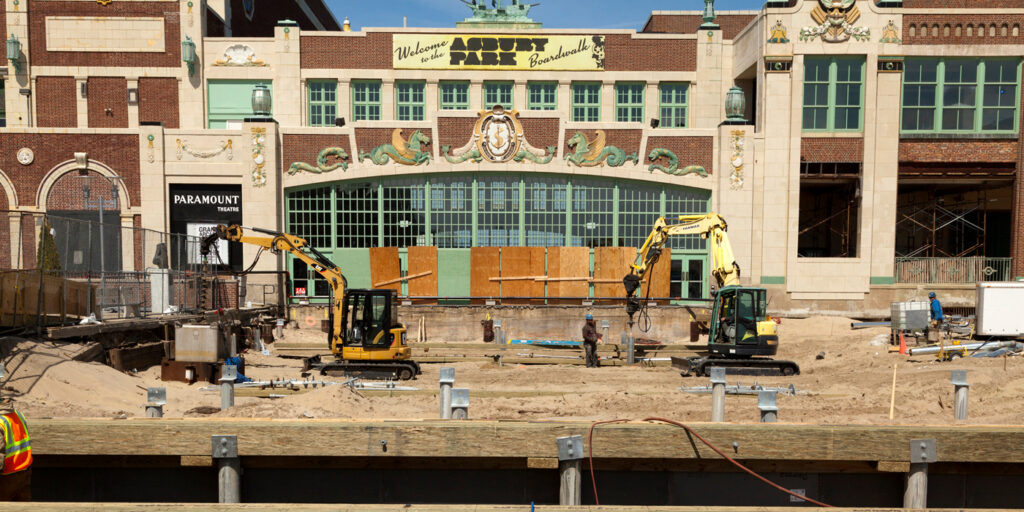
Temporary crane pads require dependable bearing support to handle vertical loads and lateral forces generated by lifting activities. Helical anchors can be arranged in grid patterns beneath timber or steel mats to reinforce areas where surface soils alone cannot support the equipment. By transferring loads to deeper soil layers, these anchors reduce differential settlement and improve the stability of the lifting platform. This method is frequently selected on projects in urban corridors, industrial facilities, and waterfront sites where ground improvement must be efficient and reversible.
Benefits for Time Sensitive Projects
Helical anchor supported crane pads are often installed rapidly because they do not require curing time or specialized heavy impact equipment. Excavator mounted drive heads allow crews to place anchors in confined spaces with minimal disruption. Once the anchors reach their design depth and target torque, the platform becomes ready for load application. These efficiencies help contractors meet demanding schedules on bridge repair jobs, rail maintenance operations, and industrial plant upgrades where daily delays can significantly impact cost.
Temporary Mooring Systems Using Helical Anchors
Holding Capacity for Marine Construction Work
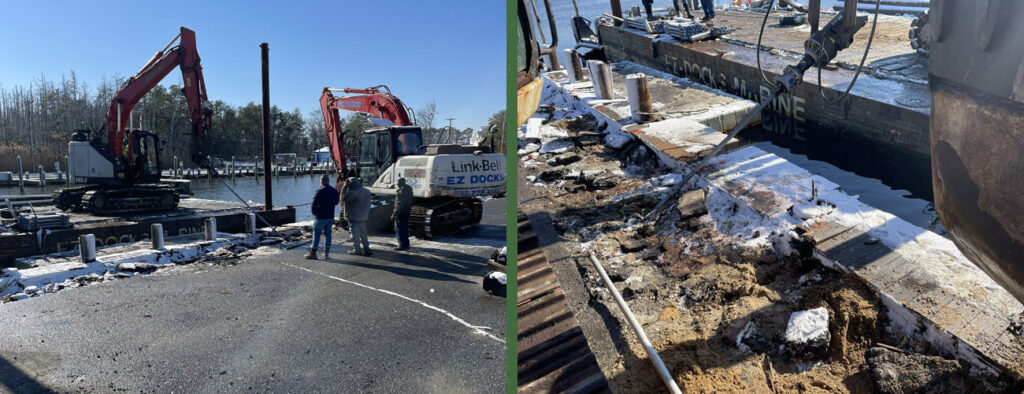
Marine contractors rely on helical anchors to create temporary mooring points for barges, floating work platforms, and portable crane systems. The anchors provide strong tension resistance, allowing them to stabilize floating assets during construction activities. Their installation can be performed from barges or shallow draft equipment that applies torque through hydraulic drive heads. This capability is useful in inland waterways and coastal zones where traditional deadweight anchors or driven piles may be impractical. Danbro Distributors provide helical foundation products, installation equipment, and technical support to help contractors select systems suited to specific project conditions.
Reduced Environmental Impact
Because helical anchors displace minimal soil and do not require excavation, they help reduce environmental disturbance. This characteristic is especially important in areas with sensitive ecosystems or strict permitting restrictions. When a project is complete, the anchors can be fully extracted by reversing the installation process, leaving little trace of the temporary foundation. Their reversibility also prevents long term interference with navigation channels, submerged utilities, or future marine infrastructure.
Comparing Helical Anchors to Other Temporary Foundation Methods
Differences from Driven Piles
Driven piles can achieve high load capacities but may generate noise and vibration that are unacceptable near occupied structures or delicate infrastructure. Helical anchors offer a quieter solution and require less support equipment. Load verification can be achieved in real time through torque measurement, which provides immediate confirmation of performance.
Advantages Over Deadweight Systems
Deadweight anchors remain common in temporary mooring applications but often require significant transport and handling resources. Helical anchors develop capacity through soil interaction rather than gravity, which reduces the need for large staging areas and simplifies logistics. They are also easier to reposition when construction phases change, which adds flexibility to marine operations.
Removal, Reuse, and Cost Management
Full Extraction After Project Completion
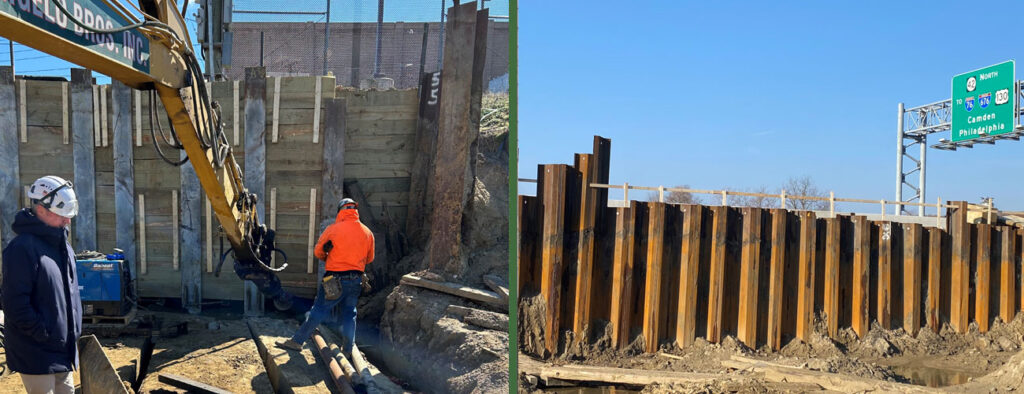
A major benefit of helical anchor systems is complete removability. The same torque used during installation is applied in reverse to extract the anchor, allowing contractors to restore the site with minimal disturbance. This reduces restoration expenses and eliminates the need to abandon materials underground. In some cases, if permitted by engineering requirements, components can be inspected and reused on future projects.
Lower Long Term Environmental Costs
The absence of buried materials supports responsible construction practices and helps contractors meet regulatory expectations near waterways and environmentally sensitive areas. Extraction also prevents future conflicts with new underground utilities or infrastructure expansions. These long term advantages reinforce the value of helical anchors for both land based and marine temporary works.
Case Applications in Heavy Civil and Marine Work
Infrastructure Sites Requiring Rapid Setup
Crane operations on bridge rehabilitation projects, industrial facility maintenance, and energy infrastructure upgrades often require temporary foundations that can be installed without delay. Helical anchors provide an adaptable method for creating stable pads even in soft or inconsistent soils. Their predictability and installation speed give engineers greater confidence when developing lift plans and equipment staging layouts.
Waterfront and Coastal Jobs
Marine construction jobs often present strict limitations on noise, vibration, and seabed disturbance. Helical anchors help contractors establish secure mooring systems without driven piles or heavy deadweights. Their use supports activities such as shoreline repair, bulkhead reconstruction, and underwater utility installation while minimizing environmental impact.
Future Outlook for Temporary Helical Anchor Systems
Growing Adoption Across Construction Sectors
Advancements in high strength steel, improved torque monitoring tools, and refined installation techniques have contributed to increased use of helical anchors on heavy duty projects. Their consistency and reversibility align with industry goals for efficient and environmentally conscious construction. The continued development of installation equipment and digital tracking systems is expected to expand their role in temporary foundation projects.
Integration with Digital Monitoring
Real time torque verification and automated data recording provide reliable documentation for engineers and inspectors. This enhances confidence in anchor performance and supports quality control requirements for large lifting operations and mooring systems.
Large helical anchors continue to prove their efficiency for temporary crane pads and mooring systems across land based and marine construction. Their rapid installation, predictable capacity, clean extraction, and minimal disturbance make them a practical choice for modern job sites. As more contractors adopt removable foundation systems and invest in tools that support precise installation, helical anchors are likely to remain central to temporary works engineering.