
Contributed by JET Filter System

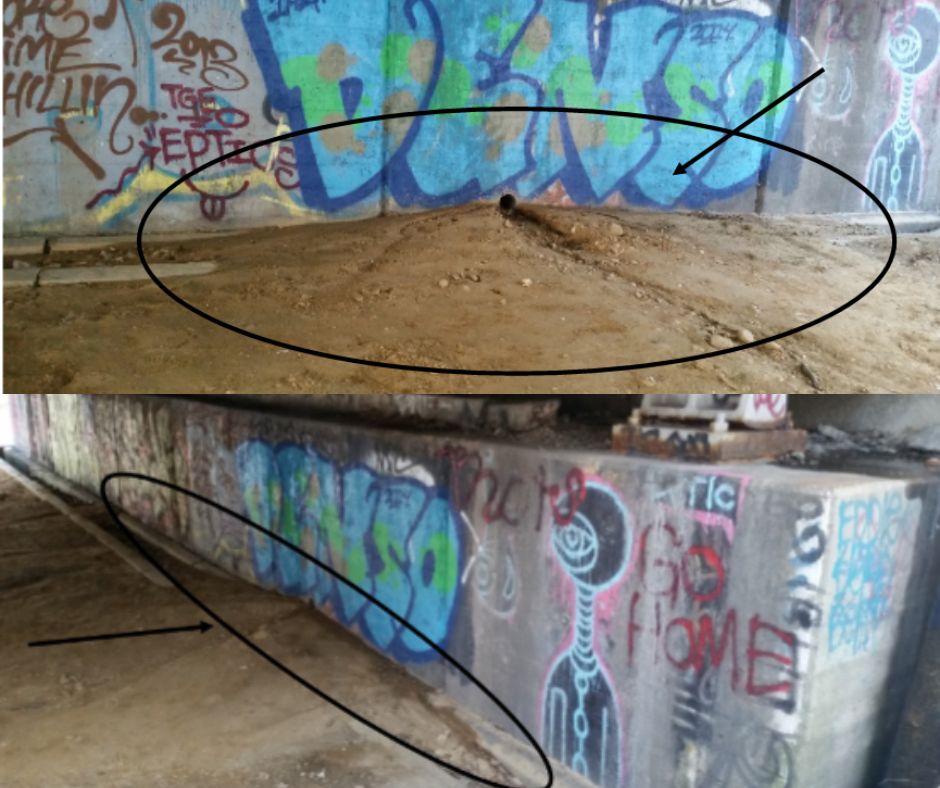
In infrastructure projects, unforeseen challenges can arise, demanding swift and efficient solutions. Such was the case with the Windy Run Bridge on the George Washington Memorial Parkway (GWMP) in Arlington, Virginia. A substantial sinkhole appeared at the bridge, prompting engineers to uncover a drainage issue as the root cause. The Federal Highway Administration (FHWA) Engineers spearheaded a remarkable initiative to address this problem, utilizing the JET Filter conical weep hole filter. This case study delves into the details of the bridge’s drainage problem, the selection of the JET Filter solution, the implementation process, and the significant benefits it yielded.
Identification of the Problem
In infrastructure projects, unforeseen challenges can arise, demanding swift and efficient solutions. Such was the case with the Windy Run Bridge on the George Washington Memorial Parkway (GWMP) in Arlington, Virginia. A substantial sinkhole appeared at the bridge, prompting engineers to uncover a drainage issue as the root cause. The Federal Highway Administration (FHWA) Engineers spearheaded a remarkable initiative to address this problem, utilizing the JET Filter conical weep hole filter. This case study delves into the details of the bridge’s drainage problem, the selection of the JET Filter solution, the implementation process, and the significant benefits it yielded.
Swift Action and Evaluation
Engineering and emergency repair crews acted promptly, assessing the situation and formulating a plan of action. Although the repair of the bridge decking presented a manageable task, the challenge lay in rectifying the compromised drainage system. Traditional methods could have entailed a lengthy and costly process of redoing the entire drainage system, causing extensive construction delays and impeding traffic flow on the busy GWMP.
Choosing the Optimal Solution
Federal Highway Administration Engineers were tasked with identifying a solution that not only resolved the drainage issues effectively but also minimized disruption and costs. After careful consideration, the decision was made to employ the JET Filter conical weep hole filter. This innovative solution promised a more streamlined approach to addressing the drainage problem.
The JET Filter conical weep hole filter was seen as a versatile and effective remedy for the bridge’s drainage issues.
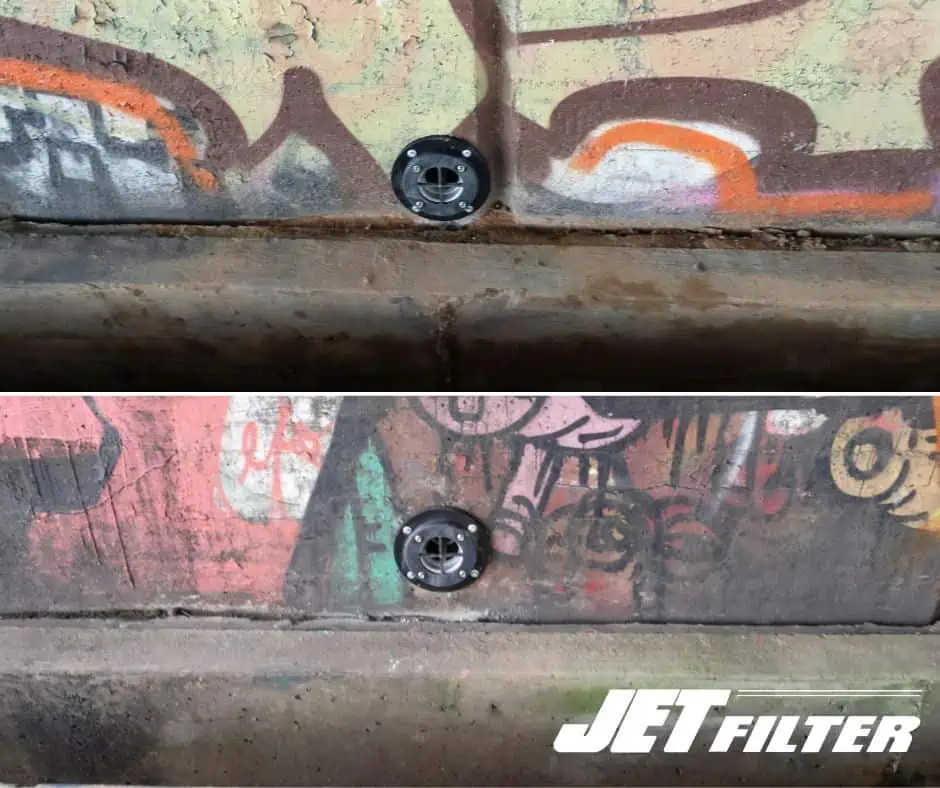
The JET Filter solution’s success at the Windy Run Bridge hinged on its innovative two-stage conical weep hole filter system, which addresses drainage and settlement filtration challenges seamlessly. The conical weep hole filter’s primary focus is efficient drainage. With a greater surface area than flat filter systems, the conical shape facilitates optimal water collection and discharge through the weep hole, directing it away from the bridge abutment. The two stage filtration involves steel filter of the outer stage and the Mirafi® Filter-weave FW30 material in the inner stage “cartridge” unit. This specialized filter-weave acts as a settlement filter, preventing smaller soil particles and sediments from entering the drainage flow. This design prevents water accumulation, which could otherwise lead to erosion and soil instability, ensuring the bridge’s structural integrity.
Efficient Installation Process
One of the most remarkable aspects of the JET Filter solution was the expedited installation process. To give access to the area behind the wall, the installation contractor, M&F Concrete, Inc., cored 4” diameter holes through the bridge abutment. Then the open-ended filters were installed in the holes to provide a drainage outlet for the abutment. Each unit took approximately 30 minutes to install, preventing extended highway downtime and minimizing disruption to the public in just 90 minutes.
Cost and Time Savings
By adopting the JET Filter conical weep hole filter, the FHWA Engineers avoided the arduous task of completely overhauling the drainage system. This decision translated to significant savings in terms of both time and money. Had the traditional method been pursued, considerably more construction time and expense would likely have been incurred. The streamlined approach not only tackled the immediate drainage issues but also ensured the long-term stability of the bridge’s infrastructure.
Conclusion
The Windy Run Bridge drainage issue along the GWMP presented a challenging situation that required an innovative solution. Through the implementation of the JET Filter conical weep hole filter, Federal Highway Administration Engineers demonstrated an exceptional ability to adapt and find optimal remedies. The choice to incorporate this technology not only swiftly addressed the drainage problems but also saved substantial resources, prevented extended highway closures, and ensured the continued functionality of the bridge. This case study serves as a testament to the power of innovative solutions in tackling complex infrastructure challenges.